1950s movies marathon – part 65

The Man from Laramie (1955, USA, Mann)

If 100 years of western movies have taught us anything, it is that when you’re the boss of a sleepy, isolated town, and a dangerous-looking stranger arrives, you should not burn his wagons, shoot his mules, drag him through the dirt, and then return his gun to him and hope he leaves town peacefully. Watched it all.

Bride of the Monster (1955, USA, Wood)

This Ed Wood movie is almost competent. The way he goes straight to the fun part – evil scientist! monster! giant squid! – makes me wish he had the abilities to match his vision. Imagine what a genuinely good screwy sci-fi-horror filmmaker could have done with Bela Lugosi and Tor Johnson. Watched 14 minutes.

Violent Saturday (1955, USA)

The kind of caper movie where the team Assembles in the first part, Executes in the second, and Fails Tragically in the third. I’ve seen this story before, and will see it again. But for some reason that I can’t explain, this particular version of it feels epic, like a long train building up speed. Watched it all.

A Generation (1955, Poland)

I love the scene in every Communist propaganda movie where the young girl stands before the crowd and holds a stirring speech about the People, the fire of truth burning in her eyes, and also the scene where the wise old worker explains his Marxist faith in simple, folksy terms, like a Communist Jesus. It makes me want to have myself put up against a wall and shot. Watched: 30 minutes.

1950s movies marathon – part 64

The Trouble With Harry (1955, USA, Hitchcock)

It was easier to hate Hitchcock back in the early 50s, when his old formulas were getting stale, but something has changed. They’re all hits now. Hard as I try, I am unable to find an excuse to hate them. It’s very frustrating. I think I’ll have to become a .. *shudder* .. fan. Watched it all.

The McConnell Story (1955, USA)

This is the earliest war movie I’ve seen that is centered around the jet plane. The sound when they fight is terrifying. It’s the sound of war birds, roaming the skies to defend the free world and/or bomb the local peasants. It’s the sound of the second half of the 20th century. Watched 5 minutes.

Himmel ohne Sterne (1955, West Germany)

All the German post-war movies I’ve come across so far have been East German. This is the earliest I’ve seen from the West, and it’s one of those honest, quiet movies countries sometimes make about their great tragedies. The characters stand between two traumas: The memory of friends and family lost in the War, and now the division of family and friends between East and West. Watched it all. It’s even more moving in retrospect: Decisions lightly made in the late 40s, were final.

Man Without a Star (1955, USA)

Kirk Douglas, the greatest rogue and/or asshole of his age. Watched: 14 minutes. All non-brilliant Westerns should open with a Frankie Laine song, to compensate.

Minireviews: Frank Furedi, Greg Bear

Frank Furedi - On Tolerance (2011)

Frank Furedi – On Tolerance (2011)

Tolerance used to mean respect for the moral autonomy of individuals, the belief that, although I disagree with someone, I acknowledge their right to choose their beliefs of their own free will, and to speak them publicly, and that there is in fact a value in and of itself in being challenged by opposing views, even when they’re wrong. Moral and political judgment was a central part of tolerance, because without something to judge, there would be nothing to tolerate. Today, tolerance has come to mean non-judgment, recognition, and approval, and not of individual views, but of group identities. Paradoxically, this new tolerance is a dressed up version of traditional intolerance, and reveals its fangs when you confront it. We need the old form back.

Recommended: Strongly.

Greg Bear – Blood Music (1985)

After [being bitten by a radioactive spider] / injecting himself with intelligent microorganism, a [socially awkward teenager] / socially awkward scientist gets superpowers and [starts fighting crime] / sits at home and broods a lot, while observing his scientifically plausible transformation into a higher being.

Recommended: No. The more I read of biology and physics-oriented hard SF, the less it interests me.  Never mind the eukaryotes, show me the politics!

Minireviews: Daniel Kahneman, Jon Ronson

Daniel Kahneman – Thinking, Fast and Slow (2011)

The brain works in two modes: System 1, which is fast, automatic, good enough in many situations, but inaccurate in others, and System 2, which is slow, deliberate, and more rational. Using System 2 usually leads to smarter decisions, but is hard work, so that often when we get a question that should be answered by System 2, we substitute it with a simpler one that can be answered by System 1. This doesn’t mean snap decisions are worthless: Experts train their System 1 to recognize cues that enable valuable intuitive leaps. But this requires training, when it is possible at all.

Recommended: Strongly. This is a definitive book on the subject. My one objection is that long after proving that nobody has an intuitive sense of probability or statistics, psychologists persist in running experiments about people’s intuitive sense of probability and statistics. Why? Are they perhaps substituting a simpler question for a harder one? Also, don’t let people like Kahneman decide policy! Their research gives them authoritarian instincts.

Jon Ronson - The Psychopath Test (2011)

Jon Ronson – The Psychopath Test (2011)

I normally mock pop-sci books that have only about 30 pages of actual content, and this is one of those books. The rest of it is just the author telling the story of what an amazing time he had travelling all over the world doing research: Talking to mad Swedes, Scientologists, potential psychopaths, etc. It’s journalistic filler, but Ronson is such a great storyteller that I couldn’t put it away.

Recommended: Reluctantly, but yes. Damn you, Jon Ronson. Damn you!

Minireviews: R. G. Collingwood, Augustine

R. G. Collingwood - An Autobiography

R. G. Collingwood – An autobiography (1939)

Collingwood believed that a philosopher’s autobiography should be about his ideas, and how he arrived at them, not his personal life. I approve. Collingwood had two ideas: 1) That a statement standing by itself is meaningless, unless you also know which question it is an answer to. Science is not an aimless discovery of facts, but asking questions, and forcing the subject matter to answer. And 2) that history is about understanding the thoughts and purposes of past people, about reliving, not reciting, events, and that it became a science when it stopped merely summarizing written records, and started forcing the records and archeological evidence to answer questions they had not been asked before.

Recommended: Yes.

Augustine – Confessiones (ca 400 AD)

You should always sample the original sources, to let the voices of the past speak to you in their own voice. I had the impression of Augustine as a theologian, but this work reveals him as a preacher and a poet, who struggles to find words to express his absolute love for and submission to God. A preacher, but not a wise one, and no philosopher. There’s no thought here, just emotions. The “Dark Ages” are a myth, but when you contrast Augustine to the pagan philosophers, it’s easy to get the impression of a culture shedding a heritage it has become too shallow to appreciate.

Recommended: No

Document, vår tids Orientering?

Jeg skriver om de historiske parallellene mellom Document.no og den gamle SF-avisa Orientering.

En parallell betyr altså ikke at situasjonene er identiske, men at det å bruke den ene til å belyse den andre øker vår forståelse av begge. Ikke minst bedrer det på perspektivet. Når man står midt oppi den politiske debatten er det lett å glemme at flere av de evige, urokkelige sannhetene bare er en generasjon eller to gamle. (Selv Orientering var israelsvenner frem til slutten av 60-tallet, da de skiftet linje under press fra ml’erne.) Landskapet endrer seg, og plutselig blir den første den siste, og den siste den første.

Paralleller som dette forteller oss ingenting om hva som kommer til å skje, men de sier noe om mulighetsrommet, og de forteller oss både at det politiske landskapet kan endre seg raskere enn vi tror, samtidig som den underliggende dynamikken i politikken kan forbli den samme selv når alt tilsynelatende har endret seg.

Les resten hos, nettop, Document.

Minireviews: Father Brown, Orientering

G. K. Chesterton – The Innocence of Father Brown (1911)

I first met Father Brown in the 1954 movie, where Alec Guinness plays him so convincingly that it’s his voice I hear in my mind when I read these stories. I don’t mind that the murderer usually turn out to be The Protestant, The Atheist, or some other soul that has been lost to the Catholic Church. It’s the religious dimension that gives these stories their appeal, the impression they give that, although being suddenly beheaded by a criminal mastermind is no doubt evil and inconvenient, what we should really worry about is lesser, everyday sins like fanaticism, coldness, pride, and greed.

Recommended: Yes, although the movie is a more coherent introduction, and should be watched first, to prevent Father Brown from taking any other shape in your mind than Alec Guinness.

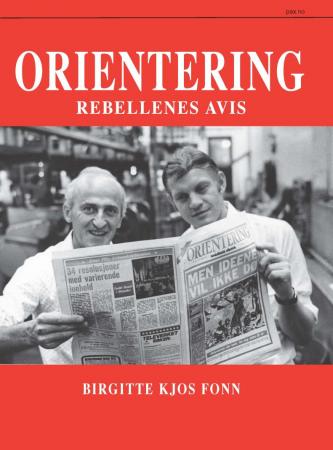
Birgitte Kjos Fonn - Orientering, rebellenes avis

Birgitte Kjos Fonn – Orientering, rebellenes avis (2011)

In the histories of Norway’s 20th century leftists, I see paralells to today’s rightists. You’d be surprised at how many there are. The radical leftists and communists at the newspaper Orientering complained about the oppressive climate for independent thought in Norway in the 1950s with many of the same words that the right use to complain about political correctness today. In other words: The largest difference between Orientering and Document is about 50 years.

Recommended: Yes. The book is sympathetic to Orientering, as one would expect, but not uncritical of their East Bloc bias, and this is in any case a far more interesting book than Frank Rossaviks SV.

The best movies of 1954

The 1950s movies marathon crawls on, one fast-forward button press at a time. 1954 went slower than usual, but not because of the movies. Here are my favorites.

For the visuals

Track of the Cat

20,000 Leagues Under the Sea

Heroic priests

On the Waterfront

Father Brown

Doomed love

Phffft

Garden of Evil

Sabrina

Creature From the Black Lagoon

Nazi’s, anti-Nazis, ex-Nazi’s and post-Nazi’s

Tiefland

Nineteen Eighty-Four

Shetlands-gjengen

Night People

I can’t pretend to hate Hitchcock any more

Rear Window

Dial M for Murder

Prototypes for later classics

Secret of the Incas

Them!

Japan discovers its sense of fun

Seven Samurai

Godzilla

Next up: 1955, a year that surprised everyone by coming right after 1954.

Bokhyller

Etter å ha flyttet inn i ny leilighet for noen uker siden er nå kronen på verket klar, mitt personlige bidrag til sjangeren bokhylleporno:

Ja, du har rett. Jeg kunne nok valgt en enda høyere oppløsning på bildet, slik at man kan studere alle de herlige detaljene.

Hyllene er laget av Risør Snekkerverksted, etter detaljerte spesifikasjoner: 9-10 hyller i hver reol, som passer nøyaktig til vanlige bokhøyder (18cm, 20cm, 23cm, ..) og dermed utnytter plassen maksimalt, samtidig som de bare er 22cm dype, som er nok til nesten alle bøker.

Her kan du laste ned regnearket jeg laget for beregning av hyllehøyder. Angi hvor mye høyde du har til rådighet, og så kan du eksperimentere og se hvor høye hyllene kan være. Dette kan du tross alt ikke overlate til tilfeldighetene.

Book roundup – Haakon Lie biography, and Darker Than You Think

Hans Olav Lahlum – Haakon Lie – Historien, mytene og mennesket (2009)

When Haakon Lie came home from the US after the Second World War, he was convinced that Norway’s future lay to the West, and over the following decades he used his considerable power in the Labor Party to make it take a pro-America, pro-Israel, and anti-Communist stand. In this, he was morally and strategically right, or at least more so than the shallower generations of leftists that came later.  He was also, reportedly, an asshole, but my one complaint about this biography is that it doesn’t examine the accusations against him more deeply. Haakon Lie comes across as temperamental and old-fashionedly authoritarian, but was that really all there was to it? Lahlum doesn’t settle this question.

Recommended: Yes.

Jack Williamson - Darker Than You Think

Jack Williamson – Darker than You Think (1948)

I can sum up the thing that turned the staple foods of geek culture – werewolves and zombies and vampires etc. – into shit, with one word: Awesomeness. All surface, no soul. The only way to save these tropes now is to return to the roots, and this novel is one of them, an early variation over the currently popular theme of modern-day werewolves and witches fighting a secret war with humanity, with the main difference from the current products (True Blood etc.) being that it isn’t awesome. It’s human. All powerful myths are.

Recommended: Yes.