..the most repressive city in China

China is certainly large enough to accommodate two financial cities, Hong Kong and Shanghai, just as Frankfurt and London coexist in Europe. What Shanghai lacks, though, is a stable legal and business climate, the comfort factor identified by the HSBC chairman. And there is no indication that things are about to change in the near future.In fact, change seems less likely in Shanghai than in other Chinese cities because it is even more closely watched by security agents and the Propaganda Department. In Beijing and Guangzhou, some journalists, writers and lawyers manage to get past the police net and have their say, but in Shanghai, the merest hint of dissident behavior is enough to put one behind bars. Shanghai is the most repressive city in China. Several student and worker movements, some democratic, others not, started here. It was here that the Communist Party took root in 1925. For this reason, the current leaders do not permit any freedom of expression. [..] Shanghai is nothing but a facade of modernity erected by the Party, which pursues its vision of what the China of tomorrow should look like. Foreigners on a hurried visit tend to lose their critical faculties the moment they land in China. They gaze, wonderstruck, at the facade erected for their benefit.

– Guy Sorman, The Empire of Lies (2006)
..the new law has not provided for such an eventuality

One-third of Shanghai’s 17 million inhabitants are migrants, yet it is virtually impossible for them to become citizens with their identity cards, which in principle give them access to public services.  In Shanghai, as in all other Chinese cities, there is a sort of local nationality by blood. With the winds of reform blowing over the city in the Year of the Rooster, the municipality has decided to issue local identity cards on the basis of marriage, but the conditions are so restrictive that they appear ridiculous. A non-Shanghai woman married to a Shanghai man can get nationality after fifteen years of her marriage, which means the couple’s children will automatically become citizens of Shanghai, as nationality is handed down by the mother. The authors of this daring innovation told me, though, that a man from Shanghai would have to be very “poor or handicapped” to marry a “foreigner”. What happens if a non-Shanghai man marries a Shanghai woman? I asked. The new law has not provided for such an eventuality, they told me at the mayor’s office, because it was unthinkable that a Shanghai woman would marry an “outsider”.

Town-hall officials said that if all immigrants were granted citizenship, by marriage or otherwise, they would flood schools nad hospitals and demand public housing. The city’s infrastructure wouldn’t be able to take the load. Were the news to spread to the countryside, millions would flock to Shanghai, creating huge ghettos around the city.

– Guy Sorman, The Empire of Lies (2006)

1950s movies marathon – part 35

Invaders From Mars (1953, USA)

I wonder if perhaps those people who see the red scare reflected in all those 1950s sci-fi movies are overanalyzing things a bit.  Sometimes a regular dad who acts like he has a terrible secret is just a regular dad who has been possessed by invaders from Mars.  Watched it all.

How to Marry a Millionaire (1953, USA)

Hey, they’ve finally invented CinemaScope! Widescreen! Stereo! Oh, how I’ve missed it all.  Okay, so they’re overdoing the stereo effect a bit.  It’s not necessary to move all the sound to the left when the character is on the left side of the screen.  And there are some odd lense effects when the camera moves.  Watched: 15 minutes.

The Wages of Fear (1953, France)

All the scum of Europe have ended up in a bar in Nameless South America.  Nothing to do but sit around in the heat and dream of food and money, and nothing to hope for but for the local ugly American to come around and exploit you.  Watched it all.  I think I read this story in Donald Duck & Co in the 80s.

Hondo (1953, USA)

The only reason I’ve heard of Hondo is because it was described as the greatest western of all time in an episode of Married With Children, where Al missed it on TV and learned he would have to wait to 2011 for the next airing.  Well, it’s now 2011, but I don’t see what all the fuss was about.  Watched: 10 minutes. Perhaps I’ll give it another chance in 2028.

Book roundup: Asle Toje, Gösta Hammarlund, A. N. Wilson, Okakura Kakuzō

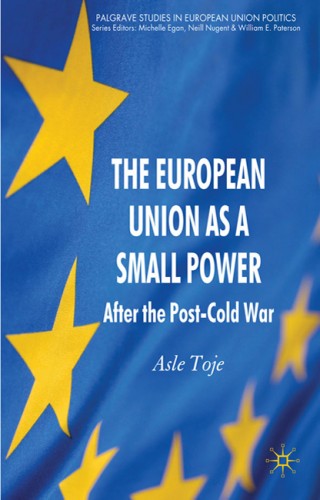
Asle Toje - The European Union as a Small Power - After the Post-Cold War (2010)

Asle TojeThe European Union as a Small Power – After the Post-Cold War (2010)

The EU talks and dreams big, but is too unfocused to act on the global stage as a genuine great power.  Toje argues that it is best understood as a small power, the middle layer of the international arena, an entity whose interests must be reckoned with by others, but has limited influence on its own outside its immediate neighbourhood.

Recommended: Yes.

Gösta Hammarlund – Hammarlund ’44

These cartoons from Dagbladet in 1944 are the worst newspaper cartoons I have ever seen.  There is nothing interesting about them, not a hint of talent.  This may in fact be the most useless second-hand book purchase I have ever made.

Recommended: Can I burn it?  Can I?  Can I?

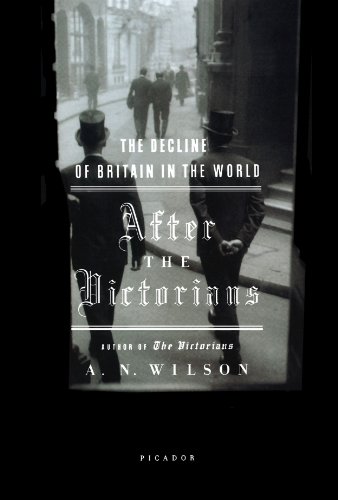
A. N. Wilson - After the Victorians - The decline of Britain in the world

A. N. Wilson – After the Victorians – The Decline of Britain in the World (2005)

I don’t mind at all an intuitive and opinionated approach to history, where one tries to get a feel for the age beyond what a list of events will provide, as long as the head in the skies is matched by feet on the ground.  That seems to be the case here.

Recommended: Yes.

Okakura Kakuzō – The Book of Tea (1906)

Eplains the tea ceremony as a Zen/Taoism-inspired attempt at creating beauty out of the mundane.

Recommended: Yes, but mostly for the even more interesting details it hints at.

1950s movies marathon – part 34

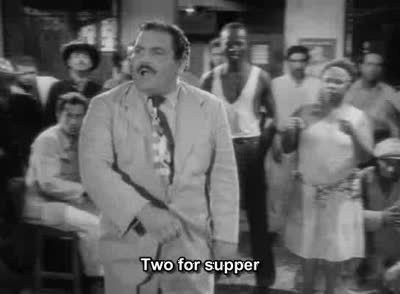
I Vinti (1953, Italy, Antonioni)

The post-war kids are absolutely terrible.  They look innocent, but their souls are bottomless pits.  They murder, and steal, and the worst creep of them all is some sort of proto-21st century self-promoter, whose first thought on discovering a dead body is to put it up on YouTube.   Watched it all.

Prisoners of the Casbah (1953, USA)

You know, I think the Grand Vizier may be evil.  1) He has a beard, 2) he’s an efficient administrator – and 3) he’s the Grand Vizier.  Watch out, curiously American-looking princess of that Arab desert tribe, so beloved by Hollywood, where one covers the faces of women but not their midriffs!  Watched: 8 minutes.

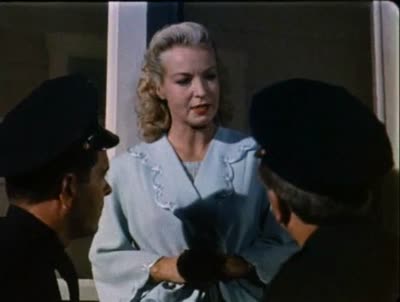
Pickup on South Street (1953, USA, Fuller)

In addition the laughably bad, there were also some good movies about Communist spies.  The Thief was one, here is another.  What they have in common is that Communism is just another variation on “generic evil organization that keeps the plot boiling”.  Watched it all.  Oh, and this one too ends with the commie traitors getting punched in the face.  Awright!

The Glenn Miller Story (1953, USA, Mann)

Oh, Anthony Mann – why? Why?!  I understand that cheerful, sappy, historically worthless biopics must be made, because it makes viewers feel in touch with Greatness without having to deal with anything real and disturbing, but why you?  Watched: 13 minutes.

..I should not publish that if I were you, Tennyson

For Osbert, Edith and Sachie Sitwell, as for Virginia Woolf and friends in the so-called Bloomsbury set, having the idea of oneself as an artist was an illusion which friends were perilously good at fostering and encouraging. That is the peril, for an artist, of ‘sets’. When Tennyson read some of Maud aloud in Benjamin Jowett’s drawing room at Oxford, the Master of Balliol said, in his high squeaky voice: ‘I should not publish that if I were you, Tennyson.’ No such voice in the early decades of the twentieth century was ever heard in the Sitwell’s drawing-room, nor over the other side of London in Bloomsbury. ..

Of course, as soon as Facade appeared on a public stage it was lampooned and condemned by all the critics. The Sitwells took this as evidence of the philistinism of the bourgeoisie. The British tradition had been firmly established, of talentless ‘arty’ people convincing themselves that exhibitionism was a substitute for talent. It could be said that this had been going on in the nineteenth century to some extent, but in the twentieth century, there came a parting of the ways in England, especially in London, between good popular books, art and music, and ‘highbrow’ versions which only the initiated could appreciate. Within this veiled holy of holies, the initiates could learn to mouth the names of composers and artists they were supposed to admire, without actually possessing any discernment at all.

– A. N. Wilson, After the Victorians (2005)

..the comparative cheapness of air power

The comparative cheapness of air power, versus manpower, had been demonstrated first in Somaliland, then in Afghanistan. In Somaliland, Mullah Mohammed bin Abdullah Hassan, inspired by memories of the Mahdi’s holy war with the British in the times of General Gordon, excited a huge following. He claimed magical powers. His followers believed that he could push whole towns into the sea with his feet. No fewer than four British expeditions were mounted against him between 1904 and 1918, killing thousands of the mullah’s men and expensively engaging thousands of British troops. On 21 January 1920 the first RAF bombing raid was sent against him at Medishe. A mere 36 officers, with 189 enlisted men and one flight of six DH9 bombers, visited the mullah’s fort twice daily. Within a month, the mullah had escaped to Abyssinia and the RAF men were back in Britain. The total of British casualties was two native soldiers. Churchill told the House of Commons that it would have cost £6 million to mount a conventional land assault on the mullah; the RAF campaign had cost £70,000.

The emir of Afghanistan was the next to be subjected to RAF bombing raids. In 1919 he had declared jihad against British troops in the North West Frontier of India. The RAF shipped one Handley Page V/1500 bomber to Kabul, where it dropped four 112-pound and sixteen 20-pound bombs. ‘Napoleon’s presence was said to be worth an army corps, but this aeroplane seems to have achieved more than 60,000 men did,’ wrote Basil Liddell Hart.

– A. N. Wilson, After the Victorians (2005)

..hideously in tune with his times

When an artist dies young there is a tendency to overpraise. Pound, however, was not given to that tendency. He saw in Gaudier ‘the most absolute case of genius I’ve ever run into’. What makes this death so continuingly haunting is that Gaudier-Brzeska’s vision of Europe, its art, its culture, and the moment it had reached, was not at variance with the war which killed him. Quite the contrary. The anti-war poets and artists of this period tended either to be of poor artistic capability or to be retrospetive in their hatreds – or both. Gaudier-Brzeska, hideously in tune with his times, embraced the struggle and saluted the violence. The huge numbers being slaughtered reduced the sense of each and every person being of unique value. As in modernist sculptures, men became almost indistinguishable from the tanks or submarines in which they set out to destroy one another, bringing about deaths in numbers which had hitherto only been known in slaughterhouses. From the nameless cannon-fodder arose an inevitable of vision of humanity as something less than what it had once been – of people as ‘the masses’, scarcely distinguishable from one another. They awaited men of genius to lead or inspire them.

– A. N. Wilson, After the Victorians (2005)

..something had died in the night, and no one had noticed

The etiolated lyrics of the English Edwardian poets, followed by the feeble poetic productions of the years which followed, should sound a warning note; something has gone out of the mixture. We are drinking a martini cocktail in which someone has forgotten to put the spirits. Yeats, speaking of the high horse in whose saddle Homer rode, found it in his day to be ‘riderless’.

It was this fact which the young Ezra Pound, however tiresome he might seem to us, could feel. It was something much more than the mere coincidence, which happens every few decades in any literary culture, that apart from the Irishman Yeats and the old Thomas Hardy there were so few poets of any stature writing in Britain in 1908. It was something much deeper than that. Something had died in the night, and no one had noticed.  We are told that the Edwardian period was some kind of glory age, the last summer afternoon before the storm, the brightly lit house party before they all went to die in the mud. Of course on sees how such a perception can be formed. But it might be truer to say that the culture which could allow itself to move into the First World War was one which was already moribund, morbid.

– A. N. Wilson, After the Victorians (2005)