.. a unique, Norwegian version of “Tao”

Askeladden is no superman – he is not even a hero in any conventional sense of the word. He is a genius in the guise of a village idiot – the only type of genius that Norwegians tolerate and cherish. His laziness is a noble, respectable laziness because it can at any time yield to feats of imagination and daring. [..] He is no saint and no philosopher. His wisest and most memorable words are: “That was really something”. He is the greatest ecohumanist in the Norwegian tradition.

Most interesting for us is the way in which Askeladden performs his various tasks in contrast to the way in which they are attempted by his brothers.  The implicit moral is that everything is possible if one does not try too hard.  The point is staying properly attuned to Nature.  Philosophically, then, the moral of Askeladden is to demonstrate the Right Way of conduct – a unique, Norwegian version of “Tao”. [..]

The principle underlying Askeladden’s behavior is wu wei, i.e. “action in inaction”, or “action in accordance with the laws of nature”. In contrast to the yu wei (forceful striving) exercised by his brothers, Askeladden practices no-striving and non-action in the Taoist sense.

– Nina Witoszek, The Origins of the ‘Regime of Goodness’, Remapping the Cultural History of Norway (2011)

Dette er en ren forretning for oss

Den amerikanske utenriksminister Henry Kissinger og sjahen av Iran møttes i Zürich den 18. februar. Sjahen kunne opplyse at Iran var villig til å erstatte den oljen Israel kunne komme til å gi slipp på ved å inngå en fredsavtale med Egypt.

Ren forretning

På spørsmål om det kunne tenkes at Israel ville få olje fra Iran som erstatning hvis Israel overlot oljekildene ved Abu Rudels i Sinai til Egypt, sa sjahen at Iran ikke brydde seg om hvor tankskipene gikk hen etter at de var lastet i Iran.  Dette er en ren forretning for oss, sa de.

Ingen boikott

Sjahen av Iran gjorde det også klart at hans land ikke hadde interesse av å gå med i en eventuell økonomisk boikott mot Israel. Iran var heller ikke interessert i å delta i en eventuell ny oljeboikott mot noe vestlig land, sa sjahen.

Det hendte 75

Den inferiøre rases trang til underkastelse

- Hva vil De? spurte hun med en ro som nesten forferdet henne.

Negeren stanset et øieblikk. Hans hår hang om den rynkete pannen, mens en tynn blodstripe rant ned fra såret. Det var som om han i et eneste lite øieblikk følte den inferiøre rases trang til underkastelse.

– Jeg byr dem 100 000 dollars for å bringe mig bort herfra, sa hun hurtig med ånden i halsen.

Den gamle negers heslige ansikt fikk atter sitt grusomme preg. Han lo rått, og gikk imot henne med de svære gorillahendene krummet av blodlyst.

Hun bøide sig behending under hans armer og løp bak sofaen. Men hun snublet, og i neste øieblikk var negeren over henne. Hans fingrer søkte hennes hvite hals.

– De må dø, sa han hest. Hvite miss må dø…

– Øvre Richter Frich, Den røde tåke (1937)

.. og med dette forstår vi med en gang at det norsk litteraturdebatt trenger aller mest akkurat nå, som bloddråper i haibefengt hav, er en nyutgivelse av Jonas Fjeld-serien, klønete forsøkt rensket for rasistiske skildringer.  Tenk så gøy det vil bli!

The Las Vegas moment

There is a Las Vegas moment in every culture, when the electricity goes on. It represents exactly what the real Las Vegas means in the West: it is a space where you can throw off the fetters of traditional morality and values, where you can gamble and fornicate. You can indulge yourself in secret, and then sneak home to respectability. This Las Vegas of big neon lights and modern temptations that appears in every culture is something the elders and preservers of morality cannot police, because its power lies outside their understanding. This contact with modernity is a death blow to their ancient culture and the old ways of life.

Culture is accumulated human experience, an anatomy of obstacles and techniques for overcoming them. Traditional culture breaks down once that first contact with modernity is made. For next comes the radio, the TV, and the washing machine; then a rush of neon lights, cell phones, and new roads, all of which usurp the stories of the grandmothers and the elders, stories that used to hold communities together.

[..] Modernity is not a controlled zone that you can visit and then leave, then return and ask for forgiveness. Modernity is a permanent state that replaces your former outlook. You can try to fight it, but it is irresistible. It sucks in your young.

– Ayaan Hirsi Ali, Nomad

(And, of course, the internet is to the city what the city was to rural life.)

Book roundup: Julian Simon, Brian Aldiss, Norman Doidge, and Ken Follett

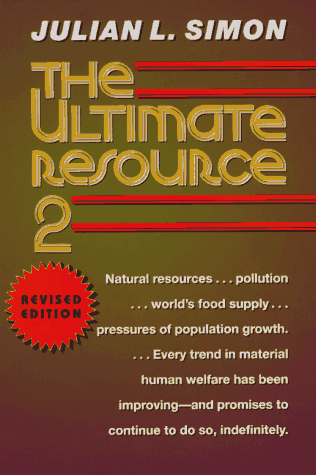
Julian Simon - The Ultimate Resource 2

Julian L. Simon – The Ultimate Resource 2 (1981/1996)

This must be how it once felt to read Darwin: If this is correct, it changes everything. Many of Simon’s conclusions are less controversial now than in 1981, but the core idea, the anti-Malthusian algorithm – it’s dynamite. Don’t experience it second-hand.

Recommended: Yes.

Brian Aldiss – Greybeard (1964)

Robbed of its ability to have children, human civilization goes mad, slowly wastes away, and dies singing “Daisy, Daisy” to itself.

Recommended: Yes.

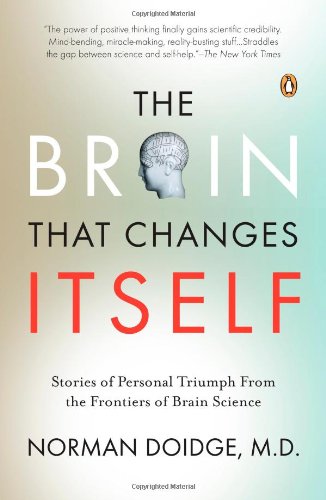
Norman Doidge - The Brain that Changes Itself

Norman Doidge – The Brain That Changes Itself (2007)

Beware/rejoice: Your brain shapes itself by what you use it for. Also: Hey, let’s rethrone Freud!

Recommended: Partly. The science is interesting. The book suffers from anecdotes and “one idea to rule them all” syndrome.

Den Norske Turistforeningens årbok 1950

Peek into the lost world of rural Norway, before it became a zombie culture.

Recommended: Oddly, yes.

Brian Aldiss - Non-Stop

Brian Aldiss – Non-Stop (1958)

The guys in WALL-E had it easy, this generation ship has descended into outright barbarism, and is ruled by a priest caste of psychoanalysts.

Recommended: Yes, though it all falls apart in the end.

Ken Follett – Fall of Giants (2010)

The 20th century told as a novel, written so that even the dimmest of potential readers won’t feel excluded.

Recommended: No.

Instead of this, read: Michael Moorcock’s Between the Wars series.

1950s movies marathon – Best of 1951

From someone who has mostly watched movies from the 1920’s, 30’s and 40’s for the last two years, it may come as a surprise to hear that I don’t particularly like old movies.  I just don’t like them less than new movies, and when you’re trying to uncover All the Good Movies Ever Made, you have to start somewhere.  But even the best of the good Golden Age Hollywood movies can be a bit unimaginative and soft around the edges.

That’s why I love the two new kinds of movies of the early 50’s: Intelligent, even angry, “message” movies, and science fiction movies.  I’ve mostly heard bad things about 1950’s science fiction, but the only thing that is cheesy about the 1951 sci-fi movies are the effects.  Otherwise they’re everything I missed in the 40’s.

So here they are, the best (or at least pretty good) movies of 1951:

Best of the best

Ace in the  Hole

Five

Hey everyone let’s invent the science fiction movie!

Five

The Day the Earth Stood Still

The Man in the White Suit

The Thing From Another World

When Worlds Collide

Aspiring towards theater

Fourteen Hours

The Scarf

Aspiring towards cinema

Ace in the  Hole

The Tall Target

Aspiring towards opera

The Tales of Hoffmann

Italian movies that don’t suck

Four Ways Out / La Citta si diffende

Satirical Japanese color movies

Carmen Comes Home

The ‘other’ bin

Desert Fox

The Lavender Hill Mob

Kranes konditori

People Will Talk

Mr Belvedere Rings the Bell

The Whip Hand

The Kaiser’s Lackey / Der Untertan

Civilization V

I’ve played every Civilization game since the first one came out in the early 90’s.  When you play a game a lot it starts to shape you.  You internalize the game model, and start applying it to other things as well.  I think the Civ games shaped how I think about long-term projects, about how to manage resources to reach long-term goals.  Ideas like that can be powerful when they’re introduced stealthily by way of having fun.

What’s new in Civilization V is that it feels more focused, more like a board game.  This is a good thing, because board game makers are good at stripping away unnecessary complexity.  Civ V is still an order of magnitude more complex than similar board games, but it feels more focused than Civ IV.  (But do remember to turn on the hex grid and the resource markers, or everything may as well run on magic.)

The largest problem with the Civ games have always been their addictiveness.  Looking up to find that it has suddenly become morning is not unheard of.  But this isn’t dangerous if you’re prepared for it.  I play only in one hour batches.  After that it stops being fun, and starts being compulsive.  A Civ game should be a garden you to tend to over a long period of time.  And then you go do something else inbetween.

Or, in Civ terms: If you dedicate all your citizens to working the Civ resource (0 food, 0 production, 0 gold, 0 science, 0 culture), your empire will decline and fall.

Et dødt kulturliv

Det som er trist med det norske  kultur- og medielivet er å se hvor mye av det som handler om kampen om å bevare økonomiske privilegier, og kvalifisere seg til offentlige støtteordninger.  Avisene kjemper for sine direkte og indirekte subsidier, (uten oss dør kulturen!)  Bokbransjen kjemper for sitt prissamarbeid, (uten oss dør kulturen!)

Og forfattere klager over at de ikke omfattes av innkjøpsordningen, (uten meg dør kulturen!)

Kan det tenkes noe mer patetisk enn en “forfatter, essayist og kritiker” som klager over at noen bøker med “høyt språklig nivå” ikke har blitt innkjøpt til norske biblioteker, hvor bøkene neppe ville blitt lest som sådan, men så fikk forfatteren iallefall litt småpenger igjen for strevet?

Gir du ut bok på norsk, skal du være veldig glad hvis du selger 1000 eksemplarer.  Gir du ut riksavis, skal du være glad om du kun mister 1000 lesere i året.

Uten offentlige støtteordninger rakner alt dette, selvsagt, men kan vi virkelig kalle dette for et kulturliv?  Er dette noe å bevare, at det skal sitte en essayist og kritiker og lese boken til en annen essayist og kritiker, og få den akseptert av noen essayister og kritikere i det offentlige, hvoretter boken i beste fall blir stående i noen bibliotekhyller en stund? Eller at en gjeng med andre essayister og kritikere skal leke at de har en vellykket avis, som både skrives og leses kun av dem selv?

Prinsipper om kultursubsidier til side: Dette kan jo ikke være en situasjon å være stolt av, kan det det?