1950s movies marathon – part 15

People Will Talk (1951, USA, Mankiewicz)

The unconventional doctor, played by an aging comic actor, doesn’t cure chronic illnesses with positive thinking, nor does he throw millennia of medicine out the window whenever he feels like it.  In fact, he’s really quite an interesting character.  So is every other person who opens their mouth in this movie.  Watched it all.

As Young As You Feel (1951, USA)

It’s fun to watch Marilyn Monroe climb up the cast list.  Here she’s number six.  Watched: 3 minutes, then fast forwarded to see Marilyn.  I still don’t quite see her appeal.  As an actor, I mean.  But she definitely has something nobody else has.  Again, I refer to her acting.

Four Ways Out / La Citta si diffende (1951, Italy, Germi)

Turns out that when you stop trying to make important movies about “real people”, the rundown apartment blocks of Italy make a pretty good backdrop for an Asphalt Jungle type post-heist thriller. Watched it all.

Distant Drums (1951, USA)

Never mind the movie, but while fast-forwarding through it I noticed a close-up shot of a man being stabbed in the stomach.  That’s new.  Step by step, filmmakers are learning that movies and violence go really well together.

Birthright (1951, USA)

Okay, some sort of boring educational movie about some family or something .. fast-forwarding .. fast-forwarding .. and, OH MY GOD, is that an actual uncensored human birth?!!  Yes.  Yes it certainly is.  Lots of it.  Watched: I don’t know.  Where was I?

1950s movies marathon – part 14

Kranes konditori (1951, Norway, Henning-Jensen)

Poverty and small-town hypocrisy keeps a single mother all tied down, stressed and unhappy.  She finds her true self by getting drunk with a contrarian Swedish sailor, and wakes up a free individual.  This isn’t subtle, but there’s a spark of something genuine and timeless here, like second-hand Ibsen.  Watched it all.  Bonus interest for appearances of Wenche Foss and Aud Schønemann.

David and Bathsheba (1951, USA)

There’s a right way and a wrong way to make Biblical epics.  The wrong way is to make it feel like the rehearsal of a school play that just happens to have access to lots of high quality costumes and scenery.  Watched: 6 minutes, then fast forwarded to see the obligatory decadent banquet scene.

Carmen Comes Home (1951, Japan, Keisuke Kinoshita)

A girl who has adopted a Western name for her career as a stripper returns to her village, where she is appreciated for her artistic renown.  After all, “Japan is very cultural”.  Watched it all.  This is the earliest Japanese color movie I’ve seen.  Also the earliest satire.  At least I think it’s satire.  Comic nuances don’t always translate well across the Japanese-Western cultural border, but I’m almost positive there is some sort of humor going on here.

Quo Vadis (1951, USA)

Rome under Nero is one big toga party, but those pesky Christians have begun to appear, and they’ll ruin everything.  And then nineteen hundred years later they’ll make a dreary movie about it.  Watched: 21 minutes, then fast-forwarded to the obligatory decadent banquet scene.

What’s a PC?

So what’s a PC any more, anyway?  I just realized that I have seven personal computers that I actively use for their own specialized tasks.

– The desktop PC, a quiet computer which runs constantly, and I mostly use for watching movies.

– The personal laptop, a tiny, slow netbook that I use for writing.

– The work laptop, a powerful machine I write code on.

– The gaming PC, which has a decent setup, but I only use rarely.

– The mobile, an HTC / Android which I use to communicate with people, (by phone if necessary).

– The mp3 player, a 160gb iPod I use clever iTunes playlists to fill.

– The tablet, an iPad, which so far seems to be good for at least three things: Reading newspapers, reading Twitter, and as an iTunes remote control.

All of them fill a niche.  I could do with fewer, but I don’t want to.  Four of them are actual PC’s, but they probably don’t all have to be.  And what I notice is that the more specialized these computers become, the less it feels like I’m using a computer.  Rather it feels like they’re part of the environment.  One might expect that having seven personal computers that you actively use would be more stressful than having one or two.  But to me it’s far less.  Every new computer seems to reduce the cognitive load.

I wonder how many more there are room for.

1950s movies marathon – part 13

The Scarf (1951, USA, Dupont)

This is what I love about the 50’s – so far.  Suddenly you’ve got low-key dramas with interesting characters who talk and act in unpredictable ways.  It’s like a new door has been opened, and a bit of honesty was let in.  Watched it all.

I Was a Communist for the FBI (1951, USA)

That commie Dad you’re so ashamed of is actually an undercover FBI agent. One day you’ll understand.  Watched: 5 minutes, then fast-forwarded to the end, where a stirring testimony for the House Un-American Activities Committee reveals those labor activists for the slimy red traitors they are.  This is followed by the undercover agent punching a commie in the face. Hell, yeah!  Er .. I mean, how uncivilized.

Strangers on a Train (1951, USA, Hitchcock)

Some nice guy’s life is made difficult by an assortment of annoying psychopaths.  Watched it before, but less so this time.  The more I see of the really good movies of this time, particularly Anthony Mann’s thrillers, the less interesting I find Hitchcock’s.   The only emotion he knows is tension.

The African Queen (1951, USA, Huston)

Humphrey Bogart and Katharine Hepburn have never looked uglier.  That’s probably intentional, but it all feels pretty awkward.  Bogart’s massive stomach rumbling scene, the ev0l Germans burning down a village for no reason.  It’s like all the effort went into actually getting a technicolor movied filmed in Africa, and everything else was secondary.  Watched: 14 minutes, then fast-forwarded to the end, where a German ship accidentally sails straight onto a stationary torpedo.  Oh come on.

Steven Levy – Hackers, Heroes of the Computer Revolution

The word “hacker” has come to have a sinister meaning, but in the alternate universe we programmers live in, hackers are the Mozarts to the regular programmers’ Salieris.  In a broader sense, a hacker is someone whose approach to understanding a complex system – not necessarily a computer – is to immerse themselves in it totally, until they reach a level of understanding where their interaction with it becomes a form of play: Inspired.  Idiosyncratic.  Mischievous.  It’s this playfulness that sets them apart from the merely competent.

Steven Levy’s Hackers chronicles the rise and fall of the first hackers.  MIT students in the 60’s, who rebelled against the IBM priesthood, and attempted to use computers, these massively expensive military and business tools, for their own personal enjoyment.  The mid-70’s Homebrew club, which attracted people so desperate for computers that they were intent to have a “personal” one even if they had to invent it themselves – people like Steve Wozniak.

The hacker culture came with its own Hacker Ethic, which believed in decentralization and a free, non-profit flow of information.  This didn’t last, and it would be up to greedy bastards like Steve Jobs and Bill Gates to realize the hacker dream of a personal computer in every home.  But, as with the ancient Greeks, so with the Hacker Ethic: Conquered, it conquered, and today lives in a weird symbiosis with the corporate world and mainstream culture.

Now, we all live partly in a hacker’s world, partly by hacker ideals.  But true hackers are still rare.

1950s movies marathon – part 12

Let’s Go Crazy (1951, UK, Cullimore)

Everything is all going to be allright now, I can feel it: Peter Sellers and Spike Milligan are here, doing the kind of short film that’s waiting for the British sketch show to be invented.  It’s not funny, but it’s got Peter Sellers!  And Spike Milligan!  Doing nonsensical sketches!  Yes, everything is going to be all right.  Watched it all.

Valgus Koordis (1951, USSR)

This movie came without subtitles, but it seems to be the Estonian version of that scene in Summer Stock where Judy Garland gets a shiny red tractor, only without all the decadent bourgeouis singing and dancing.  Watched: 2 minutes.

The Desert Fox (1951, USA, Hathaway)

I didn’t really want to watch this.  It’s a fawning biopic of Rommel, and it’s probably got all sorts of facts wrong.  He’s the one Good German, etc etc.  But I couldn’t stop, because this movie annoyingly persists in being interesting.  Watched it all.  Oh, and at some point along the way Hollywood appears to have invented the modern action movie, at least for a few minutes there in the intro.  Good for them!

Bedtime for Bonzo (1951, USA)

Life’s going downhill for Ronald Reagan, the former A-list actor who now finds himself doing one of those stupid 80’s-style comedies about a nice teacher, his chimpanzee, and the evil dean who interferes with his love life.  Watched: 10 minutes.  Once more I’m transported to that alternative reality where Reagan faded out of history at this point.

1950s movies marathon – part 11

The Lavender Hill Mob (1951, UK, Crichton)

In jolly England, crime is a game for poor, but enterprising gentlemen.  Even your local safe cracker is a decent chap, all in all, and any gentleman can become a bank robber, if they put their mind to it.  Watched it all.  Alec Guinness can add or remove 20 years with a twitch of a facial muscle.  What an actor.  Come to think of it, yes, it is a bit unfair that he will go down in movie history as “that old guy in Star Wars”.

Double Dynamite (1951, USA)

Please stop putting Marx brothers in movies now.  It’s embarassing to watch, and must have been even more embarassing for them.  Watched: 3 minutes, then fast-forwarded to see if Groucho has any funny lines.  He doesn’t.

Fourteen Hours (1951, USA, Hathaway)

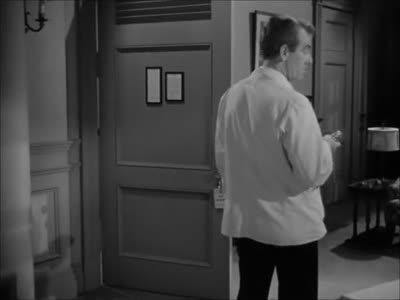
The way I do this marathon, I’m naturally biased in favor of movies with great openings.  This is one of them, (above).  The quiet streets, no words, and then, suddenly – the man on the ledger, ready to jump.  And the rest follows from there, intense and compressed like a filmed play.  Sometimes that doesn’t work, but I love it when it does.  Watched it all.

The Red Badge of Courage (1951, USA, Huston)

I don’t necessarily approve of long movies, but even I understand you can’t do an American Civil War epic in 70 minutes.  Watched: 5 minutes, then fast-forwarded to see the final battle scene, which looks amazing.

Niall Ferguson – The War of the World

When he isn’t making headlines by dabbling with astrology, Niall Ferguson is actually a really interesting historian. He’s definitely ambitious: His goal in The War of the World is to adjust the great narrative of the entire 20th century.  Instead of a story of Western triumph, it was a story of Western decline, and the driving force behind its conflicts was not ideology, but ethnic hatred in troubled empires.

He sums up these ideas in this Fora.tv video. You should watch it.

The history books I read these days are nearly always about the 20th century somehow, (because, hey, what a century), but I usually avoid World War 2.  There seems to be an army of desperate historians out there looking for new stories that haven’t been told yet, but all the stories have been told, so we end up with books about Hitler’s dog, Churchill’s cousin’s brother, and how awful it was in that one particular battle somewhere.  And they’re all about the World War 2 the readers already know, the one their grandparents told them about.

The War of the World is a fine (although speculative) antidote to all that.  Ferguson doesn’t use the word “eurocentric”, but I will.  To appreciate 20th century history you have to see all of it as a whole, not just the bits that happened near the place you were born in.  Ferguson seems on board with that, and while I’m sure his conclusions are debatable, I absolutely love his approach.

When the app store is your newsstand, you’re in competition with everyone

If the iPad successfully convinces people to start paying for digital news, on tablet devices and smart phones, that actually introduces a new challenge for the news media:

When the Apple App Store or the Android Market is your newsstand, you’re in competition with everyone.

You can no longer rely on it being harder for readers to get hold of newspapers from outside the area or country they live in.  They’re all there, right next to each other: Almost every newspaper in the world.  Local news still hold the advantage of being more relevant, and there’s still a language barrier, but for readers who are interested in non-local news, there are a lot more sources to choose from.  Good sources.  The best.

Didn’t the web already do this?  Yes and no.  The web places everyone in competition with everyone, but it never replaced the newspaper habit.  It introduced a new habit of its own, a new and more casual way of reading news.  It replaced some of the time people spent on reading newspapers, but not the habit itself, the daily ritual of “sitting down to read today’s newspapers”.  Which is what the news media now hopes to do through apps.

And if they succeed, the world’s newspaper editors had better hope they’re all making a really fine newspaper, a newspaper people genuinely want to read, and that they haven’t survived this far merely on inertia, prestige, and state subsidies.  Most of Norway’s newspapers, at least, start with a handicap in this respect.

The iPad as a news platform: First impressions

The first law of technological change is that nobody knows what is possible or profitable, so you can either get right in there and experiment, or wait a few years and emulate the winners.  Now that the first generation of newspapers and magazines for the iPad have been released, the backseat drivers are emerging, saying that it won’t work, it won’t pay, and why is everyone so obsessed with this overhyped iPad thing anyway?

Are they right?  I have no idea.  Nobody does, and it’s a bit pointless to speculate.  Media companies must choose: Experiment, or wait.  High risk, high reward, or low risk, low reward.  Whatever their choice is, it’s too soon to tell.  What matters right now is your subjective feelings as a user.

Now that I’ve tried it, I see why media companies are excited about the iPad.  I wouldn’t mind paying for news content in this form.  But I also realize that this isn’t about the iPad as a revolutionary media device.  It’s about the iPad as a wedge, that can introduce the habit of paying for digital news.  First on tablets, then on smart phones, and finally on the web itself.

Some say that they would never pay for digital news.  I think they’re lying.  Or if not, they’re morally wrong.  It offends me, this idea that good writing isn’t worth paying for.  I don’t know what will work, (and neither do you), but I root for anyone who tries. And the iPad is an interesting place to try it.