40’s movies marathon – part 74

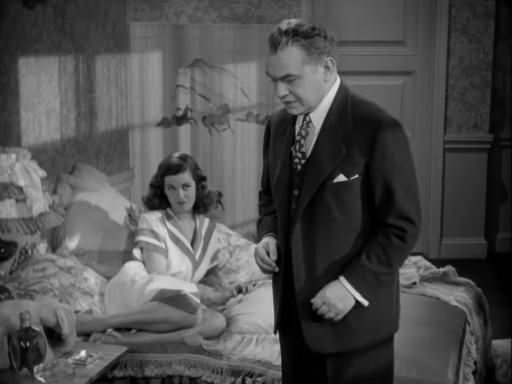
Scarlet Street (1945) - Edward G Robinson, Joan Bennett

Scarlet Street (1945, USA, Lang) – Wouldn’t it be nice if Edward G. Robinson saved a young woman on the street and it turned into a romance and an opportunity to live out all those dreams about being an artist that he buried decades ago?  Yes, it would!  But the woman he saves is Joan Bennett, who steals his money and destroys his dreams.  Watched it all.

Hotel Berlin
(1945, USA, Godfrey) – ‘Schnuppi’ and other blond Germans prepare for the end of the Reich in a hotel in Berlin.  Some of them want to escape and start the Nazi movement all over again .. IN AMERICA!!!!!  Watched: 19 minutes.
The Atom Strikes (1945)

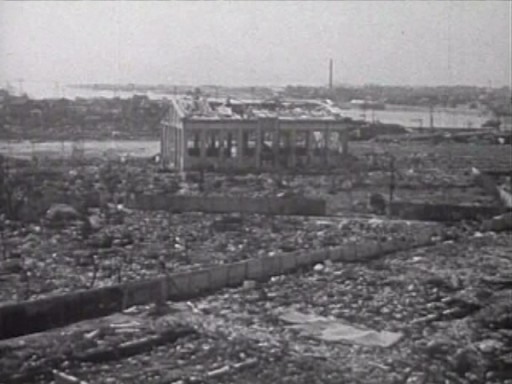
The Atom Strikes (1945, USA) – A look at the terrible structural damage caused to Hiroshima and Nagasaki.  Not so much look at the human damage.  There are hardly any humans around at all.  Watched it all.  You know, they shouldn’t have done that.  It wasn’t right.  They could have tried some other way first to demonstrate the power of their fully operational battle station.

Back to Bataan (1945, USA, Dmytryk) – Oh, enough with the war movies now.  Watched: 7 minutes.
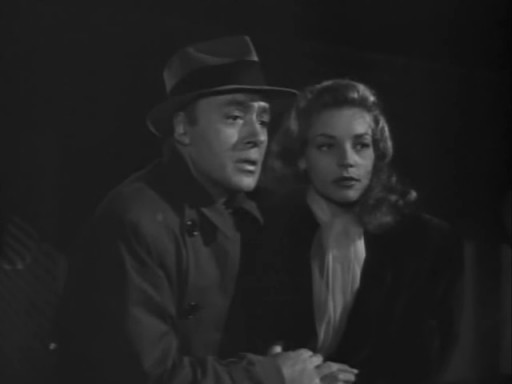
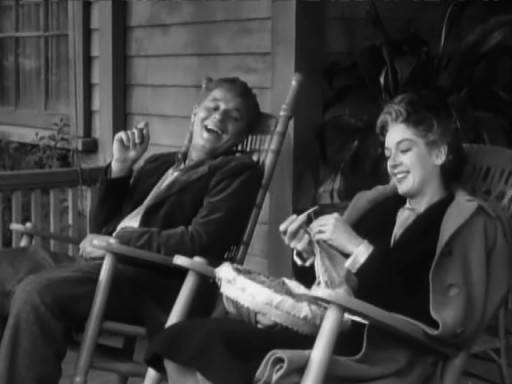
Confidential Agent (1945) - Charles Boyer, Lauren Bacall

Confidential Agent (1945, USA, Shumlin) – Charles Boyer comes out of the Spanish civil war with the idea that he’s being pursued by fascist agents.  Lauren Bacall finds this highly amusing, and laughs mockingly all throughout their thrilling fascist agent-related adventures.  Watched it all.

Kitty (1945, USA, Leisen) – Poor thief Paulette Goddard is dressed up as a lady, in order to say something or other about Class Boundaries.  Watched: 15 minutes.
The magic of privatisation is to make activities that were not bankruptable, bankruptable

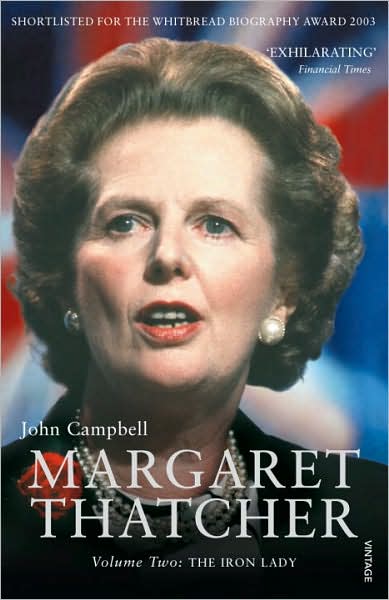
John Campbell - Margaret Thatcher - Volume Two: The Iron Lady

John Campbell continues his balanced approach to Margaret Thatcher’s life in the second volume of her biography, condeming and praising her policies, accusing and defending her character, in a way that is subjective, but never partisan.

Thatcher was a conviction politician, and it’s her convictions that, to me at least, come across as her best quality: Her belief in free markets and individual freedom, her vision of an enterprising culture, where reliance on government services is an exception, not the norm.

From these convictions, she achieved at least two major practical achievements: Taming the unions, and privatizing major industries.  The British unions of thirty years ago needed taming.  They were anti-democratic blackmail operations, run by fanatics. And the state-owned industries of the time needed selling.

Campbell does a good job of capturing Thatcher’s downfall.  Her stubborn and arrogant style served her well in the early years, but it eventually made her a bad cabinet leader, who bullied her colleagues, and ended up isolated and friendless.

But neither her Tory nor her Labor successors reversed her policies. Thatcher’s electoral success shifted the centre of the political axis, forcing Labor to abandon socialism.  This has been a global trend, culminating in the fall of Communism, and if Thatcher does not deserve the full credit, at least she was one of the most visible champions of it.

As a politician she had flaws and strengths, successes and failures.  But as a symbol, a symbol of a principled approach to personal freedom, I believe she is mostly to be praised.

40’s movies marathon – part 73

Captain Kidd (1945) - Charles Laughton

Captain Kidd (1945, USA, Lee) – Charles Laughton commands a crew of pardoned pirates through the dangerous waters of the Madagascar.  There’s a mad gleam in his eyes that is especially unsettling because it’s not over the top, movie pirate style.  Unfortunately Laughton is the only good thing about this movie, and the end is disappointingly ordinary, with a lost heir, a silly romance, and a happy ending.  Kidd is so deliciously evil that he deserves to win, goddammit!  Watched it all.

Her Highness and the Bellboy (1945, USA, Thorpe) – An honest bellboy with an honest girlfriend tries to make an honest living in the big city, along with his retarded thug friend.  But temptations lurk everywhere.  Watched: 13 minutes.

A Walk in the Sun (1945)

A Walk in the Sun (1945, USA, Milestone) – I’m getting pretty tired of war movies, but this is one of the best ones yet, maybe even better than The Story of G. I. Joe.  Watched it all.  I have a theory about World War II movies: Despite the lack of blood, swearing, etc., they were at their most realistic when they were made by people who had actually been there.  Today you expect a WW2 movie to be epic, because Hitler was teh evil and all that.  There’s nothing epic about these contemporary movies.

Tonight and Every Night (1945, USA, Saville) – A music hall stays open every night during the London Blitz.  And no wonder, for what damage can bombs possibly do against such an abundance of vibrant technicolors and short skirts?  Watched: 13 minutes.

We are all Thatcherites now

1997 can be seen as Mrs Thatcher’s greatest victory, which set the seal on her transformation of British politics.  She had set out, on becoming leader in 1975, to abolish socialism and twenty years later she had succeeded beyond her wildest dreams.  By her repeated electoral success, by her neutering of the trade unions, by her privatisation of most of the public sector and the introduction of market forces into almost every area of national life, she – and her successor – had not only reversed the tide of increasing collectivism which had flowed from 1945 to 1979, but had rewritten the whole agenda of politics, forcing the Labour party gradually and reluctantly to accept practically the entire Thatcherite programme – at least the means, if not in its heart the ends – in order to make itself electable.  Neil Kinnock and after him John Smith took the party a long way down this road, without altogether abandoning traditional Labour values. The election of Tony Blair to succeed Smith in 1994 completed the process.  Blair was a perfectly post-Thatcherite politician: an ambitious pragmatist with a smile of dazzling sincerity, but no convictions beyond a desire to rid Labour of its outdated ideological baggage.  The rebranding of the party as ‘New Labour’ was the final acknowledgement of Mrs Thatcher’s victory. ‘We are all Thatcherites now,’ Peter Mandelson acknowledged.  She had not only banished socialism, in any serious meaning of the word, from political debate; she had effectively abolished the old Labour party.

– John Campbell, Margaret Thatcher, Volume Two

40’s movies marathon – part 72

Le Retour (1945)

Le Retour (1945, France/USA, Cartier-Bresson) – The prisoners are coming home.  Millions of prisoners, by foot, by train, and by plane.  When some of them look into the camera, you see a small reflection of Hell in their eyes.  Others look so ordinary, like it was all a horrible misunderstanding.  I wonder what became of them.  Watched it all.

My Name is Julia Ross (1945, USA, Lewis) – A girl is kidnapped by evil Cornwallians, for use in a plot that is so complicated that it might take the whole movie to resolve.  Watched: 20 minutes.

The Corn is Green (1945, USA, Rapper) – Bette Davis moves to Hollywood Wales, and upsets the local Hollywood Welshmen.  Watched: 8 minutes.

Betrayal From the East (1945, USA, Berke) – The Japanese-American community is full of insidious fifth columnists.  And they all look alike, so I guess we should, I don’t know, lock them all up or something.  Watched: 14 minutes.

Objective Burma! (1945, USA, Walsh) – On principle, I never watch Errol Flynn movies.  The principle is that I hates him I hates him I hates him.  Watched: 9 seconds.

Brewster’s Millions (1945, USA, Dwan) – A soldier returns home to find that he has inherited a fortune.  What an incredible stroke of luck!  And there’s a Moral too!  Watched: 18 minutes.

Flame of Barbary Coast (1945, USA, Kane) – John Wayne wanders into the fun-loving world of gambling.  They let him win lots of money just because they like him, and he’ll probably get the girl too.  Watched: 20 minutes.

There were bound to be tears in the end

The sad truth is that Mrs Thatcher, behind the hugely successful front which enabled her to dominate her generation, was a driven, insecure and rather lonely woman who lived for her work and would be lost when her astonishing career ended, as one day it eventually must.  In her early days her phenomenal energy, her single-mindedness, her inability to relax, to admit any weakness or trust anyone to do anything better than she could do it herself, were all strengths and part of the reason for her success; but the longer she went on, the more these strengths turned to weaknesses – a loss of perspective, growing self-righteousness, a tendency to believe her own myth, an inability to delegate or trust her colleagues at all, so that instead of leading a team and preparing for an eventual handover to a successor, the Government became ever more centred on herself.  There were bound to be tears in the end, and there were.

– John Campbell, Margaret Thatcher, Volume Two

40’s movies marathon – part 71

Roughly Speaking (1945) - Rosalind Russell, Jack Carson

Roughly Speaking (1945, USA, Curtiz) – Rosalind Russell is an ambitious proto-feminist who wants it all in early 20th century America: A personality of her own, a husband, children, and a career.  And she more or less gets it too.  She has her fair share of poor luck, but she always makes the best of it, always ready to start over again in a new direction.  She’s a stoic feminist hero, (the best kind).  Watched it all.

Johnny Angel (1945, USA, Marin) – A captain loses his father at sea under mysterious circumstances.  He goes looking for answers (I’m fairly sure it’s answers) among local prostitutes.  Watched it all.

Brief Encounter (1945, USA, Lean) – A brainy married couple are unhappy and listen to Rachmaninoff, while having internal monologues about how depressed they are.  Well, maybe they shouldn’t be listening to Rachmaninoff all the time then.  Watched: 16 minutes.  IMDB says this is the 207th best movie of all time, which means I’m an idiot, or possibly everyone else is.

Murder, He Says (1945, USA, Marshall) – The local sheriff claims he’s fearless, but he’s actually a coward.  See, that’s a whatchamacallit, a joke.  And there are more!  Watched: 3 minutes.

The Dolly Sisters (1945, USA, Cummings) – Life was jolly in ye jolly old times.  Watched: 10 minutes.

Anchors Aweigh (1945, USA, Sidney) – On leave from the Navy, Gene Kelly is cockblocked by Frank Sinatra.  I can never get over how different young Sinatra looks from how his voice sounds.  At 30, he still looks like an awkward teenage boy.  Watched: 39 minutes.

Allies Open Final Drive On Germany (1945)

Things to watch for:

1) The four soldiers with top hats. For a few seconds, it feels like you’re right there.

2) The cheerful tone of the “A city dies!” segment, in which we see the city of Pforzheim – along with 17 000 civilians –  “being literally wiped out before your eyes.  Explosions and fires are sucking the oxygen out of the air.  Nothing can live in this inferno!”

3) The sudden switch from violence for real to violence for fun in the last segment.