40’s movies marathon – part 78

A Matter of Life and Death (1946)

A Matter of Life and Death (1946, UK, Powell & Pressburger) – David Niven bails from his plane without a parachute, and survives by a miracle.  From this point on, he’s either being visited by agents of Heaven, who accuse him of having cheated death, or he’s a confused veteran who’s cracking up.  Watched it all.  Whatever you do, for Heaven’s sake watch the opening scene:

Duel in the Sun (1946, USA, Vidor) – One sure way for a movie to piss me off is to open with a 9 minute musical prelude, followed by a 2 minute musical overture.  They’re the same thing, you pretentious assholes.  Watched: 12 minutes, only a minute into the titles, so I guess I’ll never know what this movie was actually about.

Suspense (1946) - Barry Sullivan

Suspense (1946, USA, Tuttle) – Some guy is hired right off the street, and quickly climbs his way to the top of the dangerous world of figure skating.  It’s Noir on Ice, (literally, in one scene), and not only does it work very well, it makes figure skating seem cool and daring.  Watched it all.

The DARK Corner (1946, USA, Hathaway) – Who is Bradford Galt?  He’s a private investigator, with a standard P. I. office, a standard secretary, and a standard William Bendix on his tail.  Watched: 6 minutes.

Inside Job (1946, USA, Yarbrough) – Say, did they make anything other than noir in 1946, or are the dice I use to select these movies loaded?  Watched: 4 minutes.

Prostitution, like any industry, is vulnerable to competition

Steven D. Levitt, Stephen J. Dubner - Superfreakonomics

Sometimes Steven D. Levitt and Stephen J. Dubner, authors of Freakonomics and now Superfreakonomics, seem to have access to little known data that they are particularly qualified to interpret.  Other times they seem like Malcolm Gladwell-style writers who popularize interesting theories in a cheerfully superficial way.

They’re in the first mode, (I think), when they explain the shifting economic realities of prostitution, and in the second when they hold up geoengineering as the solution to climate change.

I like Levitt & Dubner in the first mode, not so sure about the second.  There was a big debate a few months ago about their climate change chapter.  Here’s some of it.  I don’t want to conclude about who’s more in the right, (I trust climate science, but not all its fervent supporters, and I’m not sure which is which here), but it seems to me that their attitude is misplaced.  “Why, the solution is obvious – we could just ..”  Geoengineering may be a nice approach, but it’s not obvious.

If Levitt & Dubner have an agenda it isn’t “climate change denial”, but a faith in cheap solutions over expensive ones, in clever individuals and companies over governments.  This is a theme throughout the book, such as in their chapter on seat belts.

What they’re really offering here is a lesson in economic insights such as “incentives matter” and “solutions have unintended consequences”, for people who didn’t know they were interested in economics.  That I like, and there’s more in their blog.

40’s movies marathon – part 77

House of Horrors (1946) - Robert Lowery, Rondo Hatton

House of Horrors (1946, USA, Yarbrough) – An artist finds inspiration in the deformed face of a killer, and uses him to act out his rage against the critics who mock him.  Beauty is virtue: The bad guy looks creepy and makes grotesque statues.  The good guy is good looking and paints pretty pictures of pretty pin-up girls.  I, for one, cheer for the bad guy.  Watched it all.

The Hoodlum Saint (1946, USA, Taurog) – William Powell returns from the war, (the previous one), and finds he’s got no job or money.  But he has friends, and a wise neighbourhood priest, so he’ll be allright.  Watched: 11 minutes.

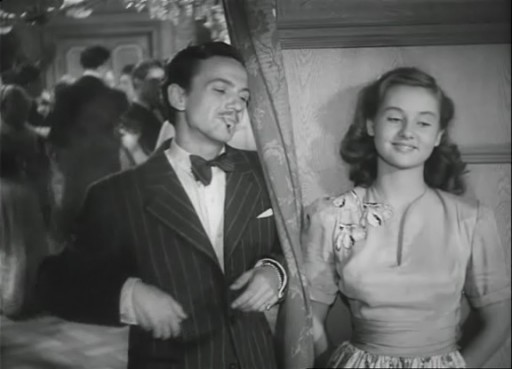
Kris (1946) - Inga Landgre, Stig Olin

Kris (1946, Sweden, Bergman) – A girl who’s been adopted by a respectable small town family is visited by her fun-loving biological mother and a no-good dandy, who teach her to boogie woogie.  It’s a clash of small-town and big-town values, with a little of good and bad in both, but the small-town values come out ahead.  Watched it all.

California (1946, USA, Farrow) – The scourge of state-named movies continues.  There’s been maybe ten so far, so I guess there are fourty left.  This one shows how California was founded by Barbara Stanwyck, a prostitute with a heart of gold.  Watched: 12 minutes.

Beauty and the Beast (1946, France, Cocteau) – The French insist on making these odd, unappealing dramedies.  There must be a reason for this.  Watched: 11 minutes.  IMDB reviewers argue that “Cocteau’s attempt to socialize his female viewers and alleviate their fear of sex is clear through textual analysis”.

40’s movies marathon – best of 1945

The nice thing about watching old movies year by year is that, having now watched early 40’s war-related movies since, oh, April last year, (I was slower back then), I enter 1946 tired of all things war-related, just like the movie audiences of the time, (except for the trauma, missing limbs and lost friends etc.)

That said, I’ve been astounded by the quality of contemporary World War II movies.  The British movies surprised me the most.  Hollywood is consistently good at this point, but the British movies are the most creative and ambitious.  Hollywood films war.  Britain films a society at war, changing under the impact.

Here are my favorites from 1945:

Thugs and women of negotiable virtue

Scarlet Street

Conflict

Dillinger

Confidential Agent

Cornered

The yearly Hitchcock

Spellbound

War, huh, what it is good for

A Walk in the Sun

The Story of G. I. Joe

The True Glory

To the Shores of Iwo Jima

Perfect Strangers

A Bell for Adano

The Way to the Stars

Various islanders

‘I Know Where I’m Going!’

Caesar and Cleopatra

The jokes, they are funny

A Royal Scandal

Zombies on Broadway

Wonder Man

Hello kitty

The Men Who Tread on the Tiger’s Tail

The Famous Sword Bijomaru

That puppet still freaks me out

Dead of Night

Isle of the Dead

Dramatic performances

The Picture of Dorian Gray

The Lost Weekend

Roughly Speaking

The horror did not end

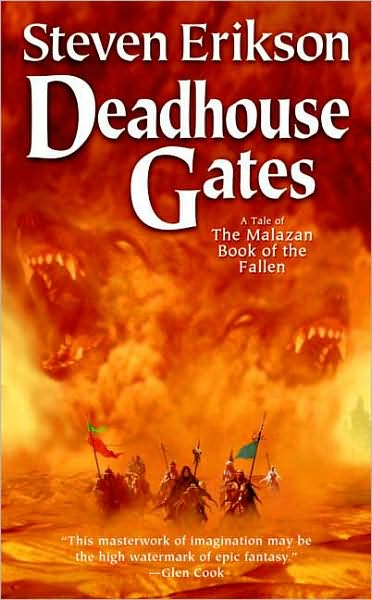
Steven Erikson - Deadhouse Gates (Malazan Book of the Fallen)

Life in general continues to suck in Deadhouse Gates, Steven Erikson’s second Malazan Book of the Fallen.  As a civilian living in or nearby the Malazan Empire, caught between forces whose ambitions leave no room for pity, you can expect torture, starvation, rape, slavery, crucifixion and death.  It has always been that way, and always will.

As a protagonist of Erikson’s novels, you can, in addition to all of the above, expect horrors on a larger and more metaphysical scale: Possession and/or being eaten alive by spirits, being made the unwitting puppet of dark gods, and various advanced forms of suffering available on the higher planes of reality you may stumble into.

Bleak, then.  Yes.  There are no particularly good sides here, just victims and perpetrators, and the story does not so much climax as let the threads converge and fade away, leaving the world better only in some abstract realpolitikal sense.  Evil, here, is not imposed by outside supernatural forces.  It springs naturally from human nature.  The supernatural merely extends this evil to a higher plane.  Even the mostly sympathetic protagonists play the game of destruction like everyone else, for their own understandable but tragic reasons.

If the bleakness doesn’t grind you down, you’ll find this a perfect novel.  Remarkably, with so many plot lines, the end is particularly good, and, since Erikson’s novels are mostly self-contained, you can read Deadhouse Gates by itself.

I wasn’t sure after Gardens of the Moon if I’d read more Steven Erikson.  Now I am.

40’s movies marathon – part 76

Somewhere in the Night (1946) - John Hodiak

Somewhere in the Night (1946, USA, Mankiewicz) – A soldier wakes up after the war with amnesia, and goes looking for his old self.  Seems nobody liked his old self much, and the search takes him through the usual web of thugs and shady women in the noir underworld.  Watched it all.

Jungle Captive (1945, USA, Young) – A man who looks so much like a thug that it’s a wonder he’s allowed to walk about freely steals the body of the Ape Woman, (who must have been killed in some earlier monster movie), and plans to ressurect her with the Power of Electricity.  Watched: 13 minutes.

Ziegfeld Follies (1945, USA) – I have high hopes for you, post-war technicolor musicals.  This isn’t a good start.  Watched: 15 minutes.

A Thousand and One Nights
(1945, USA, Green) – Another failed attempt to walk in the footprints of The Thief of Bagdad.  This one is unusually bad, some sort of parody.  Watched: 7 minutes.  IMDB says it contains an early use of “groovy” as a slang term.  Groovy.

Love Letters (1945, USA, Dieterle) – A love story by Ayn Rand.  No really.  Watched: 9 minutes.

Mom and Dad (1945, USA, Beaudine) – Teenagers all across the nation are getting into all sorts of trouble because their parents never taught them about Hygiene, Social Diseases and the Facts of Life.  But before we get into any of that: hey audience, let’s sing the national anthem!  Watched: 11 minutes. The story behind the movie is a lot more interesting: It was the original exploitation blockbuster.

Ny Tid, nr 6 2010

Ny Tid vil ha meg som leser, og har sendt et prøveeksemplar.  Jeg er mer disponert for å lese et SV-magasin enn en skulle tro, så jeg gir det en sjanse.  I nummeret finner jeg:

– Dag Herbjørnsrud kritiserer norsk våpeneksport.  Han spør om dette egentlig er noe vi som land ønsker å drive med.  Godt spørsmål fra en god skribent.  I en annen artikkel går det fram at det spesielt er eksporten til USA som provoserer.  Er dette virkelig det verste aspektet ved norsk våpeneksport?

– Kjønnsforsker Jørgen Lorentzen advarer mot leketøysindustriens bruk av fargene rosa og blå, som dytter barn inn i kjønnsroller som til sist fører til voldtekt.  Han foreslår at menn bør gråte mer.  Herregud, SV-folk, sitter dere fast der ennå?

– Hovedsaken er at Avatar inspirerer verdens urfolk, og er et brudd med Cameron’s pro-imperialistiske 80-tallsfilmer som Aliens.  Jeg har ikke sett filmen, men dette er flau analyse, litt sånn “jøss det er en fantasiverden, men så er det allikevel paralleler til amerikansk imperialisme!  Er det mulig!”  Dette er ikke første gang noen bruker science fiction og fantasy til å frembringe et budskap, og jeg tviler på at en Oscar-rettet effektfilm når opp mot de beste av forgjengerne.  Tror ikke det var hensikten heller.

– Utenrikssakene og de utenlandske kronikkene er interessante.  Jeg liker når venstresiden forsøker å få frem glemte perspektiver og alternative vinklinger. Jeg tilgir dem at resultatet ikke alltid blir så bra, forsøket er verdifullt.

Det blir ikke Ny Tid-abonnent av meg. Men det var morsomt å se hva de driver med.

40’s movies marathon – part 75

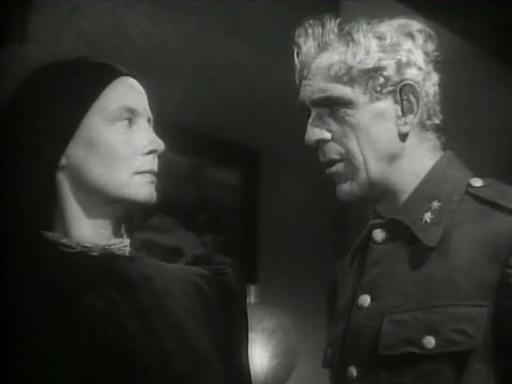
Isle of The Dead (1945) - Boris Karloff, Helen Thimig

Isle of the Dead (1945, USA, Robson) – Quarantined on a cemetary island during an outbreak of plague, Boris Karloff and others, one of whom may be possessed by an evil spirit, sit down and wait to die.  Watched it all.  Another genuinely good 1945 horror movie, this time of the Poeish persuasion.  It’s almost as if something happened that year that made people more appreciative of the horrible and the macabre.

Dick Tracy
(1945, USA, Berke) – Bad comic book movies have a long tradition.  But at least nowadays you can expect them to be bad in an inventively annoying way.  Watched: 8 minutes.

West of the Pecos (1945, USA, Killy) – A rich eastern family goes to Texas to get some fresh air and physical exercise, and meets bandits etc.  I think this is one of those westerns they show on the TV in the background in other movies.  Watched: 7 minutes.

Wonder Man (1945, USA, Humberstone) – Danne Kaye is being very silly, in color.  Even death can’t stop his antics.  Watched it all.  In the clip above he’s trying to tell the district attorney about a murder by, er, infiltrating an opera performance.

Our Vines Have Tender Grapes (1945, USA, Rowland) – Life in a Norwegian farming community in Wisconsin, where some people are good, and some bad, but mostly they’re good.  Watched: 23 minutes.

Blithe Spirit (1945, UK, Lean) – An ironically detached couple gets visited by the ghost of the husband’s first wife, and go through the usual ghost farce stuff.  Watched: 28 minutes.

To the Shores of Iwo Jima (1945)

!

I know it doesn’t seem like it from what I’ve been posting for the last couple of months, but I’m not particularly interested in the Second World War.  I don’t normally watch WWII battle documentaries.  I don’t read history books that search desperately for yet another angle from which to see the same old gallery of characters.

With documentaries like this, it’s more a matter of not being able to look away.