..I asked these questions in the most friendly and casual tone of voice I could muster

“Bush killed all those politicians because he doesn’t want peace in Lebanon.”

“Why wouldn’t Bush want peace in Lebanon?” I said.

“I don’t know!”

“Americans don’t want war in Lebanon,” I said. “It would not serve our interests or yours. Do you think Americans want chaos in Lebanon just for the heck of it?”

“We don’t hate the American people, only the government.”

“Okay,” I said. “So why then does [Hezbollah leader] Hassan Nasrallah repeatedly say ‘Death to America’?” I asked these questions in the most friendly and casual tone of voice I could muster.

“He only means death to the American government.”

“Why doesn’t he make that clear then?” I said.

“He does!”

“No, he doesn’t,” I said. “He says ‘Death to America’. What would you think if George W. Bush gave speeches where he screamed ‘Death to Lebanon’? Come on, guys. Be honest with me. I want to know what you really think.”

“I want to go to America,” the leader kid said. “I love America and I want to live in America. America is rich and free. I want to be rich and free, too.”

– Michael J. Totten, The Road to Fatima Gate (2011)

..the powerful tripping along, blinded by their own mythology

I know everything I am supposed to know. The facts that shaped the biographies of the Middle East. I see all of it in one glance, how the borders were drawn, religion swept over deserts and through empires, colonialism came and went and came again. I’ve read the books and considered the arguments. I signed up for the listservs of professors and writers who argue over Islam’s perpetual promises and America’s eternal interests. Everybody lying; everybody failing a little, then failing some more. The powerful tripping along, blinded by their own mythology, led astray by their morals. I can see all of it. I am bogged down in facts. But here I stand among the mad and maybe that’s all it’s ever been. The Middle East goes crazy and we go along with it. So many of my generation have trooped here for these latest wars – the soldiers, the sailors, the UN workers, the State Department enfant terribles, Mad Max contractors with guns strapped to beefy thighs, the writers and volunteers and freelancers and adventure-hungry travelers. We chased it all down into the Middle East and came up dry, coughing on other people’s blood.

And now, in the depths of this war, I believe that nobody will ever see this, that Israel will never really look, and America will never really look, either. This is real to nobody. This would never be real to me if I were not here.

– Megan K. Stack, Every Man in this Village is a Liar (2010)

..how those little battles bit at you like acid

Saudi Arabia stuck to me, followed me home and shadowed me through my days, tainting the way I perceived men and women everywhere. Back home in Cairo, the cacophony of whistles and lewd coos on the streets sent me into blind rage. I slammed doors in the faces of delivery men; cursed at Egyptian soldiers in a language they didn’t speak; kept a resentful mental tally of the Western men, especially reporters, who seemed to condone, even relish, the marginalization of women in the Arab world. [..]

People asked, always: What’s it like, being a woman [in Saudi Arabia]?

You are supposed to say that you were privileged, because you had a pass to the secret world of local sisterhood, to a place where faces showed and words were honest. You are supposed to say, in an almost mystical voice, “I could write about the women“.  [..] And then, too, the truth is not really easy to admit or articulate. You can’t admit how dirty it made you feel, the thousand ways you were slighted and how flimsy your self-assurance turned out to be, how those little battles bit at you like acid. Men who refused to shake your hand; squatting on the floors with men who refused to look at your face because you brimmed with sin, not one glance in an hour-long interview; the sneering underfed soldiers who hissed and talked about your ass when you walked past.

– Megan K. Stack, Every Man in this Village is a Liar (2010)

1950s movies marathon – part 56

Davy Crockett (1954, USA)

Davy, Daaaavy Crockett!  Was this the first good TV series ever made? It’s a silly children’s adventure story, but Disney Corp are great at silly children’s adventure stories, and, by 1954 production standards, this is HBO. Watched: 1 episode. This show launched a Crockett craze that reached Norway in the form of Danish author Karen Brunés’ books under the pseudonym Tom Hill, which I devoured in a reprint 30 years later. And here I am back at the beginning. Round, like a circle in a spiral / Like a wheel within a wheel / Never ending or beginning / On an ever spinning wheel.

Sansho the Bailiff (1954, Japan, Mizoguchi)

Until Japan discovered their sense of fun, (whenever that was, Godzilla?), there was only Kurosawa, and lots and lots of dull, serious historical dramas. This falls in the latter category.  Watched: 8 minutes.

Karius og Baktus (1954, Norway, Caprino)

Don’t brush your teeth, or you’ll kill the nice gay couple who lives in your mouth. Watched it all.

Un americano a Roma / An American in Rome (1954, Italy)

The young Italians have gone crazy over American culture.  They eat American, speak American, think American, sing American, dress American.  It’s so funny!  Although, if you ask me, it’s better than being, you know, fascists.  Watched: 17 minutes.

.. the fear that flashes on their faces

People who live in a dictatorship will tell you the most with awkward silences, the fear that flashes on their faces, and the implausible exclamations of rote enthusiasm. It’s what they don’t say that counts. You have to consider the negative space, to trace the air that surrounds the form to get an idea of its shape, because nobody will dare to articulate the things itself. If you accumulate everything that is unmentionable, feared, stamped out, then you have an idea of just how much terror people have swallowed over the years. You begin to grade the repression on a spectrum. Egyptian politics have been languishing in a torture cell for decades, for example, but people on the street still gripe about the government and roll their eyes at the president.

Not in Libya. The people I met in Libya were locked in the basement of an asylum. Social interaction was all nervous smiles, evasive answers, and cups of tea. Nobody wanted to talk about the Leader.

– Megan K. Stack, Every Man in this Village is a Liar (2010)

.. it matters, what you do at war

Here is the truth: It matters, what you do at war. It matters more than you ever want to know. Because countries, like people, have collective consciences and memories and souls, and the violence we deliver in the name of our nation is pooled like sickly tar at the bottom of who we are. The soldiers who don’t die for us come home again. They bring with them the killers they became on our national behalf, and sit with their polluted memories and broken emotions in our homes and schools and temples. We may wish it were not so, but actions amounts to identity. We become what we do. You can tell yourself all the stories you want, but you can’t leave your actions over there. You can’t build a wall and expect to live on the other side of memory. All of that poison seeps back into our soil.

– Megan K. Stack, Every Man in this Village is a Liar (2010)

Terroren påvirker oss

Jeg spør hos Minerva om vi burde la spektakulære voldshandlinger påvirke oss så mye som de gjør:

Jeg finner det dypt urettferdig at enkeltmennesker kan skrive seg inn i historiebøkene ved å gjennomføre spektakulære voldshandlinger, at de kun ved å drepe kan dytte samfunnet i nye retninger. Jeg protesterer.

Vi burde ikke la det skje. Vi burde være så sikre på hvem vi er og hvor vi vil hen at slike hendelser treffer oss som en stein treffer vannet, og drukner i basisfaktorer.

Les resten hos Minerva.

Book roundup: David Runciman, Øystein Sørensen, Joe Scalzi

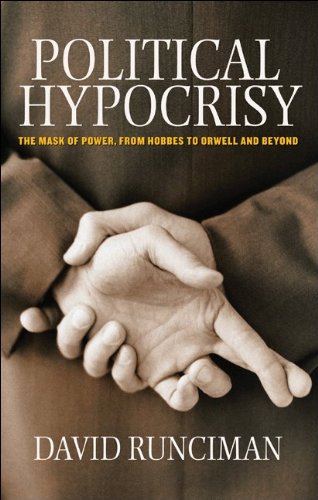
David Runciman - Political Hypocrisy

David Runciman – Political Hypocrisy (2008)

Hypocrisy, or mask-wearing, comes in many shades, and not only can some of them, (such as politeness and pseudonymity), be beneficial to society, anti-hypocrisy can do more harm than good. Honest anti-hypocrites can be dangerously ignorant about the nature of the game they want to “clean up”, and dishonest anti-hypocrites represent an even deeper level of hypocrisy than the form they attack. In politics, you’re better off with a competent and well-meaning hypocrite than with someone who gives the appearance of perfect integrity. Even democracy itself is essentially the idea of humanizing power by dressing it up in masks.

Recommended: Strongly, but not for everyone.  Read it if you like Orwell’s writings on language and thought, (which are referenced in the most interesting chapter of the book). Longer summary of this book coming up.

Øystein Sørensen – Drømmen om det fullkomne samfunn (2010)

Communism, fascism, nazism and islamism are four variations over the same theme of totalitarian utopianism.

Read: 45 pages.

Recommended: Only if this similarity is somehow news to you, and not really even then. This is an introductory book, written in a bored academic style.

Joe Scalzi – Zoe’s Tale (2008)

It’s time to have the “it’s not you, it’s me” talk with Joe Scalzi. I’m sure this is as good as his previous yarns, but I can’t be bothered to read it. Farewell, let’s be friends, and we’ll always have Frankfurt etc etc.

Read: 60 pages.

Recommended: Possibly. Lots of people like it. Good for them!

1950s movies marathon – part 55

Creature from the Black Lagoon (1954, USA)

Man is not alone: Creatures from the dawn of time lurk in the lonely corners of the world, from whence they emerge to fondle our women, murder our native servants, .. and teach us valuable moral lessons about anti-speciesism?!  Watched it all before, and again now.  Earlier generations must has seen a Freudian message here.  Today, it seems more like political commentary.

Tobor the Great (1954, USA)

The Communist Party, for one, would like to turn the giant space robot into our new overlord.  This shouldn’t be too difficult, because the senile professor who built it gave it ESP abilities and a sense of self preservation. Watched: 32 minutes.  I like the intro music.

The Black Widow (1954, USA)

This movie wants to be All About Eve, and then it wants to be Hitchcock, and it’s neither.  Watched it all, but I’m not sure why.  I guess I haven’t filled my quota for stories about society people with claws.

Jail Bait (1954, USA, Wood)

“Jail bait” meant something less interesting in 1954: Anything in general that might land you in jail.  Watched: 11 minutes. Even Ed Wood made movies that were so bad that they were not any fun at all, and this is one of them.  The only thing that stands out as entertainingly bad is the guitar soundtrack, which was inspired by the zither music in The Third Man, but instead of building suspense it grinds you down like Chinese water torture.

..det dreier seg om amerikanskhet, bestialitet og heslighet

En gang vil en av guttene i klassen vise Bjørneboe noe i et Donald-blad, men slike blader er strengt forbudt, og i klassens påsyn kaster læreren bladet i ovnen. Gutten føler seg krenket og ydmyket. Ofte i denne perioden uttaler Bjørneboe seg sterkt om denne nye sjangerens korrumperende makt. Det dreier seg om amerikanskhet, bestialitet og heslighet, men det verste er likevel at seriene virker passiviserende. “Vår materialistiske tid frembringer bare få gode leker,” hadde Steiner slått fast allerede ved århundrets begynnelse.

Bjørneboes synspunkter på tegneserier, radio og film er likevel ikke ualminnelige. De representerer kulturelitens distansering fra den vulgære massen, og en teknologiskeptisk reaksjon på hva de oppfatter som en misforstått demokratisering av kulturen. Kulturen er noe høyere, vanskeligere tilgjengelig og kvalitativt bedre enn den lettfordøyelige lektyren som nå blir servert folket.

– Tore Rem, Sin egen herre, En biografi om Jens Bjørneboe (2009)