1950s movies marathon – part 54

Father Brown (1954, UK)

I’ve never read the Father Brown detective stories, so I don’t know if Alec Guinness is a good match, but his power to breathe individuality into his characters is such that, when, after this delightful introduction, I inevitably do move on to the books, I will have no choice but to picture Brown as Guinness.  Watched it all.

The Atomic Kid (1954, USA)

Mickey Rooney survives a nuclear blast, and gets the superpower of speaking at chipmunk speed.  Watched: 3 minutes.  Here’s a thing you don’t want to see at the beginning of a movie: Produced by [Fading star], Introducing [Fading star’s wife].

Rear Window (1954, USA, Hitchcock)

I have three problems with this movie: The director is too big for himself, the movie is too big for itself, and, its fans are too big for themselves.  You have barely to mention the name of it to receive a lecture on the role of voyeurism in Hitchcock’s movies and a “did you know he has a cameo in all his movies?”  Hitchcock fans are the worst, along with Kurosawa and Kubrick fans.  But okay, I admit it, it’s a damn good movie.  Watched it all before, and again now.

The Silver Chalice (1954, USA)

Introducing Paul Newman, and, if you pay attention, Lorne Green!  Watched: 7 minutes.  It’s one of those silly  movies where Romans agonize about becoming Christians, but look at this.  Is it the strangest scene you’ve ever seen in a Bible epic or what?!

..because they are at least pretending to be good

The most common way of thinking about hypocrisy is as a vice – that is, to take it for granted that it is always a bad thing to conceal whom one really is. But another way of thinking about hypocrisy is as a coping mechanism for the problem of vice itself, in which case it may be that hypocrisy is not a vice at all. One way to cope with vice is to seek to conceal it, or to dress it up as something it is not. This sort of act – the passing off of vice as virtue – makes it possible to consider hypocrisy in two very different lights. From one perspective the act of concealment makes things worse – it simply piles vice on top of vice, which is why hypocrites are often seen as wickeder than people who are simply, and openly, bad. But from another perspective the concealment turns out to be a form of amelioration – it is, in Rouchefoucald’s timeless phrase, “the tribute that vice pays to virtue.” Hypocrites who pretend to be better than they really are could also be said to be better than they might be, because they are at least pretending to be good.

– David Runciman, Political Hypocrisy (2008)

1950s movies marathon – part 53

Sabrina (1954, USA, Wilder)

Audrey Hepburn moves upward, into Society in the movie, and into Hollywood in reality.  The laws of stardom require the rising Hepburn to meet the falling Bogart, which should strain any society’s age disparity standard, but oh who cares?  Billy Wilder is the Pixar of the 1950s, the heart of the industry.  Watched it all.

Three Ring Circus (1954, USA)

Watching Jerry Lewis and Dean Martin movies is like watching the decline part of the career of one of those comedians who used to be great on SNL.  The difference is that I don’t have proof, outside of a few scenes in At War With the Army, that they ever had more than potential.  Watched: 10 minutes.

Too Bad She’s Bad (1954, Italy)

The plot of this movie seems to be that Sophia Loren is Sophia Loren, and everyone else isn’t.  This is a good starting point, which I commend.  Watched: 18 minutes.

White Christmas (1954, USA)

The original was pretty good for a Christmas movie, and I’m sure this one may be too, but opening with Bing Crosby singing White Christmas on a French battlefield on Christmas Eve, 1944?  That’s sappy, and, even worse, dishonestly sappy.  Watched: 8 minutes.

Book roundup: Alec Russell, George R. R. Martin

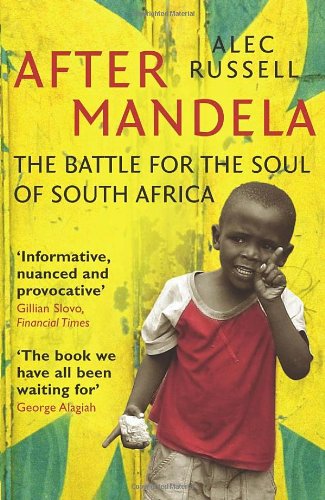
Alec Russell - After Mandela, The Battle for the Soul of South Africa (2009)

Alec Russell – After Mandela, The Battle for the Soul of South Africa (2009)

Essays on the post-apartheid challenges of South Africa: ANC’s slide towards autocratic incompetence and populism, Thabo Mbeki’s late-night surfing on AIDS-denialist websites, and Afrikaner nostalgia. But also the disasters that didn’t happen. An apparently even-handed picture of a country that could have done better, but also worse, and may go either way in the future.

Recommended: Yes.

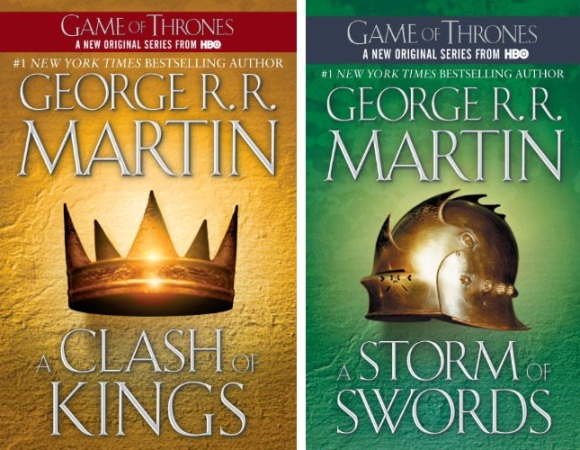
George R R Martin - A Clash of Kings, A Storm of Swords

George R. R. Martin – A Clash of Kings (1998) / A Storm of Swords (2000)

Reading A Song of Ice and Fire is like watching fireworks that go on and on, forming more and more intricate patterns, steadily increasing the light and the volume until there’s no resistance left and you bend your knees to Martin, King of all Fantasy Epics. To be fair, the trick that separates Martin from the rest, making them shadows of his ideal form, is that he destroys as much as he creates: Characters who no longer belong, and all those hundreds of pages where people wander about in the New Zealand wilderness. What’s left is so good that getting to the end is irrelevant. It’s already perfect at every level: As individual chapters, each a short story in its own right, and as individual books. Perhaps Martin will one day bring it all together as a perfect whole, but if not, you can still reread the early books – like I did now with book two.

Recommended: Oh yes. And/or try the HBO version of book one, Game of Thrones. It’s good too.

En naiv vinkling

Har et innlegg i Dag og Tid i dag. Handler om hvordan det å se på 22/7 som en tilfeldig katastrofe eller en gal manns verk er utilstrekkelig:

Jon Hustad spør om det er mulig å lese mening inn i en så usannsynlig hendelse som terrorangrepene 22. juli, og minner om at viktige hendelser hverken behøver å ha viktige årsaker eller få viktige konsekvenser.

Riktignok er virkeligheten et terningspill, og de samme terningene som ga oss norgeshistoriens verste terrorangrep kunne lett ha rullet annerledes, og gitt oss alt fra et mislykket angrep til et som var langt verre.

Men dette er en naiv vinkling. Angrepet var usannsynlig, men det skjedde faktisk, og det både hadde en meningsfull årsak, og kan ha meningsfulle konsekvenser.

Les resten her.

Av en eller annen grunn hevder Dag og Tid at jeg bor på Fornebu, det må være fordi de har gjort oppslag på telefonnummeret og funnet arbeidsplassen min? På den positive siden har de ikke oversatt innlegget til nynorsk. Jeg må derfor gå inn i meg selv og ta mine fordommer mot nynorskskrivende til revurdering.

Intervju i Weekendavisen – Mening i galskaben

Weekendavisen 2011-08-05 Mening i galskaben

Jeg er intervjuet i weekendens Weekendavisen, om nye tider og defensive innvandringskritikere. Bawer er også med, og uttaler at han opplevde essayet mitt som et personlig angrep. Joda, det var et rant skrevet nattestid, og bærer preg av det, men jeg holdt ham til samme standard som han holdt norske kommentatorer til etter 11. september. Og det blir den vanskelige utfordringen for innvandringskritikerne nå: Holde seg selv og sine egne til samme standard som de holder alle andre. Desto strengere de har vært, desto vanskeligere.

Did I have a flame war with Behring Breivik in 2005? (Probably not)

(Update: I was probably wrong. See comment.)

I think I may have had a flame war with Anders Behring Breivik in May 2005. A Norwegian reader called “AB” didn’t like one of my articlesat all.

“When in hell did this blog become a dull, quasi-intelligent, “hurray, let’s get islamized left wing”-blog?”

“I am hereby calling for a boycott of Bjørn Stærk. Why the hell are we here discussing his thoughts when there are so many truly great sites on the web? Ask yourself: Does this retarded bulwark of islamofascism and Eurabia deserve me as a reader?”

If they’re the same person, then, on the positive side, the greatest mass murderer in the history of Norway despises me.  But the scary thing is, the greatest mass murderer in the history of Norway despises me.

I stand by what I wrote to him in that thread. I wish he had listened. But I also wish I could unsay this:

 “AB, leaving your anger management issues aside for a moment, (entertaining though they are),”

Regardless of whether “AB” is him, it’s plausible that Behring Breivik encountered my blog in the years after September 11.  There weren’t many other Norwegian blogs that were critical of Islam around back then, and until I started confronting my islamophobe readers in 2004-5, I had quite a few of them.

Feeling sick, now.

New essay: On Bruce Bawer and Islam criticism after 22/7

I appreciate if discussing Islam criticism isn’t a priority right now, but after some of the shameful responses to the terror attacks by Bruce Bawer and others, I had to write this:

But reality has shifted sufficiently that you cannot mindlessly apply the same old models to the new situation.  And, this time, the pundits who reveal themselves to be most out of touch may well be precisely those right-wing critics of immigration and Islam who took the lead after 9/11.

Read the rest here: On Bruce Bawer and Islam criticism after 22/7.

Update: And here’s a shorter, Norwegian version in VG.

After the attack

It says something about how irrelevant blogs have become, that in the continous media (social and regular) frenzy that has lasted since the horrific terror attacks in Norway on Friday 22/7, I have not once thought to post anything here.

I’ve mostly been active on Twitter and Google+.  I’ve also written an article for Aftenposten about the ideology of the terrorist, Anders Behring Breivik, based on the manifesto he published online and on my own encounters with the counterjihad ideology he shares.  Here’s an English translation.

I’ve been in Dublin all this time, which makes this extra surreal.  Luckily, nobody I know has been killed, as far as I know, but it has felt uncomfortably close for another reason: The terrorist’s many connections to Norway’s online community, particularly the blogger Fjordman, his idol, who I’ve had many discussions with over the years.

I still find myself shaking, from time to time.  And I desperately want my old world back.  But there’s no turning back.  As happened nearly 10 years now, a terrorist attack has irrevocably changed the world I live in.  We have to face it, as best we can.

1950s movies marathon – part 52

20,000 Leagues Under the Sea (1954, USA)

Submarine captain Osama bin Laden’s fanatic quest for vengeance against the so-called “civilized” world may not be as politely executed as the faint of heart might wish, but it makes sense within the context of his unusual worldview.   The scientist he kidnaps, locks up, brainwashes, and reminds daily of his power over life and death, eventually learns to respect this point of view.  Watched it all, mostly for the visuals.  The best parts of steampunk, the way it looks and makes you want to dress like a Victorian gentleman and go build outrageous machines, were pioneered in this movie.  Thanks, Walt Disney Corporation!

Killers From Space (1954, USA)

The evil, horrible, gruesome beings the title hints at at do not appear until halfway into the movie, and when they do they’re just some guys in stupid suits.  It was always thus.  Watched 4 minutes.

Animal Farm (1954, UK)

It is hard to watch this without shuddering, because of all the stories told in the 20th century, this was one of the truest and most tragic.  It remains so today, wherever popular revolutions are hijacked by two-legged pigs.  Watched it all, not because it’s good, (they gave it a happy ending?!), but because, by the strokes of the animator’s brush, millions die, and die, and die.  And did anyone even ask for forgiveness?