Liberaleren har stilt meg noen spørsmål om hvordan det står til med bloggmiljøet i Norge, og jeg har svart at hele spørsmålet er litt meningsløst. Blogg har blitt bare en av flere publiseringsteknologier, og selve teknologien er ikke interessant i seg selv.
På utsiden av det gode selskap
Jeg har et innlegg på Aftenposten.no, hvor jeg skriver at selv om innvandringskritikere ofte blir dårlig behandlet i den offentlige debatten, bør de unngå selvmedlidenhet.
Det er ikke alltid lett å tilhøre den innvandringskritiske siden av norsk innvandringsdebatt. Hvis du mistenker at den ikke-vestlige innvandringen nå foregår i et tempo samfunnet ikke klarer å håndtere, plasserer du deg på utsiden av det gode selskap, med begrenset tilgang til de viktigste mediene. Og du opplever at de som står på innsiden, gang på gang får lov til å definere deg og de du er enig med som dårlige mennesker. Du tar ikke bare feil, du har et tvilsomt menneskesyn. Du er «grums», et «troll», «høyreekstrem», «islamofob».
Det blir det gode mot det onde. Gode hensikter mot mørke fordommer. Og du er en av de onde.
Jeg er forøvrig også gjestemoderator for anledningen, og styrer kommentarfeltet under innlegget med hård hånd!
Book roundup: John Medina, Jane McGonigal
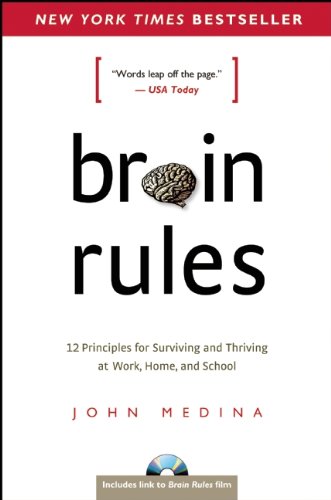
John Medina – Brain Rules (2008)
Exercise and sleep are good for the brain, multitasking is a myth, stress makes you stupid, and repetition and repetition and multi-sensory input aids memory.
Recommended: Yes. It’s basic, but Medina seems to take science seriously, the snappy title isn’t stupid, and even his anecdotes are discreet. See, pop-sci authors, is that so difficult?
Jane McGonigal – Reality is Broken (2011)
Gamification is to add a layer of gaming mechanics (goals, rules, feedback and meaning) on top of everyday activities, to achieve something useful, or just for the fun of it. I’ve been experimenting with gamification since long before there was a word for it. But McGonigal brings out the cynic in me, and when I picture her gamified utopia, I see a world of superficial geeks using carefully designed Happiness Hacks to become the emotional equivalent of health freaks. It’s not that I don’t see how checking in to Foursquare, or taking part in Halo 3’s 10 billion kill challenge, can provide your life with a meaning that it otherwise lacks – I just don’t see this as something to aspire to. Nor do I see the millions of World of Warcraft players as an army of potential do-gooders who stand ready to Save the World, if only someone could translate this into the right gaming metaphors.
Recommended: No. The basic ideas are sound, but the uncritical enthusiasm makes you feel like you’re reading this from twenty years into the future, looking back on the naivety of an earlier generation.
Book roundup: David W. Maurer, Paul M. Handley
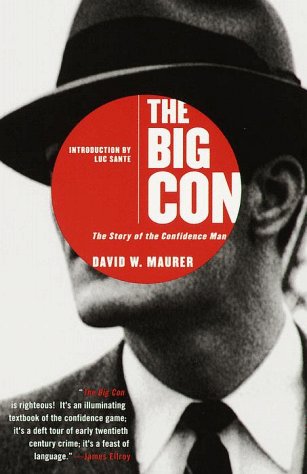
David W. Maurer – The Big Con (1940)
Long before the con man became the second laziest trope in all of movies and television, (after the serial killer), genuine gentleman swindlers roamed the land in search of wealthy marks with “larceny in their veins” and a taste for the “sure thing”, and used elaborate big store setups to encourage them to give away their money.
Recommended: Yes. Most of all for the attention it gives to the language of the con men, which seems to have been linguist Maurer’s original motivation for talking to them. This may in fact be the only interesting book ever written by a linguist. (No? Give me a counterexample!)
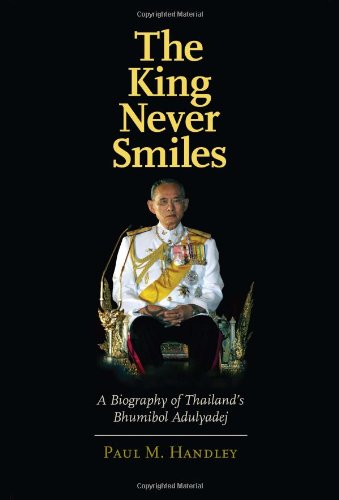
Paul M. Handley – The King Never Smiles (2006)
Bhumipol Adulyadej, the King of Thailand, and the longest-serving current head of state, has cultivated an image as a dhammaraja, a ruler whose strict adherence to Buddhist virtue makes him the moral center of his country. Reality is a bit less virtous: Bhumipol is a player who interferes rarely but decisively in political life, usually preferring stern generals over chaotic democracy.
Recommended: Weakly. The subject is interesting, and can only be dealt with honestly by a foreign historian, because of Thailand’s powerful lese-majesty laws. But the book covers nearly a century in 450 pages, and eventually gets bogged down in a never-ending series of coups and generals. Handley doesn’t actually have much to say about Bhumipol at all. His image is too well protected.
1950s movies marathon – part 60


Lowlands / Tiefland (1940s/1954, Germany, Riefenstahl)
When wolves threaten the sheeple, it is time for a great Shepherd to come down from the mountains and Lead them to freedom. Watched it all. People who are uncomfortable with Leni Riefenstahl, (or, more stupidly, claim she’s actually an anti-fascist), must be unaware of just how much fascism there is hidden away in all of our art, (including, probably, several of your favorite movies.) That’s where it belongs. The problem is when it escapes into real life. Anyway, this is a fantastic movie. It was filmed during the war, and is a reminder of what Riefenstahl could have achieved after it if she hadn’t already done such a great job for Hitler.
Botostroj / Giant Shoe-Factory (?!) (1954, Czechoslovakia)
Oh, you evil capitalists with your evil ways, you make me so mad! Watched: 21 minutes. You can always count on totalitarian movies for a certain intensity that normal movies lack. Everything that happens resonates with Destiny. But this is still pretty stupid.

A Star is Born (1954, USA, Cukor)
This reconstructed version goes on and on and on forever. It’s been patched together using still photos in place of lost scenes and everything. Dear god, why?! The beginning is good, though, and Judy Garland has never sounded better. Watched it all, although with only half an eye for the last seven hours. (Oh, and, believe or not, it uses the Wilhelm scream. Twice!)
1950s movies marathon – part 59

Seven Brides for Seven Brothers (1954, USA, Donen)
I try to imagine how this movie was pitched. I think it went like this: All the MGM bigshots sit around a table discussing ideas, and one of them says, “I know what, let’s take that old Roman legend, you know, the one about the rape of the Sabine women, and make a bright, cheerful musical out of it!” And everyone thinks it’s a brilliant idea. Brilliant. “But”, says one, “could we lose the rape angle? Some of our viewers are women, and may be a bit narrow-minded about that sort of thing.” “Sure! We’ll just pretend that when a gang of lonely men kidnap a group of women, and keep them locked up in their cabin over the winter, sex would be the furthest thing from their minds! And they’ll all fall in love in the end, so it’s okay!” (Actually, that was how the Romans spun the story too. As if!) And thus was born the most unintentionally disturbing musical ever made. Watched it all before, and bits of it this time.
Casino Royale (1954, USA)
Ah yes, the famous quiz question: Who was the first James Bond? I’ll tell you: It was Barry Nelson. But I encourage you to register a protest with the quiz master, because this made for TV version of Ian Fleming’s first Bond novel has stripped away everything that is Bond about Bond. Watched: 15 minutes.
1950s movies marathon – part 58

Heat Wave (1954, UK)
The first (and last?) Hammer film noir that’s any good, and it’s not even any good. But it does have a cynical author doing voiceovers while getting mixed up in a love triangle, which is a very traditional and proper thing for this sort of movie to do, and it makes you feel at home. Watched it all.
The Mad Magician (1954, USA)
Vincent Price’s brilliant and potentially murderous inventions bring him no fame, just persecution and ridicule. But he’ll show them. He’ll show them all! Ahem. So, anyway, do you want fries with that? Watched: 19 minutes, then fast-forwarded to see the gruesome deaths. There are only two, and they’re not that gruesome.
Det brenner i natt! (1954, Norway, Skouen)
The unbearable weight of his journalistic genius turns Claes Gill into a pyromaniac. Oh, will nobody in this cold, cruel world of ours show him a bit of compassion so he can overcome his disease?! Watched: 24 minutes. The scene where he stares longingly at a pack of matches stands out as the most unintentionally hilarious among many. Is this the moment when Serious Norwegian Filmmaking began to go wrong?
Troll i ord (1954, Norway)
The Norwegian mountains take the breath away of Danish girls, and make them vulnerable for decent proposals. Watched. 25 minutes. Actually, the downhill ski flirt scene was used by Hollywood at least a decade earlier, with Sonia Henie. Btw, hilarious mistranslation in the subtitles: “Å, da jeg spilte på kam?” => “When I threw up on the roast?”
AntiJihad Norge – de siste innleggene
Mens jeg akkurat satt og skrev om dem forsvant de siste restene av AntiJihad Norges blogginnlegg i sommer fra nettet. Så jeg har lagt ut en kopi. Det mest interessant er “Når er begeret fullt?” fra 18. juli:
Både i Norge og andre vestlige land har anti-islamske bevegelser og organisasjoner lagt vekt på å opptre lovlig og bare med ikke-voldelige midler. Det er vanskelig å kritisere dem for det, det tilsvarer på sett og vis om noen hadde forsøkt ikke-voldelig motstand mot den tyske okkupasjonen. Det ville selvfølgelig ikke vært noe galt i det, problemet er bare det at hadde all motstand mot nazismen vært ikke-voldelig ville Hitlers etterfølgere ha regjert Europa i dag, og for all sin djevelskap er nazismen bare som blåbær å regne mot islam.
På hvilket tidspunkt desinformasjonen, som denne saken fra Bergensbanen er et godt eksempel på, har pågått så lenge og så intenst at myndighetene ikke lenger er å anse som lovlige og legitime, og at væpnet motstand og opprør blir en rett, for ikke å si en plikt, vil i siste instans være opp til den enkelte å avgjøre i forhold til sin egen samvittighet. De som måtte si, og mene, at nå er begeret fullt må selvsagt regne med å bli dømt, av illegitime domstoler etter illegitime lover, slik de over 20 norske motstandsfolkene som ble henrettet etter Majavatn ble dømt, av illegitime domstoler og etter illegitime lover. Historien har imidlertid gitt dem en annen dom.
1950s movies marathon – part 57

Nineteen Eighty-Four (1954, UK)
Well, it’s Nineteen eighty-four, and an excellent version too, featuring that guy who played a few scenes in Star Wars. But not only that, this is an early example of that huggable British form of sci-fi television where the sets look like cardboard, but the words are poetry. Watched it all.
The Phantom of the Rue Morgue (1954, USA)
Members of the French academic elite use the power of phrenology, Freudianism and other pseudosciences to pin the murders on the gorilla. It’s an outrage of justice! Watched: 20 minutes, + lots of screaming and Karl Malden with a very sinister moustache.

Gojira / Godzilla (1954, Japan)
Yes, I guess Japan has made many contributions to the world of serious art, but what we really love them for is their outrageous sense of fun, isn’t it, and that all starts here. Watched it all. It’s pretty good for a stupid monster movie, and the Harryhausen-inspired stop motion effects are quite cute.
Carmen Jones (1954, USA)
After decades of segregation, there are not enough movie stars to fill this black version of Carmen with, only second raters. And the color line stands firm: No white actors at all, no mixing. It’s all or nothing. What a shame. Watched: 10 minutes. Now, Rita Hayworth, there was a Carmen who could lure disco donalds to a life of vice.
Book roundup: Tore Rem, Megan K. Stack, Michael J. Totten


Tore Rem – Sin egen herre (2009) / Født til frihet (2010)
Jens Bjørneboe has been so much to so many that it is impossible to entirely like or dislike him. He abandoned Rudolf Steiner’s bullshit mysticism, and became a passionate individualist, but a whimsical intellectual. He was open about his faults, but also a myth-maker. He got beatified as the saint of radical clichés, but that’s hardly his fault. It was a small pond. Almost forgotten now is how he was a product of a time when Norway was part of the Germanic cultural sphere. Our move to the Anglo-American sphere left a vertical cultural gap through the decades, with him on the other side, burning Disney comics. He never did “love America”, and his world is further apart from us than it seems.
Recommended: Yes. And like any good biography, it uses both the age to study the subject, and the subject to study the age.

Megan K. Stack – Every Man in this Village is a Liar (2010) / Michael J. Totten – The Road to Fatima Gate (2011)
Along with the blood and death and the pain that never goes away, one of the things all wars seem to produce is a trickle of excellent war reporting, hiding within a torrent of lies and fantasies. So also in the Middle East. It’s not worth the cost, but there it is, poetry and insight from pain.
Recommended: Yes, both. Stack for the writing, Totten for the macro insights. Their first-person observations are particularly interesting in light of the revolutions that came afterwards.