Max Headroom

Year: 1985, 1987, 1988

Type: Cyberpunk

Premise: Society is falling apart, and all you get to choose from on television is 60 Minutes and some goofy AI talking head

Primary audience: People who are nostalgic for a time when everything was going to hell and there was no future, no future for you

Tics: Evir Japanese megacorroporationos

Worth watching: The original standalone episode, yes

Asian businessmen are the scariest people 80’s scriptwriters can imagine.  They come here and throw some money around, and then they expect to be treated as our overlords.  But they’re getting a crappy deal.  In the future, everything is ugly.  Nobody cares.  Punks control the streets.  All that’s left is TV, and, for some odd reason, investigative reporting.

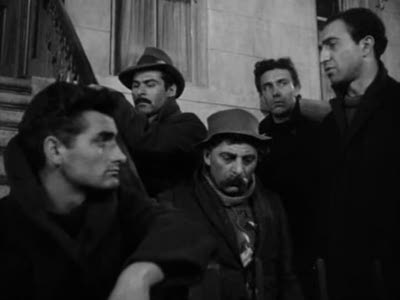
Max Headroom was made in two batches, a 1985 television movie called 20 Minutes Into the Future, (above), and a 1987-88 series.  The first episode of the series is a remake of the movie, allowing us to see how the concept was dumbed down along the way.  The series has the same visual style, but is kind of upbeat.  The evil hacker is now a good hacker.  The team of good guys win stupid little victories every episode.  It goes against the grain of the original.  20 Minutes was odd and cheap, but at least it stood for something.  It stood for believing that everything was going to hell.  The series stood for the family friendly version of that, ie. nothing. Nothing at all.
40′s movies marathon – part 130

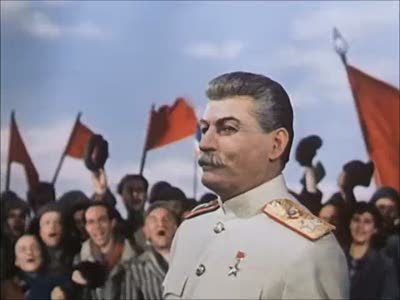
The Fall of Berlin (1949, USSR, Chiaureli)

I can learn to like Communist war epics, if they’re all like this, the original Der Untergang.  The emotions are all heightened: All joy, all love, all rage.  The first scene with Stalin is shot with an angelic choir humming in the background.  And the scenes of the actual battle of Berlin are like nothing that actually happened – mythical, crossing over to delirious when Stalin himself shows up, and all the nations on Earth join hands to sing his praise.  Watched it all.  I guess I’m able to watch this with moral detachment because it crosses over into fantasy.  Fantasy was the element that held Communism together.  Which is why I look forward to more of these movies.

Battleground (1949, USA, Wellman)

Another step towards insincerity in war movies.  I don’t mean that The Fall of Berlin (above) is particularly sincere.  But at least it doesn’t pretend to be.  Watched: 4 minutes.

A Letter to Three Wives (1949, USA, Mankiewicz)

We never see Addie’s face, only the effect she has on her desperate housewife friends, all of whom are less beautiful, less interesting, less cultured, less alive, less perfect than she is.  They know it, and their husbands know it too.  Watched it all.

Who Done It (1949, USA)

The Three Stooges – another of the massively unfunny comedy teams of the 1940’s.  I know they won a war and all, but the World War II generation should be ashamed of themselves for having such a terrible taste in humor.  Watched: 3 minutes.

Boardwalk Empire

Year: 2010

Genre: History with swearing

Subgenre: Lovable sadistic gangsters and cops battle it out in 2000’s New Jersey / 1870’s Deadwood / 1920’s Atlantic City.

Primary audience: People who want to be reassured that everyone in the past were hedonists too.

Tics: Every man’s a gangster, every woman a whore.

Worth watching: Not sure.

Let’s call it the Ian McShane smirk, even though he’s not in this series.  It’s the look of a character out of the past who knows it’s all a charade, that there are no truths, no right or wrong.  It’s the character who at heart is really one of us, only slicker.

And this has been the mode now for about a decade, hasn’t it?  It’s beginning to feel dated.  It used to say: We’re daring and honest.  Now it says: We know nothing about the past, nothing about people, and we have nothing to say.  So we’re settling for the same old polished grittiness that makes you grin because you still think it shocks other people.

It doesn’t make you think.  It doesn’t make you feel anything.  It doesn’t even make you uncomfortable.

But hey, it looks good.

Philip José Farmer – To Your Scattered Bodies Go

Philip José Farmer - To Your Scattered Bodies Go (1971)

To Your Scattered Bodies Go (1971) by Philip José Farmer is perhaps more a thought experiment than a novel.  Science fiction always has to walk that balance, because it’s the literature of ideas.  I mean, the really big ideas, the ones that are too big for a realistic novel.  Science fiction without ideas feels empty, like there’s a hole in it where something was supposed to be.  But then sometimes you get only a thought experiment, and not much of a story attached.

Scattered isn’t quite there, but it’s close.  Every human who has ever lived has been resurrected by aliens on one big planet, where they’re given the basic necessities of life, and no instructions.  Whenever anyone dies, they get resurrected again.  It’s one big angry world of warcraft.

We follow Richard Burton, the Richard Burton, who sets out on a mission to find those asshole aliens who are responsible for this mess.  He didn’t ask to be resurrected.  And for some reason, wherever he goes he keeps bumping into Hermann Goering.

You can choose to see Scattered either as a dressed up thought experiment, or as a minimalist and more subtle approach to story-telling.  I’m going for the second alternative, because it puts me in a good mood to be reminded of SF’s leaner, younger years, when you didn’t take one small idea and turn it into 600 pages of action-packed bloat.  You took plenty of big ideas, and crammed them into 200.

Glem de kriminelle, offentlige skattelister er først og fremst galt

Jeg tror dette nå blir en årlig foreteelse for meg, å skrive om de offentlige skattelistene.  Det blir en årlig foreteelse fordi jeg vil holde en utdatert tanke i live: At ingen har rett til å google lommeboken din. Og det blir en årlig foreteelse fordi jeg ikke tror dette forsvinner med det første.  Stakkars det prinsippet som har både medienes egeninteresse og lesernes nysgjerrighet mot seg.

Og igjen skal mediene unskylde seg med samfunnsnytten, og man må jo trekke en balansegang mellom det ene og det andre, og fy faen så kjedelig og feigt.

Hør nå her: De som legger ut skattelistene gjør noe galt.  Jeg vet ikke hvor farlig det er.  Jeg bryr meg ikke om skattelistene også brukes av innbruddstyver.  Det kommer isåfall i tillegg.  Dette er først og fremst galt.

Og de som kikker på skattelistene, de gjør også noe galt.

Jeg har gjort det selv, i blant.  Jeg er ikke stolt av det.

Hvis du er så fryktelig nysgjerrig på hva noen tjente i fjor kan du vel ringe dem, og spørre, og forklare hvorfor du mener dette er noe du bør vite.  Jeg forteller det gjerne.  Det er det da ikke så farlig?  Men det er jeg som skal ta beslutningen.

Det er på samme måte som jeg skriver om bøkene jeg leser, men jeg vil ikke at Amazon skal tvangspublisere ordreloggen min.  Det er privat.  Det skal være opp til meg.

Klikker du “søk”?  Det sier noe om deg.  Du er i stort selskap, men det er ingen unskyldning.

40′s movies marathon – part 129

The Barkleys of Broadway (1949, USA, Walters)

Here it’s way past the prime of Fred Astaire and Ginger Rogers, but they’re more alive than ever.  It’s the Comden & Green magic.  Featuring Oscar Levant, the gnome-faced mascot of Hollywood musicals.  Watched it all.

The Adventures of Jane (1949, UK, Whiting)

Jane was a comic strip character who had the habit of “accidentally” losing most of her clothes, thus pioneering fanservice. Wikipedia earnestly speculates that Jane’s last name Gay did not necessarily imply that she was a lesbian, as “gay” may possibly[original research?] have had a different meaning[citation required] in 1949.  Watched: 10 minutes.

I Was a Male War Bride (1949, USA, Hawks)

I’m becoming familiar with post-war Berlin as a movie backdrop. Everyone was making a Berlin movie at this time. It seems to work well with everything, from sentimental neo-realist movies to screwball comedies such as this.  Berlin really is the most promising new actor to emerge in the late 1940’s.  Oh, and that airhead Cary Grant is unusually interesting here as well.  Watched it all.

Christopher Columbus (1949, UK, MacDonald)

Columbus was a 15th century visionary who dared to believe – against all “common sense” – that the world was round.  Watched: 6 minutes.  Actually any educated person at the time knew the world was round.  Columbus just thought it was small enough that he could sail around to Asia.  It’s not, and he would have died if there hadn’t just happened to be another continent in the way.  Which, when you think about is, is to be extremely lucky.

Digitale betalingsmodeller: Bare vanskelig, ikke mystisk

Det å tjene penger på digitalt innhold omtales som om det var et av historiens uløste mysterier.  Det store spørsmålet for norske medier i år ser ut til å være om det er “frelse” i iPad, og utifra spørsmålsstillingen følger det jo at det er det selvsagt ikke.  Det finnes jo ingen enkle løsninger.  Det hele er og forblir et uløst mysterie.

Ja bortsett fra at det ikke er uløst da, og ikke så veldig mystisk heller.  Avisene har ikke løst det, det stemmer, men andre har.  Musikkbransjen har f.eks. to lovende inntjeningsmodeller: iTunes-modellen og Spotify-modellen.

Det som kjennetegner modellene som fungerer er at de gjør det enkelt og naturlig å bruke penger.  Friksjonsløs netthandel.  Apple har redusert det til ett museklikk.  Verre er det ikke.

Å realisere denne innsikten er ikke fullt så lett, men det er ikke et mysterie.  Bare vanskelig.  Resten kan man finne ut av ved å eksperimentere.  Vær litt vågale, hopp uti det.

Et alvorligere spørsmål norske medier ikke spør seg er: Finnes det noen norske aviser det er verdt å betale penger for?  Jeg leser ingen papiraviser fast, men jeg blar i de fleste en gang i blant, og jeg er omtrent der er at jeg er villig til å betale litt, men langt mindre enn de faktisk koster.  Ikke fordi det er så totalt utenkelig å bruke penger på nyheter, men fordi de ikke er gode nok.

Og det tror jeg norske medier kommer til å slite med lenger enn den digitale betalingsmodellen.

40’s movies marathon – part 128

Give Us This Day (1949, UK, Dmytryk)

An Italian-American bricklayer has big dreams and works hard, but circumstances go against him, and we watch his hope die, slowly, over the course of decades.  Watched it all.  I don’t know if it is because the other movies of this year were unusually terrible, or because there was something in the air, but the ones that are good, they’re good.  They’re alive – and honest.  Like this one.

She Shoulda Said ‘No’! (1949, USA, Newfield)

The ‘teen-agers refer to it as “tea” or “tomatoes”, but the technical name for this latest threat the police defends our kids against is “marihuana”.   If we were only to scale up to a full-out war, maybe we could eradicate this killer drug once and for all.  Watched: 7 minutes.  I question the use of the theremin in the soundtrack, though.  It makes this horrible, evil, deadliest of drugs sound kind of intriguing.  As does the scenes of frantic dancing.

Pinky (1949) - Jeanne Crain

Pinky (1949, USA, Kazan)

I don’t know.  The concept here, a white girl who’s legally considered colored because of her black grandmother, and comes home to the Dirty South and starts confronting everyone and everything, ending up in one of those righteous courtroom scenes – it’s a little convenient.  The message seems to be that even in a movie about racism, the main character still has to be white.  Then again, it’s only been 9 years since Santa Fe Trail, a movie that openly celebrated slavery(!), so I guess it’s progress.  Watched it all.

40’s movies marathon – part 127

Thieves’ Highway (1949, USA, Dassin)

I love how this movie makes the apple trucking business appear dangerous and exciting. Even the honest guys are hard-nosed entrepeneurs, living right on the edge of broke and always looking for a good deal. This is really a drama about capitalism (for or against according to your bias). Railroad Tycoon the movie – with lots of crooks but no guns, because why would apple truckers carry guns? Watched it all. I also love how everybody’s an immigrant or has immigrant parents, and break into some European language whenever they get angry.

The Winter of Three Hairs (1949, China)

A beggar boy walks hungry in the streets, visions of food dancing before him.  Oh, if only there were some sort of movement or army that could liberate the people and (after a brief transition period) make sure that nobody in China would ever starve again!  Watched: 11 minutes.

The Adventures of Ichabod and Mr Toad (1949, USA)

At last – a Disney movie I don’t like at all!  In fact, it’s awful!  This is wonderful!  I’ve seen so many less-than-classic 40’s Disney movies in this marathon, and sort of liked them all, that I was beginning to wonder what was wrong with me.  And it’s quite fitting that it would arrive in the worst movie year of the decade.  Watched: 9 minutes.

Adam’s Rib (1949, USA, Cukor)

One way a marathon like this warps your perspective is that suddenly you start thinking things like: Another Tracy and Hepburn comedy? That’s so thirties! Watched: 10 minutes.

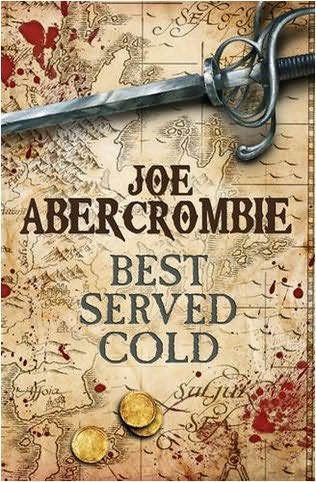
Joe Abercrombie – Best Served Cold

Joe Abercrombie - Best Served Cold

Revenge stories appeal to me. I guess they appeal to everyone, but it also doesn’t bother me that they appeal to me.  It has to do with believing that Justice is something more than Law.  That it lives in all of us, and is not something we can delegate entirely to legitimate authorities.

Revenge stories also frighten me, because they appeal to raw, destructive anger.  And it frightens me a bit that one of the easiest way to make a popular story is to base it on violent revenge.

A contradiction?  Perhaps.

And it’s a contradiction Joe Abercrombie captures in Best Served Cold.  Just as he in the First Law trilogy served up an epic fantasy premise, in order to undermine it, here he does the same with the vengeance trope.  It starts out, as these stories must, with a Great Crime, and a victim, Monza, the crippled sister of a murdered brother.  And then we follow her as she methodically eliminates every person she blames.

We start out sympathizing.  But as the story progresses, we learn that Monza and her brother, and the people she gathers to avenge him, are themselves among the most evil characters in the story.  And we watch how her ferocity causes ripples of suffering throughout a world already overflowing with causes for revenge.

Abercrombie force-feeds you vengeance until you’re sick of it.  And while he was fumbling about a bit in The First Law, now he knows exactly what he’s doing.  It’s brilliant.  And disturbing.  And just a bit funny.