Nytt essay: Amatørenes inntogsmarsj

Jeg har et essay i Humanist nr 3/2010, hvor jeg tar pulsen på årets store debatt, om hva ny teknologi gjør med oss – og hva vi gjør med teknologien:

Vi er blitt forledet til å tro at alt som er teknologisk mulig er uunngåelig. Men vi må selv ta ansvar for hvordan nettet og nettkulturen skal utvikle seg. Vi må akseptere at teknologien vil fortsette å endre samfunnet på grunnleggende måter, ved å fjerne forutsetninger og begrensninger vi tidligere tok for gitt. Kunsten er å kombinere dette med å være bevisst på hva endringene gjør med oss. Ta ansvar. Tenk selv.

Les resten her.

Etter at jeg skrev dette har to av essayene jeg nevner kommet i lengre bokform: The Shallows av Nicholas Carr, og Cognitive Surplus av Clay Shirky.

For krig, men mot soldater

Jeg respekterer pasifisme.  Pasifisme er tullete, men det er et modig standpunkt.  Du kan ikke ta lett på å erklære deg som pasifist.  Du må på en måte bære hele verdenshistorien på dine skuldre.  Du må våge å påstå at dine idealer var riktige også i møte med Hitler og Sovjetunionen.

Til gjengjeld får du gå rundt med den indre gløden som kommer av å tro kompromissløst på gode idealer.

Det jeg ikke har respekt for er de som ønsker det beste av begge verdener, med både realismen og selvrettferdigheten komplett i behold.

Debatten om norske Afghanistan-soldater handler litt om det.  Den handler om at vi er for krig i abstrakt forstand, men den skal føres i henhold til alle idealer.  Vi ønsker å bidra til “krigslignende operasjoner”, men helst uten mennesker som er i stand til å bruke våpen i kamp.

Du behøver ikke være pasifist for å leve opp til slike idealer.  Men du er nødt til å si: Våre soldater, de skal holdes hjemme, og brukes kun i vår ytterste nød.  For med en gang de sendes i kamp, vannes idealene ut med adrenalin. Moralske gråsoner er en pris vi ikke vil betale.

Tør noen å si dette?  For det vil det stå respekt av.  Fordi du dermed taler norsk forsvarspolitikk midt i mot.  Og fordi du innser at man i blant må si nei til noe godt for å si ja til noe bedre.

Men spar meg for de som er så feige at de vil ha det beste av alt.

Om bloggstøtte og document.no

Fritt Ord gir 2,5 millioner til 16 bloggere. Jeg er lunken til prosjektet, ikke så mye for og ikke så mye mot. Men utdelingen har fått meg til å tenke på hvordan jeg selv ville prioritert hvis jeg skulle dele ut slike midler.

For, ja, jeg synes document.no godt kunne fått støtte. Jeg liker ambisjonene deres. Og jeg liker raseriet deres ovenfor samfunnsdebatten forøvrig. Burn, Akersgata, burn.

Glem de konkrete meningene, de er ikke poenget.

Poenget er at med norsk medievirkelighet har du tre alternativer: Du kan spille med, (være Opplyst om Hva Som Skjer, og delta i debatten på en Saklig Måte), melde deg ut av den i avsky, (som vel jeg for det meste har gjort), eller gå til enslig frontalangrep mot det hele.

Og det er den siste gruppen av smågale, småfanatiske, og veldig veldig vrange mennesker som i blant endrer verden.  Eller iallefall er det de som har det gøy mens de gjør det.

Det er de man burde bygge opp.  Tonen kan ellers gjerne være saklig, det er ikke om å gjøre å være “kontroversiell”.  Men hvis du ikke starter med det utgangspunktet at det er noe alvorlig galt med norsk offentlighet, og hvis du ikke drives av et ønske om å rive ned ting – hva er det egentlig du har å tilføre?

Mitt kriterie ville være å finne noen som ønsker å endre spillereglene, som ikke er fornøyd med rollene andre har definert for dem. Kanskje er det noen av de på denne listen. Men én havnet iallefall utenfor.

40’s movies marathon – part 126

Passport to Pimlico (1949, UK, Cornelius)

A street of much-rationed, much-regulated Londoners discover that they’re technically part of the Duchy of Burgundy, and decide to secede from England.  Watched it all.  What an amazingly libertarian movie this is, especially for the time.  What they’re really doing is creating an economic free zone, free from regulators and moral busybodies.  Suddenly the economy is booming, everyone’s getting involved in local politics, and are generally having a good time.  Of course it doesn’t last, but only because they’re sabotaged by the British government.

Border Incident (1949, USA, Mann)

Most Mexicans who want to work in the US are law-abiding citizens who enter it legally, but there are some who try to cross the border illegally!  Unfortunately they are usually killed by bandits.  Which is a shame, so let’s send the police to protect them.  Watched: 15 minutes.

The Spider and the Fly (1949, UK, Hamer)

I guess any well-worn trope becomes interesting when I haven’t encountered it in a while.  In this case it’s the gentleman thief, who foils the French police in humorous ways, then goes off into World War I to serve his country, because one is after all a patriot.  Watched it all.

Post Office Investigator (1949, USA, Blair)

One trend in the late 40’s was to make movies about all the brave deeds government employees did to keep their country safe: Fighting terrorists, Communists, illegal immigrants, and, in this case .. er, stamp thiefs.  They were really scraping the barrel at this point.  Watched: 3 minutes.

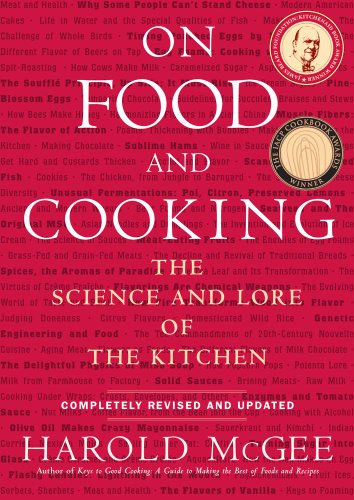
Harold McGee – On Food and Cooking

Harold McGee - On Food and Cooking

What makes Harold McGee’s On Food and Cooking a nerdy food science bible instead of a cooking book is that there aren’t any recipes in it.  Some people will say that a book about food that explains what meat really is but doesn’t contain any meat recipes sort of misses the point.  Others will say: Wait, it explains what meat really is? And what actually happens when you fry something? And it lists all the characteristics of common herbs in a big scary table with big scary words?  I want to own this!  If so, this book, and this review, is for you.

McGee covers not only the facts but the history of commonly eaten animals and plants, often in poetic terms.  What fascinates me about the history of food is how basically everything we eat has been shaped by humans in some way.  We’ve taken things that were barely edible and made them good, and things that were good and made them better.  Our food has been bred and hybridized upon for thousands of years – just to make us happy.

One of the trends of this history, as McGee tells it, is how this great (unnatural) variety was reduced and homogenized during the 20th century, as part of the rise of industrialized food, but is now being rediscovered.  The fun is returning to food.  And this book is above all fun .. for very nerdy values of fun.

40’s movies marathon – part 125

Rotation (1949, Germany, Staudte)

I’m actually a bit offended that the first German-made post-war movie I see is about a couple of ordinary Germans whose lives are mildly inconvenienced by the reign of Adolf Hitler.  As if that was the great crime of the Nazis: That they made life difficult for German dissidents.  But I grudgingly approve, because this is a good movie, and that trumps anything.  Watched it all.

Tokyo Joe (1949, USA, Heisler)

Humphrey Bogart must have really not wanted to visit Japan for this movie.  Every scene that shows his character in the streets of Tokyo is shot with a double, from behind, or with Bogart acting against a rear projection.  It looks ridiculous.  Watched: 9 minutes.

Love Happy (1949) - Harpo Marx plays the harp

Love Happy (1949, USA)

As a Marx Brothers disciple I’m ashamed that not only didn’t I know that this movie existed, I didn’t even know it featured a not yet famous Marilyn Monroe for about 30 seconds.  Watched it all.  It’s awful though.  When Chico says “tutsi fruitsy ice cream”, referencing his own part in one of the funniest scenes in movie history, it’s actually kind of sad.  And when Harpo plays the harp, as he always did, it’s even sadder.  Because it’s all over now.

Red Light (1949, USA, Del Ruth)

There’s something about a 1940’s thriller when they get it just the right amount of hard-boiled.  Not too clever, no fancy film-noir love triangles, just a dangerous anti-hero with a gun.  This is almost there, but falls short by being terrible.  Watched: 20 minutes.

On hedging your bets

In finance, hedging means that you split your investments so that if you lose on one of them, you’re likely to win on another.  If one investment wins when the weather is sunny, and another when it rains, then you don’t lose much either way. It’s a way of managing risk, so that there’s a limit to how far down misfortune can drag you.

I find that I’ve ordered my life by this principle as well.  Everything that is important to me, I’ve hedged in some way, so that I don’t lose, almost no matter what.

A lot of it has to do with how I choose to look at things.  I choose to see a win where others may choose not to.  For instance: I spend about two hours every day commuting by bus, and I use that time to read or listen to audiobooks and podcasts.  The hedge is that if traffic is good one day, I get home earlier.  If it’s bad, I get to spend more time reading a good book.

That may sound facetious, as if you can solve all problems by putting a smileyface on them.  But it really isn’t: The hedge genuinely makes me happy with either outcome.  It’s a real hedge.

Not everything can be hedged.  If I drove to work by car, bad traffic would have no upside at all for me. So I don’t do that.  It’s simple: I choose to see a hedge, or choose to create one – whenever possible.  And it’s often possible.

Sym-Bionic Titan

Year: 2010

Creator: Genndy Tartakovsky

Type: Mecha

Subtype: Alien teenagers try to combine a normal life on Earth with their outrageous mecha lifestyle.

Primary audience: People who have been hoping for anime esthetics to be imported into Western cartoons for a couple of decades now.

Worth watching: Oh yes.

Big monsters, big robots, big battles, (ir)regular teenagers, blah blah blah.  So anyway, let me talk about Genndy Tartakovsky, who is one of the few Western cartoonists who understands anime, and has been copying all its best tricks for years, but always adding something uniquely his own to the mix.  An secret ingredient X, if you like.  Dexter’s Laboratory, The Powerpuff Girls, Samurai Jack, The Clone Wars (the earlier one).

Sym-Bionic Titan makes all of those seem like trial runs, and just like the mecha in the series combine to form super-mega-mecha for their super-mega-battles, (as such things are inclined to do, and if you find yourself wondering how they do it, remind yourself it’s just a show, and you should really just relax), all his previous cartoons combine to form this one.  It’s a bit messy, and it’s really all style, but what a style it is.  Enough talk, I’ll show you: The clip above, about an uneventful trip on the bus.  Real anime is too stuck in its own clichés to do something like that.  But this isn’t anime, it’s Genndy Tartakovsky.

40’s movies marathon – part 124

Stray Dog (1949, Kurosawa) - Toshirô Mifune

Stray Dog (1949, Japan, Kurosawa)

The same theft turns two war veterans in two different directions: One towards becoming a cop, the other to become a criminal.  But they’re both in a sense similar, stray dogs burning up with anger and despair.  Watched it all.  In post-war Japanese movies you never see any sign of the American occupation forces, because of censorship.  But in movies like this you do see how society was changing under their impact.

Fängelse / The Devil’s Wanton (1949, Sweden, Bergman)

If you were to make a parody of an Ingmar Bergman movie, it would probably be about a movie director who has long, philosophical discussions with his bohemian friends about life, the nature of evil, and the atom bomb.  The parody wouldn’t be funny at all, and that would be the great joke.  Watched: 16 minutes.

Mighty Joe Young (1949, USA, Schoedsack)

It pays off to pay attention to the credits.  This one has Ray Harryhausen working on the special effects.  Watched: 3 minutes, then fast-forwarded to see Harryhausen’s stop motion scenes, which are amazing.  It looks like they were having fun thinking up creative ways for the stop motion gorilla (who has the face of a Wallace & Gromit character) to interact with the live action characters.

Døden er et kjærtegn (1949, Norway, Carlmar)

A car mechanic who talks like an old-timey radio announcer gets picked up by a married woman who also talks like an old-timey radio announcer.  Their shared speech impediment becomes the basis for a dangerous romance.  Watched: 28 minutes.