Listened to this week: Vangelis, Christopher Franke, Mr Flash, Händel

Vangelis – Tales of the Future, from the soundtrack to the 1982 movie Blade Runner

In the future, it’s always 2am and raining.

Christopher Franke – Theme from a cancelled Babylon 5 Sierra game

Every TV series I watch, I compare to B5.  It usually falls short, so I operate with a double standard: a separate definition of “good” for everything else.

Mr Flash – Motorcycle Boy, from the 2010 album Blood, Sweat and Tears

Händel – Minuet in G Minor

Dangerous music. The vulnerability rubs off.

Do steers sign treaties with meat packers?

The aliens in Robert Heinlein’s The Puppet Masters are often held to be stand-ins for communism, but I don’t find that explanation very interesting.  Of course there’s a parallel – the Titans are evil masterminds who control their victims’ thoughts and actions, and at some point in the story the narrator tells us that, hey, this is a bit like communism, isn’t it?

But to classify The Puppet Masters as an example of 50’s red scare is to miss the point.  Yes, it was published in 1951.  And yes, it reflects a general anti-communist atmosphere.  But what it really does is something more interesting: Inventing the zombie apocalypse.

Well, sort of.  Richard Matheson came closer with the 1954 novel I Am Legend, (except with vampires instead of zombies), but the essentials are there in The Puppet Masters: The loved ones turning into monsters, the exponential infection rates, the paranoia, the sense of futility.

Of course Heinlein puts a different spin on it.  The world isn’t doomed, we just need to use our heads.  He portrays the conflict as a struggle of wits, a chess game of sociology.  And he finds a perfectly rational excuse for having every single person in the world becoming a nudist.  Perfectly rational, I swear.

And in which proper zombie apocalypse stories has the best way to detect infected people been to flirt with them?  Too few, I say.  Too few.

40’s movies marathon – part 117

Red River (1948, USA, Hawks)

John Wayne  arrives in Texas and steals a good chunk of land from the people who stole it last.  While turning it into a successful cattle ranch, he crosses the fine fine line between stoic Western hero and psychopath.  (Yes there is a difference.  It has to do with the way your eyes look while you slaughter people: Cold, or really cold.)  Watched it all.

The Naked City (1948, USA, Dassin)

I love the style here.  It’s all shot on location in New York, and the story sort of strolls along casually, with us just happening to be there to watch.  But there’s still only a police procedural underneath, like everything on TV right now.  Watched: 19 minutes.

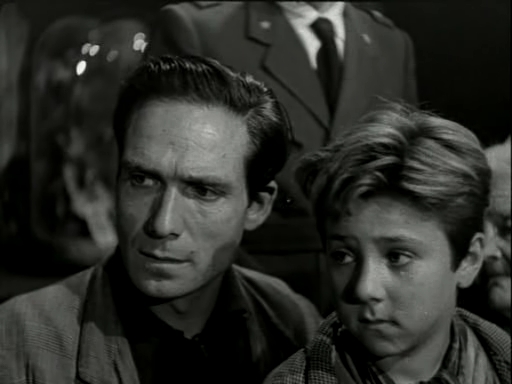
The Bicycle Thief (1948, Italy, De Sica)

The realistic lives of the Italian working class are so real and gritty that even a stolen bicycle can make the difference between work and hunger.  If you’re going to watch a neo-realist movie anyway it should probably be this one, because it’s actually pretty good.  Watched it all.

Quartet (1948, UK)

Here’s how to make a literary movie extra boring: Have the author, W. Somerset Maugham, introduce the movie by explaining the Purpose of his Art.  How to make it pathetic: Have him make a joke about some critics who once said something mean about him.  Watched: 4 minutes.

40’s movies marathon – part 116

Germania Anno Zero (1948, Italy, Rossellini)

Life sucks for all the ex-Wehrmacht, ex-Hitlerjugend and ex-Nazis in Berlin.  No place to stay, no food, an no tolerance for freethinkers any more.  What did they ever do to deserve this?  Oh, if only Hitler was alive.  Watched it all.  The ruins of Berlin are the star here.  Ruins always are.

Silver River (1948, USA, Walsh)

I hate Errol Flynn so much that I won’t even download a movie if I know he’s in it.  (He, and Shirley Temple, but I don’t think she’s making movies any more).  But sometimes one slips through the net.  Then I catch it, for a segment I call: Out like Flynn. Watched: 3 minutes.

So Dear to My Heart (1948, USA)

It would seem that there is nothing Disney did in the 1940’s that I do not like at least a little bit, no matter how far they sink from their golden years.  I can’t even dislike this sentimental children’s movie, mostly live action, about a boy and his adorable black lamb.  I mean, look at the intro sequence above, where memories from a scrapbook come alive.  Isn’t it awful!  But kind of nice!  And so is the rest.  Watched it all.

So Evil My Love (1948, UK, Allen)

It feels weird to watch movies that were written by Margaret Thatcher’s speechwriter.  Mostly in a good way.  Watched: 11 minutes.

Unbearable desolate happiness, without the sting of grief, the wine of rage, the hot fumes of fear

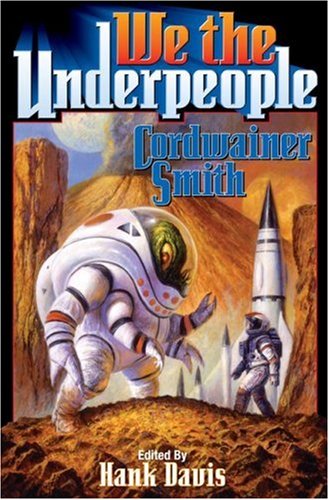
Cordwainer Smith - We the Underpeople

Science fiction was more ambitious in the post-war decades.  Reading the short stories and novels from the 40’s, 50’s, 60’s, is like watching a whole culture flex its mind, exploring uncharted areas of itself, (disguised as outer space and remote worlds etc., but us all along, always us).  And that was happening in real life as well, but you see it clearest and earliest in all these authors who were twisting and turning all the dials of humanity to see what would happen if..

Cordwainer Smith fits into this somehow.  Not at the center, but in a corner by himself.  The stories collected in We the Underpeople are set in a future that struggles with two great problems: Discrimination and perfection.  The discrimination theme works somewhat, such as when the man-animal hybrids get their own Jesus / Joan of Arc, even if the parallel to the civil rights struggle is a bit obvious.

I’m more fascinated by the perfection theme.  Humanity has rid itself of all risk, creating an anemic culture where nobody is unhappy, but nobody is really happy either, nobody does anything fun or extraordinary.  The rulers try to fix this by reintroducing an acceptable level of artificial risk, but it’s all very clumsy, even tragicomic.

Cordwainer Smith’s language has a rough edge, which I like, and the stories do to, which I don’t, not always.  There’s a garage band feel to it: The energy is beautiful, even when the notes are off.  It’s a good, wild ride, for the most.

What’s the point of debates?

I once thought that the purpose of a debate was to convince the other side that you’re right.  That didn’t work out so well.  I’ve seen it happen, for instance that’s how I became an atheist, but that “oh shit, you’re absolutely right!” moment is rare.

What debates are good for, I learned, is not “winning”, but helping me to think about my views, and identify the weak spots.  I shifted from seeing debates as a battle, where you destroy the bad guys any way you know how, to more like a boxing match, where you test your strength in a controlled situation, a game.  There are rules.  There are only temporary victories.  And it’s not personal.

Many people don’t see it that way.  Sometimes I write a critical comment somewhere and the author reacts like they’ve been assaulted on the street by some crazy stranger.  Maybe they fight back, but it’s desperate and personal, or they run away, by not responding at all.

I understand why.  But here’s what I respect: I respect someone who defends themselves, and doesn’t make it personal.  Even if they’re not good at it.  It’s a sign of confidence, that they’re not just throwing bullshit around to see what sticks.  And it shows that they understand what the point of debates is: It helps us to think.

So the next time someone criticizes your views, try to think of it as a game, and keep it up for a round or two.  It’s more fun, and everyone may learn something.

Listened to on vacation: Prokofiev, Alex North, Michael Nyman, Alan Silvestri

More music my shuffle button dug up for me on vacation, kind-of-classical edition:

Prokofiev – Piano Concerto No. 3, first movement

Prokofiev is for taking 90 degree turns into dimensions you didn’t know existed.

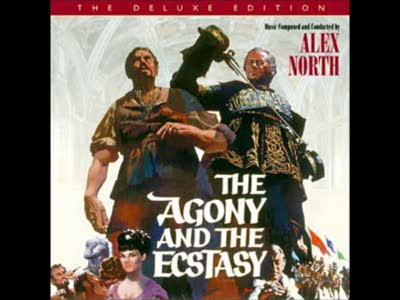
Alex North – Main Title from the 1965 movie The Agony and the Ecstasy

Every time I hear this soundtrack there’s a book I want to read while listening.  I’m not sure what book it is, because I haven’t found it yet.  I’ll know it when I find it.

Michael Nyman – The Masque, from the 1991 movie Prospero’s Books

Nyman has a repetitive, trance-inducing style that, when it’s bad, is really boring, but when it’s good, when he gets it right, it just goes on and on and on, flowering in new directions all the time, and it seems impossible that it hasn’t ended yet.  How can this go on for twelve minutes?!

Alan Silvestri – Beowulf Slays the Beast, from the 2006 movie Beowulf

I used to wonder where all the classical composers had gone, but then I realized they went to Hollywood.  Classical music split in two.  The fine arts crowd kept the pretensions and the integrity, but all the emotions, all the rousing epic scores, which had been part of classical music and opera from the beginning, that went to the movies.  Some people can’t stand this sort of music, and, some times, neither can I, but, look, if you can’t add an epic soundtrack to your life once in a while, what kind of boring person are you?

Men didn’t go to war and stay merchants

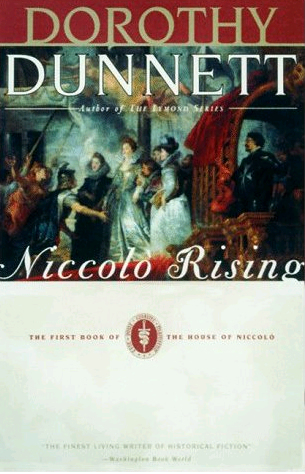
Dorothy Dunnett - Niccoló Rising

Historical fiction isn’t all that different from fantasy: It’s all about the world building, except you use one of the real worlds instead of building a new one.  Historical novels can perhaps skip the 20 pages explaining what, where and why France is, but they have to describe their world in detail all the same: The context is half the story, half the appeal.

The context in Niccoló Rising by Dorothy Dunnett is Flanders and Italy in the 15th century, a context that deserves a protagonist who could walk out of a renaissance painting.  One of those whose ambitious eyes shine out across the centuries, as if they’re asserting a right to run our world as well.

Niccoló will eventually end up in a painting like that, no doubt, but in this first of many novels in the House of Niccoló series he’s just a clever apprentice, who manouvers his way into becoming some sort of merchant/mercenary/courier/spy.

I enjoyed the novel a lot, partly because of how vividly it paints mid-15th century Europe.  But the more I think about it, the less I want to read the followups.  Niccoló is too perfect.  Despite being maybe 20, he’s absolutely brilliant, knows everything that happens in any court or banking house in Europe, can trick anyone, pull any string to make anything happen, and is a fantastic lover.

The novel says he’s flawed, but I see no sign of it.  I see a wish-fulfillment fantasy. Which can be fun, but not fun enough to last eight long novels.

40’s movies marathon – part 115

Oliver Twist (1948, UK, Lean)

There’s no need for monsters in alternate, Dickensian England, because the place is full of humans.  They’re all rotten, all except the plucky hero, and some nice people he meets along the way who give false hope that maybe life isn’t so awful after all.  But it is, and requires nothing short of a miracle to set things right.  Watched it all.

Good Sam (1948, USA, McCary)

Gary Cooper wants to be nice to everybody, but his wife knows better: Helping people makes you look silly in front of your neighbors, and it’s really expensive too. Watched: 13 minutes. I find myself wanting to watch an evil version of this movie written by Ayn Rand, where Gary Cooper’s wife teaches him to be a selfish asshole uninhibited by altruism, and not the other way around.

Act of Violence (1948, USA, Zinnemann)

Hey this is almost that Viggo Mortensen movie, A History of Violence.  Only here, the violent past that comes back to haunt the nice suburban dad is the War, where there was no such thing as nice suburban dads.  Watched it all. This is the darkest veteran movie yet.  Surviving the war is portrayed as a cruel joke: It just makes the pain last longer, the pain of knowing what you’ve become.

The Snake Pit (1948, USA, Litvak)

It has always been a reliable ticket to the Oscars: Play a mad person.  Watched: 13 minutes.

Listened to on vacation: Ratatat, Shiina Ringo, Deep Purple, Misstrip, Eero Johannes

I don’t know how I ever managed to travel without a 160GB mp3 player.  The people, they are annoying, and they talk all the time!  Gah!  The optimal solution would be to make it socially obligatory to use sign language when you talk on the bus, train etc., but I guess it’s .. easier to just turn on some music if you’re the kind of asshole who is annoyed by that sort of thing.  So here’s what my mp3 player dug up for me this vacation:

Ratatat – Wildcat, from the 2006 album Classics

Shiina Ringo – Ishiki, from the 2003 album Karuki Zamen Kuri no Hana

Deep Purple – Listen, Learn, Read On, from the 1968 album The Book of Taliesyn

Misstrip – Lilly White, from the 2009 album Sibylline

Eero Johannes – HAL Manifesto, from the 2008 album Eero Johannes