Velkommen til Norge

Jeg har et essay i Minerva i dag om veien jeg har gått i forhold til innvandringsspørsmål o.l. det siste tiåret.

En av mange ting jeg har trodd på en gang er multikulturalismen. Det var vanskelig å vokse opp i Norge på 80- og 90-tallet uten å bli innprentet i verdien av det fargerike fellesskap, og jeg antar at det er det enda. Det var en grunn til denne innprentingen. Et land hvor nærkontakt med fremmede kulturer stort sett hadde vært forbeholdt sjøfolk og misjonærer taklet naturligvis innvandring dårlig, og dette var utgangspunktet for anti-rasistiske bevegelser og multikulturelle visjoner. Det var godt ment, og riktig tenkt.

Men barnelærdommen holdt ikke det den lovet. Den lovet, i Jo Tenfjords ord, at meget er forskjellig, men det er utenpå. Inni er vi like. Men det kulturelle mangfoldet i verden forteller oss at det er omvendt: Av utseende er vi mennesker ganske like, det er på innsiden vi finner de virkelig store forskjellene. Ikke bare på tvers av kulturer, men innad i dem.
40’s movies marathon – part 84

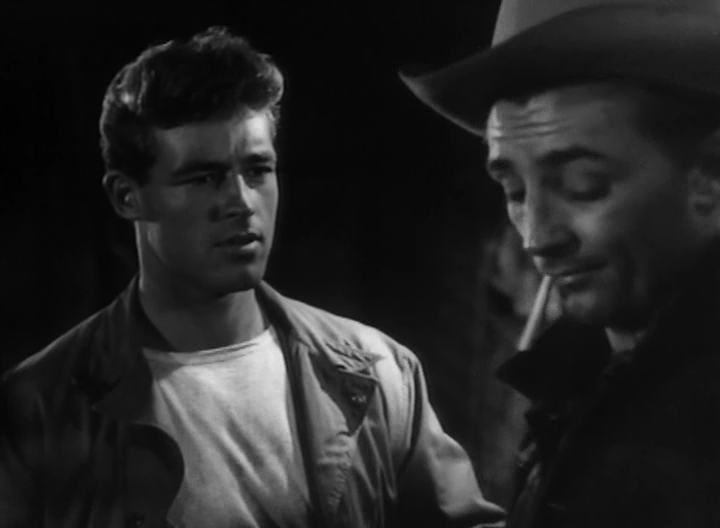
Till The End Of Time (1946) - Guy Madison, Robert Mitchum

Till the End of Time (1946, USA, Dmytryk) – Marines come home from the war, and find that nobody wants to know what they’ve been through.  The war has created a gulf between those who fought, and those who didn’t.   Watched it all.

Magnificent Doll (1946, USA, Borzage) – Abandoning the White House during the 1812 war with Britain, Ginger Rogers makes sure to take with her the original Declaration of Independence and the portrait of George Washington.  Watched: 4 minutes.

The Dark Mirror (1946, USA, Siodmak) – Either Olivia de Havilland or her identical twin Olivia de Havilland have murdered a man, and they won’t say which one.  Faced with this conundrum, the police is helpless.  Watched: 16 minutes.

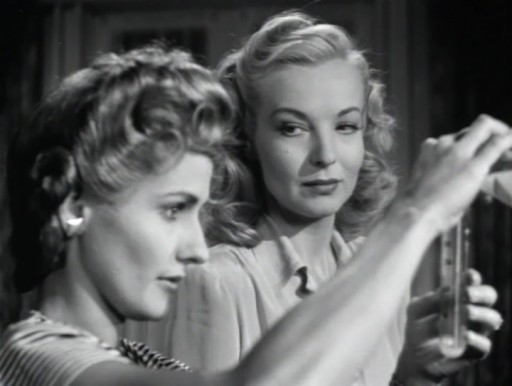
Strange Impersonation (1946) - Brenda Marshall, Hillary Brooke

Strange Impersonation (1946, USA, Mann) – The weirdest noir so far, with some really inventive touches, such as all the main characters being women, so I don’t mind that it’s terrible.  Watched it all.  IMDB reviewers complain that this isn’t strictly noir or strictly good or strictly coherent, which is to miss the point: It’s strange and fun!

Till the Clouds Roll By (1946, USA) – All these biopics are the same.  This one’s about Jerome Kern, some composer who I’m sure faced the usual adversity etc. etc.  Watched: 9 minutes.

Wanted for Murder (1946, UK, Huntington) – A woman dates a psychotic asshole, despite there being a perfectly fine nice guy available.  He’s probably the murderer referred to in the title, (unless it’s the nice guy, you can never trust these quiet ones).  Watched: 17 minutes.

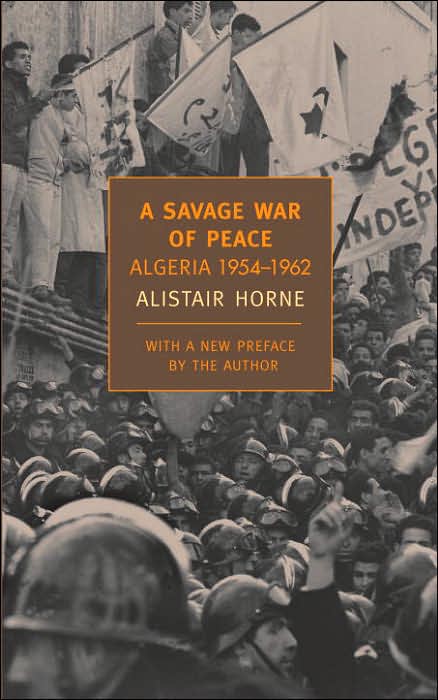
The Algerian War (in 256 words)

Alistair Horne - A Savage War of Peace - Algeria 1954-1962

When the Algerian rebellion started in 1954, Algeria had a population of 1 million Europeans, known as the pied-noirs.  France thought of Algeria as France, and the pied-noirs thought of it as home.  To lose it was inconceivable.

The war started because France refused to grant the Algerians political rights.  Even assimilated Algerians were distrusted by the French, who feared the power of the Muslim hordes.

Algerians formed the FLN, which used a combination of guerilla and terrorist tactics.  Their terrorist activity reached a peak in 1957 with the Battle of Algiers, which resulted in a fantastic movie but was a strategic mistake.

Their failure to defeat the FLN caused the fall of multiple governments, and the French political and military elite turned in despair to Charles de Gaulle, who agreed to take over if he could write a new constitution.  This created the Fifth Republic, which is still in place.

His backers expected de Gaulle to continue the war, but de Gaulle didn’t take orders from anyone.  When he began to hint that France would have to let Algeria go, the army attempted a coup in 1961, which failed. Segments of the army and the pied-noirs formed a terrorist organization of their own, the OAS, whose pointless, brutal terrorist campaign alienated the French public, and made it impossible for the pied-noirs to remain after independence.

The second worst outcome of conflict, after genocide, is mass migration, and this is what happened to the pied-noirs after Algeria became independent in 1962: They all emigrated, mostly to France, where they were assimilated.

40’s movies marathon – part 83

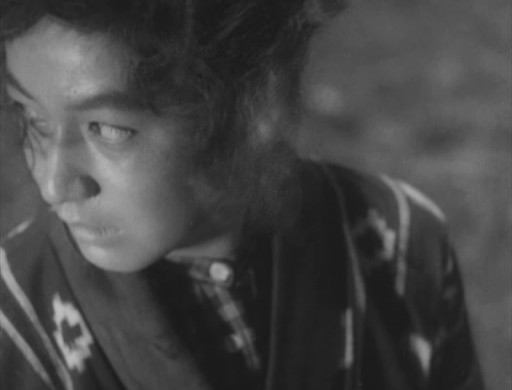
No Regrets For Our Youth (1946) - Setsuko Hara

No Regrets For Our Youth (1946, Japan, Kurosawa) – A group of anti-militarist students try to find their place in the Japan of the 30’s and early 40’s, but there isn’t any.  All they have is old ideals and a dream that things may one day be different.  Watched it all.

Tomorrow is Forever (1946, USA, Pichel) – Claudette Colbert faints when she hears that her husband Orson Welles has been killed in the war,  (the previous one).  Watched: 10 minutes.  Did you know that shock and fear does not actually cause people to faint?  The only exception is people who are afraid of blood or needles.

Devotion (1946, USA, Bernhardt) – The lives of the Brontë sisters (and their brother Dot) were just as interesting and dramatic as the novels they wrote.  Watched: 6 minutes.

The Jolson Story (1946, USA, Green) – Al Jolson loves to singa, about the moon-a and the June-a and the spring-a, he loves to sing-a.  Watched: 54 minutes, mostly spent reading the much more interesting Wikipedia entry about Jolson, where I learned that he was the Elvis of jazz, blues and ragtime, and also that the movie is completely fictitious.

Cloak and Dagger (1946, USA, Lang) – The OSS recruits Manhattan Project scientist Gary Cooper to go to German-occupied Europe as a spy, to prevent the Nazis from acquiring the nuclear bomb.  Oh come on, that’s just retarded.  Well, maybe Feynman could have done something like that.  Watched: 13 minutes.  Btw, the Office of Strategic Services is a much cooler name for a spy organization than the Central Intelligence Agency.

I det mere provinsielle Norge var det derimod lettere at udtale sig frit

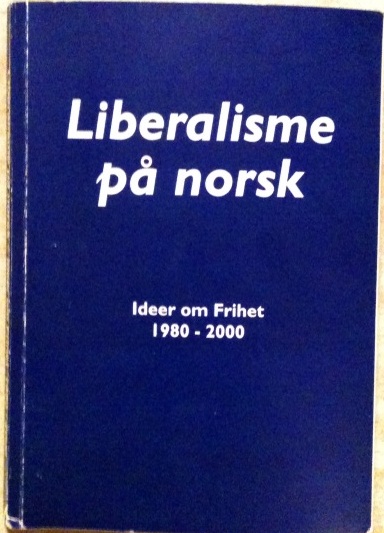
Liberalisme på norsk - Ideer om frihet 1980-2000

Liberalisme på norsk – Ideer om frihet, 1980-2000 samler artikler fra det liberalistiske tidskriftet Ideer om frihet, et tidsskrift jeg aldri har hørt om, og dermed er vel mye sagt om tilstanden til norsk liberalisme.

De beste artiklene i samlingen forsøker å grave frem sporene etter en ørliten liberalistisk tradisjon i norsk politikk.  På midten av 1800-tallet var denne tradisjonen representert ved stortingsmannen Søren Jaabæk, en slags norsk Ron Paul som var kjent som “Neibæk” fordi han stemte nei til enhver økning av offentlige utgifter.  Kulturelitens skrekkbilde fra fjorårets valgkamp var faktisk en realitet: Jaabæk stemte nei til kunstnerlønn for Bjørnson og Ibsen.

Og allerede før 1800 var det en forsiktig interesse for markedsliberale ideer blant dansk-norske embetsmenn, som i 1779 sørget for den første offisielle oversettelsen av Adam Smith’s Wealth of Nations. Den ble riktignok ikke lest.

Det er også mer filosofiske artikler her, blant annet av SF-forfatteren Øyvind Myhre.  Det er noe virkelighetsfjernt over liberalistisk filosofi, men samtidig er det interessant på sin måte.  Liberalister er blant de få som fremdeles tenker prinsippielt om grunnleggende politiske ideer, så som i hvilken grad man rasjonelt kan begrunne statens legitimitet.  Det har lite direkte relevans for virkelighetens politiske liv, men det bidrar til å belyse aspekter vi lett går glipp av oppi all pragmatismen.

Liberalismens mer frustrerende sider er også representert, med en lengre debatt rundt en av Ayn Rands grunnteser.

Mange av artiklene kan leses her.

40’s movies marathon – part 82

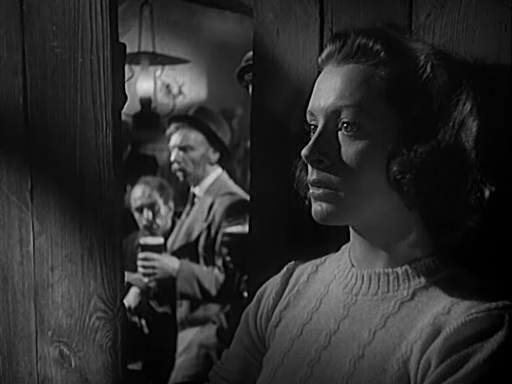
I See a Dark Stranger (1946) - Deborah Kerr

I See a Dark Stranger (1946, UK, Launder) – Raised on stories about British atrocities, Deborah Kerr goes to Dublin to join the IRA.  Turns out the old IRA isn’t very active these days, what with the independence and all, but Nazi Germany wouldn’t mind some help with their heroic struggle against the British.  Watched it all.

Mysterious Intruder (1946, USA, Castle) – An old man hires a private detective to find a girl who lived nearby.  All he remembers about her is that she was 14, and had long, blonde curls.  Okay, that’s creepy.  Watched: 6 minutes.

A Night in Casablanca (1946) - Groucho Marx

A Night in Casablanca (1946, USA, Mayo) – The Marx Brothers are getting old, literally.  But this is pretty good for one of their later movies.  The jokes are actually funny, and the rest doesn’t get in the way.  Watched it all.   Of course, Horse Feathers is five times funnier.  And Duck Soup.  And A Night at the Opera.  Did I mention that the Marx Brothers are the only 30’s and 40’s comedy team that was funny?  I had no idea before I started this marathon, but it’s true, or at least interesting.

Angel on My Shoulder (1946, USA, Mayo!) – A murdered gangster goes to Hell, where Satan recruits him to spread the cause of gangsterism back on Earth.  I guess that’s plan B after Nazism failed.  Watched: 17 minutes.

40’s movies marathon – part 81

The Blue Dahlia(1946) - Doris Dowling, Howard Da Silva

The Blue Dahlia (1946, USA, Marshall) – Alan Ladd comes home from the war and discovers that his wife has turned into a shrewish, child-killing femme fatale, a common occurence in those days, judging from what I’ve seen so far.  Also, his friend has gone mad from war trauma.  And it’s raining.  Watched it all.

The Mask of Diijon (1946, USA, Landers) – A former illusionist is being a complete asshole to everyone he knows because he wants to “get in touch with the infinite”.  I believe meditation or drugs is the generally recommended approach.  Watched: 12 minutes.

The Kid from Brooklyn (1946, USA, McLeod) – Opens with an army of pretty girls singing about how much they just love to milk cows.  What could they mean?  Watched: 9 minutes.

Humoresque (1946) - John Garfield

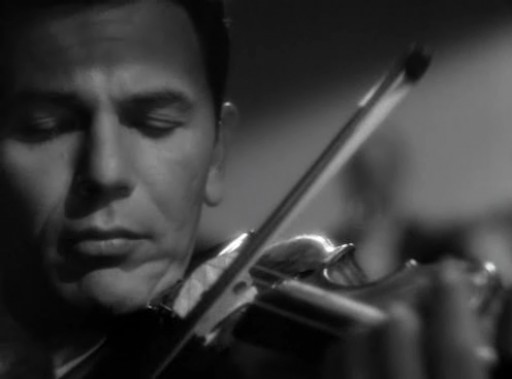
Humoresque (1946, USA, Negulesco) – Virtouso violinist John Garfield enters into a complex relationship with Joan Crawford, a troubled New York aristocrat.  His mother doesn’t approve, and I don’t either.  There’s no reason not to go with the nice girl in this one.  Watched it all.  Lots of good music.

Two Years Before the Mast (1946, USA, Farrow) – The captain of the Pilgrim is a real meanie, who works his crew to death and sends out press gangs to find replacements.  But if you ask me, the real problem is the exploitation inherent in the capitalist system of production.  Watched: 15 minutes.

91:an Karlsson (1946, Sweden, Bolander) – The Swedish officer corps is full of fat and jolly old men.  Staying out of the war by cosying up to Nazi Germany clearly has its benefits.  Watched: 7 minutes.

40’s movies marathon – part 80

Great Expectations (1946) - John Mills, Valerie Hobson, Martita  Hunt

Great Expectations (1946, UK, Lean) – John Mills has a Dickensian childhood in alternate, gothic England, and after a series of rather unlikely events he gets married and lives happily ever after.  Watched it all.

The Overlanders (1946, UK, Watt) – Australians evacuate the Northern Territory, because the Japs may be coming.  Finally an Ealing movie that isn’t particularly good, perhaps because it isn’t about the English National Character.  Watched: 8 minutes.

The Strange Love of Martha Ivers (1946) - Barbara Stanwyck, Kirk Douglas

The Strange Love of Martha Ivers (1946, USA, Milestone) – Barbara Stanwyck kills her aunt in a fit of juvenile delinquency, and ends up married to Kirk Douglas, a cowardly alcoholic.  Life sucks all around, but at least they’ve got money and power and an entire little town to boss around.  Watched it all.

Anna and the King of Siam (1946, USA, Cromwell) – Welcome to the half-barbaric land of Siam!  (Cue dramatic music by Bernard Herrmann.)  Watched: 6 minutes.

Gilda (1946) - Rita Hayworth

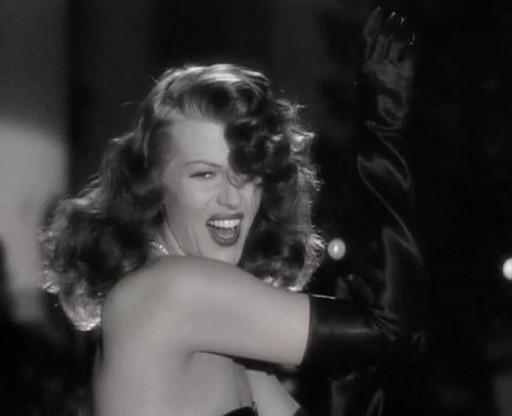
Gilda (1946, USA, Vidor) – Glenn Ford is the cynical gambler who makes his own luck.  Rita Hayworth is the boss’s wife who sleeps around.  They’re headed for love/hate, murder and ruin etc.  These noir plots are beginning to get predictable, but oddly enough that actually makes them more enjoyable.  Watched it all.

Without Reservations (1946, USA, LeRoy) – Claudette Colbert has written a popular inspirational novel that makes everyone feel all warm inside despite the cover looking just a tiny bit like a Nazi propaganda poster.  She wants Cary Grant to star in the movie version, but will probably have to settle for John Wayne.  Watched: 13 minutes.

40’s movies marathon – part 79

The Killers (1946) - Burt Lancaster, Ava Gardner

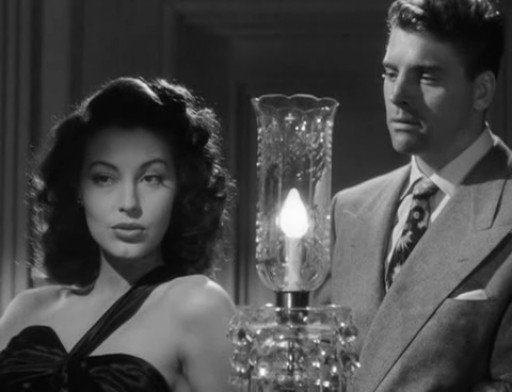
The Killers (1946, USA, Siodmak) – Two Tarantino-awesome professional killers arrive in a small town and murder a guy.  An insurance claims investigator (well, why not?) looks into the death, and puzzles together the life of the victim, a good boy gone bad.  A woman is to blame, though all she seems to do throughout the movie is lie seductively in the background.  Watched it all.

Devil Bat’s Daughter (1946, USA, Wisbar) – Devil Bat’s dead, daughter arrives in town, yada yada.  On a completely unrelated note, I miss MST3K.  Watched: 8 minutes.

Cluny Brown (1946, USA, Lubitsch) – Holly Golightly pretends to be a plumber in pre-war London.  Watched: 14 minutes.

The Verdict (1946) - Sydney Greenstreet, Peter Lorre

The Verdict (1946, USA, Siegel) – A Scotland Yard superintendent hangs an innocent man in foggy, 1890’s London, loses his job, and falls to pieces.  A locked-room murder mystery gives him the opportunity to play the Holmes to his successor’s Lestrade, while Peter Lorre hangs about being Lorreish.  Watched it all.

Road to Utopia (1946, USA, Walker) – Bob Hope and Bing Crosby tell dirty jokes and parody the movies, none of it funny.  Watched: 9 minutes.

Badman’s Territory (1946, USA, Whelan) – I’m not against voiceover in movies, but two minutes of it is too much, especially when it’s just to inform us that we’re in a lawless town where one lone journalist stands up for the cause of Freedom.  Also I prefer the “absolutely true historical fact!” section of a movie intro not to be completely made up. Watched: 11 minutes.