Jeg er liberal og optimist av instinkt, men jeg har ett problem: Jeg stoler ikke på alle de andre som er det. Jeg mistenker at mange av dem innerst inne er koseliberalere, som helst bare vil tenke på alt som er godt, fordi de ikke orker tanken på at frihet kan ha en mørk side, og at verden i blant beveger seg i feil retning.
1950s movies marathon – part 90
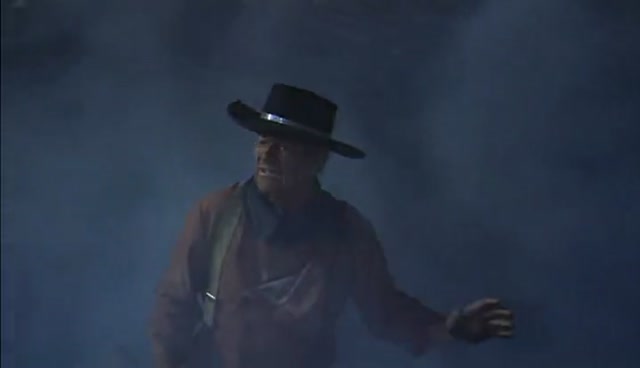

The Searchers (1956, USA, Ford)
I’ve heard it said that the anti-heroic tone of this movie, where John Wayne is almost as hateful and murderous as the Comanches who have kidnapped his niece, represented something new in westerns in 1956. But Anthony Mann had been making cynical westerns for year. What this is, though, is an exceptionally well-made western, and that has always been rare. Watched it before, several times, but I didn’t notice until this time how much the Tatooine scenes in Star Wars owe to it.
The Conquerer (1956, USA, Hughes)
This movie is best remembered today for (allegedly) causing half the cast and crew to (eventually) die from cancer, because it was filmed downwind from a nuclear test area. Also, for the odd choice of having John Wayne playing a cowboy dressed up as Genghis Khan.Even the Obligatory Decadent Banquet Scene is unusually silly. Watched: 8 minutes.

Between Heaven and Hell (1956, USA)
Whenever a movie opens with a piece of music that makes me sit up and pay attention, more often than not the music is written by Hugo Friedhofer. In this movie he borrows the Gregorian chant for Dies Irae, which was used to even more chilling effect in the intro to the T. H. Dreyer movie Vredens dag, (a movie intro so ominous that it makes you want to go out and invent black metal). Anyway: Watched: 12 minutes.
Minireviews – Guantanamo diary, Persian night
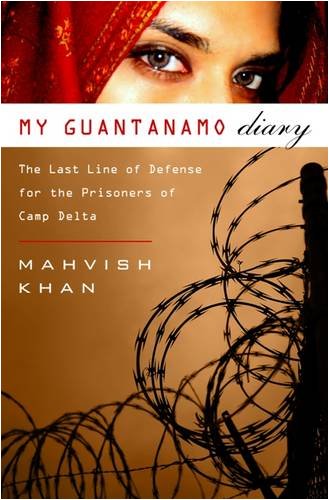
Mahvish Rukhsana Khan – My Guantanamo Diary (2008)
Khan begins working as a translator for the lawyers of the detainees at Guantanamo because she believes that, although they may be guilty of what they are accused of, they still deserve to face their accusations in a fair trial. She gradually comes to believe that most of the detainees are in fact innocent, victims of power struggles in Afghanistan and Pakistan, and that many have been tortured and sexually assaulted. The whole system is a massive injustice.
Recommended: Yes. She could be more skeptical of the detainees’ stories, but she backs up the strongest claims with trusthworthy sources.
Amir Taheri – The Persian Knight, Iran under the Khomeinist revolution (2008)
So when a book about modern Iran opens with a chapter about how Shia Islam is stupider than Sunni Islam, a lot of questions pop into my mind: What was the author thinking? What was the editor thinking? What were the blurbers thinking? The one question I’m not asking is: What other valuable insights does this author have to offer me about life, religion and politics in modern Iran?
Read: 31 pages.
Recommended: No.
1950s movies marathon – part 89

The Forty-First (1956, USSR)
Even Soviet war movies were good in 1956. Like many Soviet movies of this time, it feels like an alternate reality Hollywood movie, in this case an alternate reality Civil War western: A lost company of soldiers trek across a desolate landscape in search of their army, dragging an enemy agent along with them. And this isn’t The Fall of Berlin. The bad guys are mostly bad, but the good guys are all human. And the ending – ah, I love Russian sentimentalism. It’s my second favorite type of global superpower sentimentalism. Watched it all.
Around the World in Eighty Days (1956, USA)
I love how seriously the intro takes itself, explaining how technological progress has turned many of Jules Verne’s fantasies into reality, and may soon even make it possible to travel to the moon. That’s the spirit that eventually got them to the moon a decade later. But the movie itself is too farcical. Farce is all wrong for this story. Watched: 37 minutes. Beautifully shot, though. One of the best-looking widescreen movies so far.

The Violent Years (1956, USA, Wood)
Most 50s teenage gang movies seem like they’re made by peaceful, law-abiding adults who try to imagine what this “juvenile delinquency” they read about in the papers is all about. Something to do with music, guns, and .. mmmm dangerous gangster girls dragging innocent boys into the woods. Oh yes, yes yes yes. Ahem. Watched it all, with MST3K commentary.
Minireviews: Mongolian wolves, Congo tragedy

Jiang Rong – Wolf Totem (2004)
A Beijing student during the Cultural Revolution goes native among the nomads of Inner Mongolia, and learns to respect their love/hate-relationship with the wolf packs that terrorize their grasslands. Wolves taught the Mongols military tactics, and keep their pests in check. You fight them, because you must, but you also admire them and recognize their usefulness. The Han Chinese have become weak and sheep-like, and should learn from the wolf-like qualities of the Mongols.
Recommended: Strongly. Partly for being a fantastic novel, which although being entirely natural has the mythic power of a Sandman substory. And partly for what it says about modern China’s search for identity. Some have interpreted its massive popularity as a sign of an emerging receptivity for fascism. I think that’s too literal-minded, and ignores the ecological message. But when millions of people read a novel that attacks them for behaving like sheep, it’s certainly interesting.
Theodore Trefon – Congo Masquerade (2011)
Various people have for more than a century done their best to destroy what little economic and social fabric there has been to destroy in Congo / Zaire. They succeeded. Now nobody knows how to fix it, and there is little hope for the near future.
Recommended: Weakly. The topic is interesting, but the writing is unfocused. Contrast with Jason K. Stearns’ Dancing in the Glory of Monsters.
Minireviews – Failed aid, unwelcome police, decline and fall all around
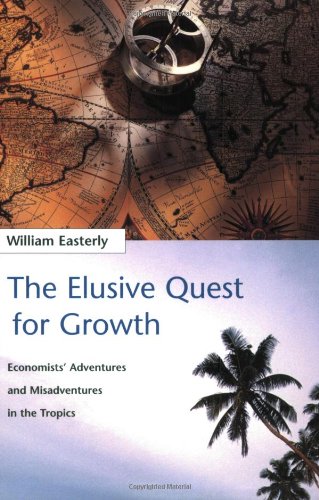
William Easterly – The Elusive Quest for Growth
None of the methods development agencies tried for creating economic growth countries actually worked. Not investment, not education, not population control, not aid in return for reform, and not debt relief. Growth only happens when all the incentives of all the major players in a society are aligned in the right way, and nobody has found out how to make that happen yet.
Recommended: Strongly. But I would add that incentives need a Story to keep them in place. People in wealthy societies do not act constructively only because they are incentivized to, but also because they believe in a story about where this fits into the greater picture.

Jonny Steinberg – Thin Blue (2008)
Two decades after the police returned to the poorest neighbourhoods of South Africa, the people who live there do not yet consent to being policed. They and their local police officers play a dangerous game where each side provokes the other to the degree that is necessary for them not to lose face, but not so much that they risk getting killed for it.
Recommended: Yes.
Evelyn Waugh – Decline and Fall (1928)
I expected more than just a slightly meaner P. G. Wodehouse. Now, I like Wodehouse, I just don’t feel like reading him right now, (or most other times, come to think of it, but I’m fairly certain that I do like him, or at least that I have fond memories of having liked him in the past.)
Read: 74 pages.
Recommended: Weakly.
1950s movies marathon – part 88
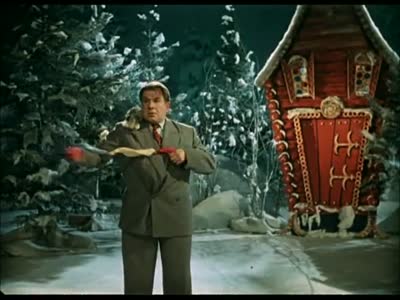
Karnavalnaya Noch (1956, USSR, Ryazanov)
I had no idea that in the Soviet Union in 1956 you could make a musical about how the spirit of youth will triumph over the habits of old, stupid men still stuck in the Stalin era. But they did. They really did. Watched it all. It’s basically a Soviet The Band Wagon. I’m now officially a fan of mid-50s Soviet cinema. I wonder how long they got away with doing things like this. The satire here is almost subversive.
War and Peace (1956, USA)
This sort of movie is made for people who don’t want it to be known that they don’t know what the great classic novels they haven’t read are all about. Well, I haven’t read War and Peace, but, although I’m not proud of this, I’m certainly not going to cheat by watching it. Watched: 5 minutes.

Bus Stop (1956, USA)
This is one of those charming comedies where, by changing just a few lines and the way they’re spoken, you end up with the disturbing tale of a retarded backwater rapist who kidnaps and forcibly marries a weak-willed bimbo. Watched it before, and again now. It’s a strange movie, even if you don’t see it as a rape tragedy. Both the main characters are annoyingly stupid, but for some odd reason the movie itself isn’t. It seems to be showing us what you’re left with when you take away all the dishonest pleasantries of courting: An ugly, pathetic war of the sexes. In other words, we’re better off being hypocrites.
1950s movies marathon – part 87
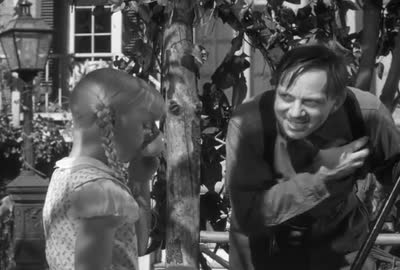
The Bad Seed (1956, USA)
And then gradually you begin to suspect that your daughter has no soul. Watched it all. It’s the movie birth of the psychopatic child – and the child-like psychopath. Patty McCormack does an amazing job portraying pure evil with a moderately plausible outer layer of innocence. The only thing wrong with this movie is the absurd happy ending, where an Act of God solves all problems, but even so, this is one of the most disturbing movies Hollywood had made up to that point – another nail in the coffin of the Production Code.
The Killing (1956, USA, Kubrick)
The classic caper formula: First the crew gathers, then they execute, and then they fail tragically. Watched it before, and I think I liked it, but this time I find myself too annoyed with the voiceover. The director being Kubrick, this movie invites pretentious over-analysis, but come on, it’s just a well-made throwback to film noir with some inspired touches, nothing truly new.

Rock Around the Clock (1956, USA)
This is the second ’56 rock’n roll movie about two middle-aged has-beens who try to wrap their heads around this new music the teenagers are listening to, so that they can make lots and lots of money off of it. I guess it’s a story producers could relate to. Watched it all.
Alexander the Great (1956, UK)
This epic movie about the epic leader Alexander the Epic is so epic that I’m already falling asleep. Watched: 7 minutes.
1950s movies marathon – part 86

Teahouse of the August Moon (1956, USA)
American imperial administrators arrive to bring the light of civilization to Marlon Brando and the other barbarian natives of Okinawa. Watched it all. This is almost a Marx Brothers movie, with Glenn Ford as Groucho, Marlon Brandon as Chico, and Machiko Kyo as Harpo.
The Ten Commandments (1956, USA, DeMille)
Not unlike certain high-budget TV producers of today, Cecil B. DeMille takes the social values of his day and places them in the legendary past, creating a spectacular multi-hour epic with bad writing and worse actors. Watched: 18 minutes, then fast-forwarded through the exciting bits, to find out if the Charlton Heston-sounding clips in this Hanzel und Gretyl song were actually from this movie, (they are). I thought I’d seen this movie before, but I can’t remember a single scene, and there are scenes here you’re not ever going to forget once you’ve seen them. Unfortunately, the total effect of it all is to highlight all the ways in which this story is utterly implausible. I prefer the book.

Spring on Zarechnaya Street (1956, USSR)
Love is possible in the brown and dusty industrial cities of the Soviet Union – just possible. Watched it all. The few post-war Soviet movies I’ve seen so far have an almost American level of ambition to them. Earlier the ambition was channeled into Stalin worship, but the ’56 movies feel freer, more alive. Human. Look at the scene above – Hollywood could have made that scene. The French or Italians would have bungled it completely.
Minireviews: Expert intuition, energy myths, and the Soviet Dream
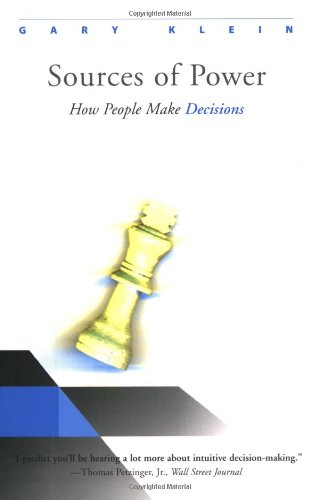
Gary Klein – Sources of Power – How People Make Decisions (1999)
Expertise can be an illusion, but in fields where people run into similar situations repeatedly, and receive feedback on the decisions they make, it is possible to build up the powerful sense of intuition that marks a true expert. Where the novice agonizes over multiple options, the expert immediately sees the right one – or at least one that is good enough to act upon. It looks like magic, but is actually just subconscious pattern-matching that allows them to see what others don’t.
Recommended: Yes.

Vaclav Smil – Energy Myths and Realities – Bringing Science to the Energy Policy Debate (2010)
There are no easy solutions to our energy problems. Electric cars are no more green than the electricity they run on, nuclear power is expensive and unpopular, wind power requires a lot of space and complex infrastructure, and biofuel pits food and energy in direct competition for the same land. And no matter how theoretically useful a new technology may be, the transition to it must necessarily be slow and expensive. Basically, if we’re not making large investments in Technology X right now, (and we’re not), it’s not going to be a major energy source 30 years from now.
Recommended: Yes.
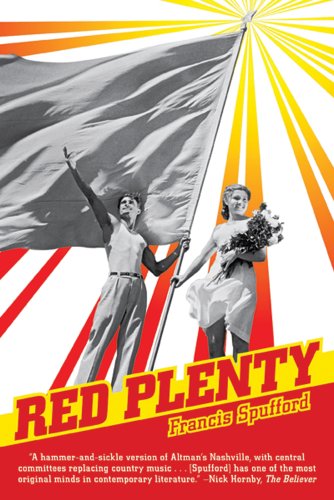
Francis Spufford – Red Plenty – Inside the Fifties Soviet Dream (2010)
Hayekian market philosophy told as a science fiction novel from reality, about a people who set all their best minds to the work of building something smarter than markets, and failed.
Recommended: Strongly.