1950s movies marathon – part 85

X: The Unknown (1956, UK)

These early Hammer sci-fi horrors are basically prototypes for Doctor Who: Level-headed and massively ambitious all at the same time. And this one features the earliest plausible atomic monster I’ve seen in a movie. Watched it all.

Gun the Man Down (1956, USA)

Faster, angrier – it really does look like 1956 was the year the tolerably good bad western was born. Watched: 14 minutes.

The Undead (1956, USA, Corman)

Hypnosis .. reincarnation .. medieval witches ..  Satan .. something something .. Tibet something something. Wait, what? Watched it all – with MST3K commentary. It may in fact be harmful to watch this movie without help from Mike and the bots, and this is one of the best riffs they ever did.

Qivitoq (1956, Denmark)

One of those movies where the scenery is the main character, in this case Greenland, beautifully shot in widescreen and color. Watched: 13 minutes.

Baby Doll (1956, USA, Kazan)

Tennessee Williams seems to be cycling through all sorts of eccentric characters in the hope of coming across some that are both new, interesting, and can be used to tell a good story. Here, too, he ends up with two out of three.  Watched: 25 minutes.

1950s movies marathon – part 84

Ilya Muromets (1956, USSR)

The high budget Soviet movies of the 40s and 50s often feel like they were made in an alternate universe where the ambition that in Hollywood was channeled through greed, instead was channeled through the Ministry of Culture of a borderline-totalitarian dictatorship. Which is more or less what really happened. Watched it all. This is a fantastic fantasy epic, visually ahead of the rest the world, and it makes up for being weird in bad ways by being also weird in good ways.

Starik Kottabych (1956, USSR)

A Young Pioneer discovers a mischievous genie in a bottle, which teaches him valuable life lessons about power and responsibility. Watched: 20 minutes. I think this is the first Soviet movie I’ve seen that portrays anything resembling daily life in the modern Soviet Union.

Susaki Paradise (1956, Japan)

The bar right at the edge of the red light district is a convenient place to work for girls who are not entirely sure which of the two worlds they belong to. It’s less convenient for her loser husband, who gets constant reminders of his inability to provide. Watched it all.

1984 (1956, USA)

The 1954 BBC version is better. It even features that guy who had that minor role in Star Wars. Watched: 13 minutes.

Break the Darkness Before Dawn (1956, China)

If high-budget war movies are a sign of prosperity, then I predict that Chinas will have enough to eat for everybody for years to come. Watched: 22 minutes.

Minireviews: Female suicide terrorists, Nick Cohen, cold warriors

Barbara Victor – Army of Roses (2004)

Terrorism is hard, but becomes easier when there’s a social context that encourages and aids it, such as the one Fatah, Hamas and Islamic Jihad perfected during the second intifada, and which for a time also encouraged women to become martyrs. Victor looks into the backgrounds of these female suicide terrorists, and finds that their personal lives had been brought to a dead end, from which a socially and politically acceptable suicide appeared the natural way out.

Recommended: Yes. Victor finds the right balance between trying to understand what motivates these terrorists, and not excusing them.

Nick Cohen – You Can’t Read This Book (2012)

Censorship is bad.

Recommended: Yes, for its historical and factual sections, but Cohen is weak on ideas – he is a journalist and polemicist, not a thinker – so follow up with Frank Furedi’s less obvious On Tolerance.

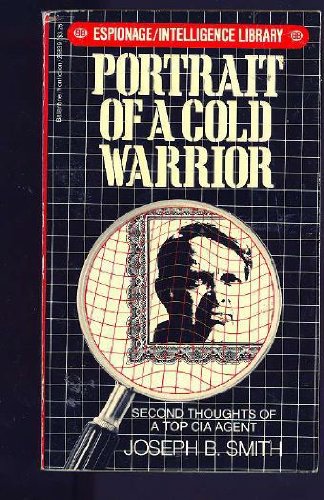
Joseph B. Smith – Portrait of a Cold Warrior (1976)

A former CIA agent reveals the unimpressive reality behind their work in South-East Asia and Latin American in the 1950s and 60s. The CIA comes across as a top-heavy but at times also reckless organization whose involvement in a country could mean anything from “was the decisive factor in a coup” to “got entangled in affairs they were too stupid or arrogant to understand”.

Recommended: Yes. I respect the author’s inner conflict between believing that he is fighting the right war for the right side, and being frightened by the people who fights it alongside him.

Han representerer ingen

I romanen Perdido Street Station av China Miéville hjemsøkes gatene av et monster som fanger sitt bytte ved å folde ut vinger med et hypnotiserende mønster ingen er i stand til å fjerne blikket sitt fra. Ofrene trollbindes i dyp fascinasjon, og blir stående hjelpeløse. Den eneste måten å bekjempe monsteret på, er å se en annen vei.

Jeg tenker på dette når jeg ser på alt som er skrevet og sagt om personen Anders Behring Breivik gjennom rettssaken de siste ukene. Hele Medie-Norge har samlet seg ved Oslo tinghus, og er dypt fascinert av den tiltalte. De stirrer og stirrer, skriver og skriver, prater og prater om det de har sett. Alt for å forstå hvem denne mannen virkelig er.

Og alle ser noe litt forskjellig fra de andre.

Les resten hos Aftenposten.

1950s movies marathon – part 83

Invasion of the Body Snatchers (1956, USA)

The tiredest cliché about 1950s sci-fi is that it was all Really About Fear of Communism, because, you know, people had this irrational belief that the Soviet Union was governed by a clique of murderous fanatics who desired to rule the world, and they didn’t know how else to express it. But, trust me on this – when old Hollywood wanted to make movies about Communism, they knew how to make movies about Communism. When they made movies about a zombie apocalypse from outer space, it was probably for the same reason they do so today: because they wanted to tell a good story. Watched it before, and again now.

The Girl Can’t Help It (1956, USA)

Two middle-aged has-beens try to make some money on all this music the young people are into. This also seems to have been what the producers had in mind, because this is the highest budget rock’n roll movie so far. Watched: 19 minutes, plus the musical numbers. Features Jayne Mansfield trying her best to impersonate Marilyn Monroe, but the hottest thing here is the music.

The Burning Hills (1956, USA)

Did westerns get a lot better in 1956? Not the best ones, they were always good, but the ones that are hardly more than competently assembled revenge fantasies, the kind that might inspire someone to invent the spaghetti western. Watched it all.

Reprisal! (1956, USA)

Look, “Reprisal” is just a bad title for a western, and it doesn’t get any better by adding an exclamation point. Watched: 7 minutes.

NRK nettmøte

Har deltatt i nettmøte hos NRK:

Stærk jobber til daglig i IT-bransjen som programmerer, og har i flere år skrevet om en rekke temaer i blogginnlegg, aviskronikker og artikler.

– Jeg startet en blogg etter 11. september med fokus blant annet på islamsk ekstremisme, hvor jeg etterhvert også endte opp med å krangle med forløperne til dagens kontrajihadister, blant andre «Fjordman», fortalte Stærk til en leser.

Stærk begynte etter terrorangrepet den 22. juli å lese Breiviks kommentarer på ulike nettsteder, og bladde i manifestet hans. Stærk kjente igjen mye av innholdet, nettstedene Breivik siterer og skribentene han beundrer, blant annet norske «Fjordman».

Les resten hos NRK.

1950s movies marathon – part 82

Solid Gold Cadillac (1956, USA)

Miss Smith goes to Manhattan, and teaches the fat cats about corporate ethics and the rights of the Small Shareholder. Watched it all.

Our Mr Sun (1956, USA, Capra)

A charming science documentary with one flaw: That there’s nothing uglier than 50s animation. Also, it’s meta, which gets old. Watched: 10 minutes.

Der Hauptmann von Köpenick / The Captain from Köpenick (1956, West Germany)

In Wilhelmine Germany authority is everything, and appearance gives authority. Anyone who can find a uniform and put on a stern manner, and knows enough military mumbo jumbo to impress the guards, can just walk right into the Kolsås NATO base and steal their whisky supply. Or .. no, let’s not go there. Watched it all.

The Creature Walks Among Us (1956, USA)

The creature that walks among us is the one from the Black Lagoon, who is kidnapped by scientists who want to dress him up as a man and teach him about the rains of Spain. Watched: 10 minutes. It’s dull. But – the title of this movie is poetry.

Le Mystère Picasso (1956, France)

A movie made out of nothing but Picasso drawing on the screen before our eyes, proving beyond a doubt that he was a fairly competent cartoonist. Watched: 20 minutes.

1950s movies marathon – part 81

Star in the Dust (1956, USA)

This isn’t very good, but for some reason it feels more like a Western than most of the other not very good Westerns so far. Maybe it’s the closeups, the (admittedly awful) gitar music, and the no-nonsense (but admittedly ridiculous) “town edging steadily closer to war” story. Watched it all.

Liane, Jungle Goddess / Liane, das Mädchen aus dem Urwald (1956, Germany)

A number of movies have been made about white women who are worshipped as goddesses by childlike African tribes. Of course, it adds a certain piquancy when the story is told by Germans, (and not only because their goddess happens to walk around topless). Watched: 9 minutes, plus the naughty bits.

Swamp Women (1956, USA, Corman)

Roger Corman has what most B movies so far have been lacking: Sympathy for the Devil. Plus, hardened girl criminals in short pants. Watched it all, though to be fair this is a bad movie.

Rock, Rock, Rock (1956, USA)

It says something about how little life there was left in the swing generation that there’s more great music in this half-assed rock’n roll B-movie than there were in all the major movies of the previous years. Watched the musical bits, of which this Chuck Berry song is the one that makes me the giddiest.

Sirkus Behring Breivik

Terrorangrepet 22. juli er ikke over, det fortsetter i dag i Oslo tingrett.

Anders Behring Breivik kaller rettssaken for «fase 3» av operasjonen sin. Det er nå han skal han utdype sitt budskap til de 15 prosent av befolkningen han tror har forståelse for det han har gjort, slik at de tar del i borgerkrigen mot «kulturmarxistene» og muslimene.

Det foregår ingen borgerkrig. Det finnes ingen horder av tilhengere. Fanatikere som Behring Breivik oppnår sjelden sine hovedmål, fordi de ikke lever i den virkelige verden. De lever i en fantasiverden hvor politikk og galskap glir over i hverandre.

Men de kan allikevel gjøre stor skade på veien. Behring Breivik har allerede lyktes i å drepe. Nå er spørsmålet om vi vil få en verdig rettssak, eller et nedrig mediesirkus som etterlater et lag av skitt på alle det kommer i kontakt med.

Resten i Aftenposten.