Minireviews – Darfur, Houellebecq, Iraq

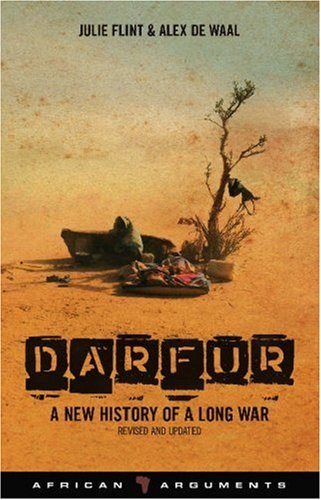
Julie Flint, Alex de Waal - Darfur, A new history of a long war (2009)

Julie Flin & Alex de Waal – Darfur, A new history of a long war (2009)

When the decades-old ethnic conflicts in Darfur, in western Sudan, escalated in the early 00s, ethnically African groups formed two rebel movements, the SLA and the JEM. The government in Khartoum decided to use local Arab supremacist militias, known as Janjaweed, to suppress them. This casued a borderline-genocidal conflict in 2003 to 2004, which had morphed into a more traditional civil war by the time the West started to warn of a Darfur genocide. The authors argue that for the years that followed, the “save Darfur” media story had little to do with reality.

Recommended: Yes.

Michel Houellebecq – The Elementary Particles (1998)

Absolutely Fabulous with angst instead of jokes.

Recommended: No. It’s a powerful statement of disgust, but didactic The Way We Live Now novels don’t age well. Houellebecq can see nothing but his own generation’s sufferings, and I’m not impressed by the philosophy or the attempt at an SF ending.

Nir Rosen - Aftermath, Following the bloodshed of Americas wars in the Muslim world

Nir Rosen – Aftermath (2010)

Rosen argues that the sectarian civil war in Iraq was not inevitable, but a result of the mistakes of the American occupation force, which created a level of Sunni-Shiite rivalry that had not really been an issue before. The counterinsurgency tactics they adopted later may or may not have helped to end the civil war, depending on who you ask. What is certain is that lots of people died and got scattered across neighbouring countries. Mission failed.

Recommended: Yes, although the book reads like a draft, long and unfocused.
Minireviews – Anxiety and chavs

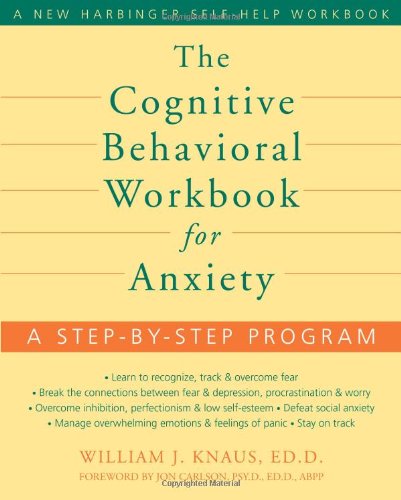
William J Knaus - The Cognitive Behavioral Workbook for Anxiety (2008)

William J. Knaus – The Cognitive Behavioral Workbook for Anxiety (2008)

I’m not an anxious person, with a few exceptions, but I used to be. I bugfixed myself by accidentally combining a set of techniques – self-awareness, changing how I thought, meditation, and gradual exposure to the things I feared – that I later learned are similar to cognitive behavioral therapy, and also, on a different level, to Stoicism. If I am sometimes impatient with people who complain that they’re helpless, it’s because I once walked out of my own personal mud-hole one step at a time. Paradoxically, it’s because I know it’s hard that I look down on you for saying it’s impossible.

Recommended: Yes. If I had had a book like this at the time, I could have gone about it in a more focused way.

Owen Jones – Chavs, The demonization of the working class (2011)

I’m confused by how British television portrays poor people. Which are insightful caricatures, and which mean-spirited? Living in a classless society, I can’t read the markers. Jones argues that it’s all mean-spirited. Unfortunately, this is one of those books that makes its point by quoting stupid pundits saying stupid things, then ties it all together with the author’s ideology, (ie. the Tories hate poor people). But it does have funny moments, such as when Jones writes that his real complaint against the comedy-drama Shameless isn’t the characters, but that it doesn’t Portray Poverty In Its Proper Political Context (ie. the Tories hate poor people).

Read: 23 pages, then skimmed the rest.

Recommended: No.

1950s movies marathon – part 74

Blackboard Jungle (1955, USA)

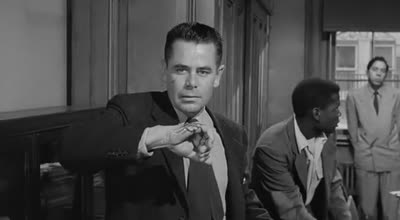
50s cultural history was a bit unclear to me before I started this marathon, so I was surprised to learn that it’s not until 1955 that you get movies that feature (actual) rock’n roll music and juvenile delinquents with (almost) stereotypical 50s hairdoes.  Watched it all.

Creature With the Atom Brain (1955, USA)

Is it very pedantic of me to point out that it makes absolutely no sense to talk about a “creature with an atom brain”, because all brains are made of atoms? Especially when the creature in question is actually a remote-controlled zombie. Watched: 5 minutes.

The Quatermass Xperiment (1955, UK)

Three men go up in space, only one of them returns, and he has become .. EVIL. Watched it all before, but I didn’t appreciate then that this is one of the best SF movies of the 50s so far – and also perhaps the first genuinely good SF horror. Welcome aboard, Hammer.

Jump Into Hell (1955, USA)

“This film is dedicated to the thousands of heroic men and officers of the French Union Forces who defended the fortress of Dienbienphu. Their courage stands as a symbol and proof that free men will forever oppose slavery.” Ah yes. I don’t think it was quite that simple. Watched: 5 minutes.

Daddy Long Legs (1955, USA)

The Swing Generation, they got old. Watched: 7 minutes.

1950s movies marathon – part 73

I Live in Fear (1955, Japan, Kurosawa)

Which is more insane: Being consumed with fear of a nuclear holocaust, or being able to live calmly with the knowledge that the world may end suddenly at any moment? Watched it all.

Quentin Durward (1955, USA)

It’s bad enough for Walter Scott to give both a novel and its main character the name “Quentin Durward”, but that is no excuse to make it worse by repeating the error in the movie version a century later. Watched: 5 minutes.

The Day the World Ended (1955, USA, Corman)

The only thing this post-apocalypse has is Roger Corman’s unique style, brutal and trashy, but never mind that just yet. Watch Five instead. Watched: 13 minutes.

As Long as They’re Happy (1955, UK)

The British have been trying for years to copy the American fast-paced musical-comedy formula, and this time they’ve actually got it almost right, right down to the cheerful consumerist message. Watched it all. Its only fault is the music.

Killer’s Kiss (1955, USA, Kubrick)

Well, everybody has to start somewhere. Watched: 10 minutes, then fast-forwarded to .. wow!

The Dark Avenger (1955, USA)

As a rule of thumb, you are recommended to stay away from all mid-50s widescreen movies that open with a shot of a medieval castle. Watched: 5 minutes.

Krigsbloggerne som alternative mediestemmer

Jeg har lagt ut artikkelen min fra Internasjonal Politikk 1/2012, et stykke blogghistorie om krigsbloggerne på 00-tallet.

På begynnelsen av 2000-tallet gjorde den nye bloggteknologien at mennesker som normalt har begrenset adgang til tradisjonelle medier, fikk mulighet til å enkelt bygge opp sine egne, alternative medier på nettet. En gruppe som spesielt omfavnet denne teknologien, var politisk interesserte mennesker som var misfornøyde med vinklingene i tradisjonelle medier. Terrorangrepene 11. september 2001 utgjorde startskuddet for det første større miljøet av politiske bloggere.

Miljøet som vokste frem i årene etter var primært amerikansk, men hadde et internasjonalt ambisjonsnivå, og avleggere i mange land, også Norge. Skribentene i denne første bølgen av politiske bloggere var i overvekt sympatiske til krigen mot terror, og Bush-administrasjonen generelt, og plasserte seg til høyre for det de opplevde som en venstredominans i de etablerte mediene. Mange identifiserte seg i starten som “krigsbloggere”, dvs. bloggere som skrev om krigen mot terror, men som samtidig heller ikke var redde for å uttrykke støtte til den.

Les resten her.

1950s movies marathon – part 72

Five Against the House (1955, USA)

I think this could be the first ever proper college movie, with witty youths, hazing, parties and gambling. There was that one Mr Belvedere movie, but that doesn’t count, and plenty of movies that took place in colleges, but that doesn’t make them college movies. Perhaps this one isn’t either, because it morphs into a rather implausible caper movie. Watched it all.

Three for the Show (1955, USA)

Betty Grable finds herself married to two men at the same time, and decides to resolve this in the least interesting way possible: By choosing one of them. But not until toying with the idea of bigami for a while. Watched: 30 minutes.

Cockleshell Heroes (1955, UK)

Cheerful British war movies about gangs of cheeky individualists who carry out daring raids into enemy territory are so much much more fun than thinking about what the average soldier or civilian went through. Watched it all, although it has to be said that their sabotage raid is pretty dumb, and only works because the Germans are dumber. Then again, it did actually happen, and .. er .. “shortened the war by six months”. Okay then.

Lola Montez (1955, France)

This is what happens when you give a director too much money and power. Bah, directors, what do they know about movies! Watched: 6 minutes, plus the naughty bits, of which there aren’t any, so I can’t figure out how this movie caused the scandal the intro text boasts about.

1950s movies marathon – part 71

Picnic (1955, USA)

On youth and age, beauty and brains – and sex, which is dealt with more directly here than in any movie I’ve seen since the time of Mae West. The Hayes Code, apparently, is dying. Most of all, though, this is a snapshot of mid-50s America, honest but not cynical, and free from the preachy nostalgia you get when later generations look back on it. Watched it all.

Crashout (1955, USA)

The dangerous gang of escaped convicts includes the always-sympathetic William Bendix, which means that the Hayes Code is dying, allright. This is probably the sort of movie parents had in mind when they worried about what was becoming of their children. Watched: 14 minutes.

Gelosia / Jealousy (1955, Italy)

Looks like the Italians have finally shaken off the neo-realist legacy, and are making actual movies again, with actors and scripts. Good for them! This is a nice little melodrama about passion! jealousy! murder! doomed love! etc., all leading up to: tragedy! Watched it all. It’s awful-wonderful, and I think I have a better understanding of the phrase “Catholic guilt” now. One character here literally dies from it.

All That Heaven Allows (1955, USA)

Rock Hudson doesn’t seem terribly interested in Jane Wyman, and he doesn’t seem terribly interesting himself. But I like the scenes with the daughter who has been reading Freud. Watched: 26 minutes.

1950s movies marathon – part 70

The Ladykillers (1955, UK)

The British are nostalgic about Ealing Studios, but they didn’t make all that many good movies, and only a few really great ones. This is one of them. One of the many many great things about it is how amazingly ugly and evil Alec Guinness manages to look. Watched it all.

The Seven Little Foys (1955, USA)

Oh, Bob Hope. You’re the worst. You really are. But I don’t blame you, I blame the entire generation of moviegoers who thought you were the very definition of wittiness. Watched: 3 minutes.

The Seven Year Itch (1955, USA, Wilder)

I have a theory that makes Marilyn Monroe’s character a lot more interesting: She’s actually quite intelligent, and is just stringing Tom Ewell along for the fun of it. Watched it all before, and again now, this time slightly more attuned than before to the nuances of 1950s innuendo.

Conquest of Space (1955, USA)

So now we know what inspired the title sequence for Pigs! In! Spaaaaaace! Watched: 5 minutes. This movie is begging for a m3stking, but I don’t think it ever got one.

Summarnattens leende / Smiles of a Summer Night (1955, Sweden, Bergman)

What confuses me about Ingmar Bergman is how someone can be so talented, and at the same time make movies that feel so irrelevant. Perhaps it was a mistake for him to work in a country where he was vastly more competent than anyone else. Or maybe I’ll change my mind when I’ve seen more of his classics. Watched: 25 minutes.

1950s movies marathon – part 69

Five Guns West (1955, USA, Corman)

The Confederates send a dirty dozen of hardened criminals to rob the Union, and, although the movie eventually introduces some morally upright characters, you can tell that Roger Corman finds the bad guys more interesting. Watched it all.

The Man With the Golden Arm (1955, USA, Preminger)

Ex-con Frank Sinatra has a talent for drumming, but will he be able to to resis the lure of the OLD DOPE PEDDLER?!!?!  (Probably not).  Watched: 10 minutes.

Bad Day at Black Rock (1955, USA)

Small-town America is full of bigots, and it takes the occasional visit by big-city liberals to shake them out of their narrow-minded ways. Watched it all. It’s a classic, although with a hypocritical premise. The greatest crime against the Japanese-Americans during the Second World War was committed by the government, not by backwater hillbillies.

Battle Cry (1955, USA)

It remains true in 1955: The only good movies about the Second World War were made during it. It’s not that they were all great, but that they were made by people who bore all the weight and uncertainty of the war on their shoulders, and not these jolly late-comers. Watched: 13 minutes. The only interesting scenes here are actual footage from the battle of the Pacific. Each time I see such clips I react with new emotions, this time was with the realization that, dear God, we’ve been documenting our world in color all the way back to 1942! (Try it yourself – watch this clip, and see how you react.)