Minireviews: Triads, Heinlein, and the new elites

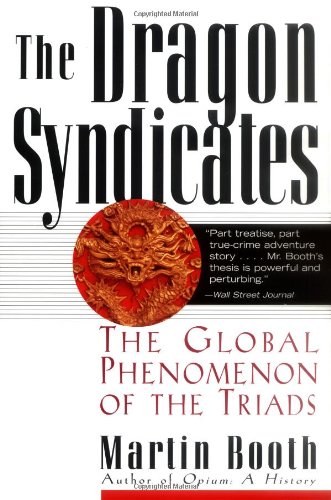
Martin Booth - The Dragon Syndicates

Martin Booth – The Dragon Syndicates – The global phenomenon of the Triads (2001)

The Triads are secret societies that once served useful functions in Chinese society, but they were always closely connected with crime, and eventually this became their only purpose. It takes either a totalitarian state or unusually well-planned police actions to inhibit them, and they’re still to be found in most Chinese communities over the world.

Recommended: Weakly. Like all organized crime exposés it leans towards sensationalism. On the other hand, the myths of organized crime are often as important as the facts.

Robert Heinlein - Tunnel in the Sky (1955)

Robert Heinlein – Tunnel in the Sky (1955)

A group of youths are sent out into the wilderness to fend for themselves, and, after a brief Lord of the Flies phase, discover that democratic government is the art of living peacefully with people you don’t like.

Recommended: Yes. There’s a line in the sand, and Heinlein’s juveniles and I are on one side of it.

George Walden - The New Elites

George Walden – The New Elites (2000)

Elites come and go. Walden argues that the elites of today are populist anti-elitists, mediocrities who condescend to the masses – the average man – from a position only slightly raised above them. We would be better off with genuine elites who are not afraid of aiming and reaching high, as long as they’re also alive and open to newcomers.

Recommended: Yes. Walden veers off into some unfocused “my country is the worst in the world” rants, but for the most part, this is an insightful analysis that applies equallywell to Norway.

1950s movies marathon – Best of 1955

The best movies of 1955, or at least those that had an opening that was interesting enough for me not to immediately hit the fast-forward button. I’ve collected the best scene from each movie, plus some amusingly bad ones, in this playlist.

The ones I’d heard about

The Trouble With Harry

Bad Day at Black Rock

The Ladykillers

The Seven Year Itch

Blackboard Jungle

The Quatermass Xperiment

Mad, murderous preachers

Night of the Hunter

Priests, maddened and nearly murdered

The Prisoner

Mann, with and without Stewart

The Last Frontier

The Man From Laramie

Start of a promising career

East of Eden

Rebel Without a Cause

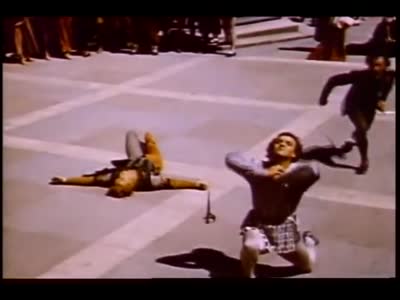
Go, go, Rasputin!

Romeo and Juliet

Movies! with! exclamation! point! titles!

It Came From Beneath the Sea

Commies and Nazis

Himmel Ohne Sterne

Night and Fog

Nice Britain

A Kid for Two Farthings

Cockleshell Heroes

As Long As They’re Happy

Not so nice Britain

Richard III

Goodbye Hayes

Picnic

Madness and/or sanity

I Live in Fear

Ordet

Dementia

Next up: 1956, featuring a queue of ca 500 movies + various clips from the Internet Archive.

1950s movies marathon – part 80

The Prisoner (1955, UK)

A psychological interrogation movie in the tradition of Nineteen Eighty-four, the Babylon 5 episode Intersections in Real Time, and – most of all – the 1960s TV series The Prisoner, which it certainly must have influenced. Watched it all.

Love Me or Leave Me (1955, USA)

I hate biopics. Hate them, hate them, hate them. On the upside, this one has Doris Day being smart, ambitious, and doing her best to get into the song business without having to go through the bed of that sleazebag James Cagney.  But it’s still a biopic. Watched: 14 minutes.

Oh.. Rosalinda!! (1955, UK, Powell & Pressburger)

I liked Powell and Pressburger more when there was a certain operatic quality to their movies that still wasn’t actual genuine opera. Watched: 12 minutes.

It’s Always Fair Weather (1955, USA)

And now Comden & Green are writing stinkers too. What is the world coming too? I bet the good times are over, and nobody will ever make a good movie ever again. And then the movie business will go broke, because all the stories have already been told as well as they can be. Watched: 9 minutes. Well, I guess I should give 1956 a chance before I give up. Just one quick peak ..

1950s movies marathon – part 79

Rome and Juliet (1955, USSR)

I think I get the purpose of ballet now: It’s a way to have have both story and music, without having it interrupted by singing. The dancing is just something to keep your eyes distracted with while you listen to the music and try to remember how the story goes. But then if that is the case, I don’t see why they make such a fuss about the dancing. Maybe I’ve missed something after all. Watched it all. Btw, whose idea of a cruel joke was it transport Shakespeare into a medium without dialogue?

Son of Sinbad (1955, USA)

In almost every movie that is set in the Biblical past or the near East, you’ll find an Obligatory Decadent Banquet Scene at around the 1:00 mark, where nobles recline lazily by their dinner tables, while they watch a pretty girl dance. It’s usually the only scene worth watching, because you really can’t go wrong with that sort of thing. The one in this movie is unusual in that it features pole dancing. Watched: 5 minutes.

The Prodigal (1955, USA)

I’m sure there is a right way to tell the story of the Prodigal Son, but a big, loud Bible epic isn’t it. You can tell the worst of the worst Bible epics by the voiceover in the intro that explains how people in ancient times all worshipped the evil gods Baahl and Astarte etc. etc., except for one small village of indomitable Hebrews. Watched: 4 minutes. It doesn’t even have a proper Obligatory Decadent Banquet Scene.

Minireviews – Bjørn Vassnes – Sokrates & sjøpungen

Bjørn Vassnes - Sokrates & sjøpungen - Flukten fra kunnskapen (2011)

Bjørn Vassnes – Sokrates & Sjøpungen (2011)

It’s ironic how little actual knowledge there is to find in this book about how nobody in Norway values knowledge any more. It’s as if Vassnes just quickly wrote down all the opinions he has about knowledge, scattering facts inbetween, but never pausing to focus on any single topic. So we jump from Norway’s PISA scores to academics who don’t like evolutionary psychology to “oh you can’t trust the newspaper these days” to how the infrastructure is failing to how the climate may collapse and kill us all – sometimes from one paragraph to the next. I probably agree with his overall message, I just can’t figure out what specifically he is trying to say most of the time. I’ve littered the margins with “Uhh…?” Which is short for: “Ah yes, this is an interesting claim, I can’t wait to see how you intend to support it – no, wait, don’t move on, not again! Please stand still for just one moment! Nooooo..” And then we’re off to how Christianity created the Dark Ages, and then to how Cloud Computing and China aren’t all that, and ..

Read: 44 pages.

Recommended: No. This may be the right book for somebody, for instance people who doen’t already agree that knowledge is important, but are easily convinced by unfocused polemics. To me it feels like a desert full of mirages. I can tell that there is something interesting going on over the horizon, but I have a growing suspicion that this book will never take me there.

Vi kan leve med usikkerheten

Jeg skriver om Breivik, galskap og ekstremisme i Dagbladet i dag:

Mange tror at spørsmålet om Anders Behring Breivik er psykotisk, og dermed utilregnelig, er nøkkelen vi trenger for å forstå terrorangrepet han utførte 22. juli 2011. Var det bare en gal manns verk, eller et naturlig resultat av høyresidens innvandringsretorikk? Begge deler er feil, og vi kan leve med usikkerheten.

Det er nemlig to sannheter den første rettspsykiatriske vurderingen ikke rokket ved, og som neppe vil bli det av den andre vurderingen heller, når den kommer.

Les resten hos Dagbladet.

1950s movies marathon – part 78

The Last Frontier (1955, USA, Mann)

Westerns are full of frontiersmen and soldiers, but the ones in this movie are among the first that actually feel like the sort of undisciplined, independent men you’d expect to find wandering about in the great American wilderness, and the kind of tough, disciplined murderers you’d expect to find in an army. Watched it all. This is one Mann western that doesn’t feature James Stewart, and it’s better for it.

Rebel Without a Cause (1955, USA)

One way of looking at Rebel is as the first in a proud tradition of dramas about teenagers behaving badly & sadly, (the standard of which today is defined by the UK version of Skins). Another way of looking at it is as the parents of 1955, who grew up during the Depression and the Second World War, might have looked at it: As a story about a generation of ungrateful whiners who wouldn’t have lasted five seconds in the War. I’m not saying that’s the right way of looking at it, but it’s more fun than the usual one, especially the scene where Dean berates his father for not knowing what it means to be a Man. Why, his father probably stormed the beaches of Iwo Jima, and murdered hundreds of Japs with his enormous flame thrower. Watched it before, and again now.

1950s movies marathon – part 77

Dementia / Daughter of Horror  (1955, USA)

Horror movies lost something when sound was invented, the ability to portray the world as fundamentally evil. This is one of the first movies to recapture that. It’s not scary, just perversely fascinated with the all the awfullness that life has to offer. Watched it all.

Kvinnodröm / Dreams (1955, Sweden, Bergman)

For a few moments, this is one of the most visually interesting movies I’ve seen .. and then the characters start speaking, the usual Bergman dialogue, ruining everything. Watched: 8 minutes.

Piagol (1955, South Korea)

The Communist Party of North Korea is EVIL, evil I tell you. (Well yes, actually, it was, and still is.) Watched: 14 minutes.

East of Eden (1955, USA)

Preliminary hypothesis: The movies of James Dean are remembered today mostly because they were the only ones he got to act in. Hypothesis now disproven. Watched it before, and again now. I didn’t pick up on the Biblical allegory the first time, which is embarassing, considering that it’s right there in the title.

Guys and Dolls (1955, USA, Mankiewicz)

Musicals are supposed to be phony, but the right kind of phony, you know? Like this. I think Good News ruined me for musicals. Ever since I saw it, I’m always waiting for the Joan McCracken scene. And there isn’t any. She only really played in that one movie, and then she died in 1961. I miss Joan McCracken. I think I’ll go watch Pass That Peace Pipe again. Over and over again. Anyway – watched: 18 minutes.

1950s movies marathon – part 76

Ordet (1955, Denmark, Dreyer)

If someone were to make a parody of a brilliant but slow-moving drama about God-fearing Danish farmers, it would be indistinguishable from this, and vice versa, in much the same way that this movie implies that holiness is indistinguishable from madness – and vice versa. Watched it all.  A chill builds in while I watch this. I don’t think the temperature in the room has dropped. It’s the movie, and the centuries of cultural memory it resonates with. This isn’t quite the religion of my parents, or of their parents, but perhaps of their grandparents.

To Catch a Thief (1955, USA, Hitchcock)

This movie is above all a tourist commercial for the nature and architecture of southern France, with Cary Grant stumbling about in the foreground, a gentleman thief trying to catch another gentleman thief, trying and failing to outshine his surroundings. Watched: 27 minutes.

The Rains of Ranchipur (1955, USA)

This is one of those titles that sounds impressive when you first hear it, but when you think about it, it doesn’t make any sense. What’s so interesting about the rains of Ranchipur? Are they particularly frequent, or rare, or just very unusual? Are they more so in Ranchipur than elsewhere? Explain. On second thought, don’t. Watched: 9 minutes.

The Private War of Major Benson (1955, USA)

Charlton Heston is nearly kicked out of the Army for being too manly, which doesn’t really strike me as a plausible setup for a movie. Although, if anyone can be too manly for the Army, it would be Heston. Watched: 11 minutes.

1950s movies marathon – part 75

Night and Fog / Nuit et brouillard (1955, France, Resnais)

The greatest documentary about concentration camps and extermination camps I’ve ever seen.  A visual essay that looks back on the horrors of the recent past in a way that hits you like a half-forgotten nightmare forcing you to remember it. Watched it all.

Land of the Pharaohs (1955, USA)

Evil Egyptians plot and scheme, blah blah blah. Watched: 4 minutes. In pseudo-historical epics, the obligatory decadent banquet scene typically occurs around halfway into the movie. It’s usually the only interesting scene in the movie, but is outdone in this case by the astonishing finale, a burial scene that is truly worthy of Indiana Jones, and probably a direct influence.

Mister Roberts (1955, USA)

Military humor is all the same, half light-hearted absurdity, and half deadly. This one tries a little too hard, and James Cagney certainly does. He’s no Queeg, and the movie grinds to an embarassing halt the moment he opens his mouth. Watched: 45 minutes.

The Rose Tattoo (1955, USA)

It doesn’t look like Tennessee Williams has discovered how to tell a coherent story yet. Or maybe Hollywood hasn’t found out how to film his plays. Watched: 14 minutes.