Book roundup: Christopher Caldwell, Adeline Yen Mah, Mattias Svensson

Christopher Caldwell - Reflections on the Revolution in Europe

Christopher Caldwell – Reflections on the Revolution in Europe: Immigration, Islam and the West (2009)

Immigration poses two challenges to Europe: The formation of a separate, oppositional identity among muslims, who make demands European social models are unprepared for, and the inability of the native cultures to deal honestly with the challenges this causes.

Recommended: Yes, even obligatory. Hardly anything written about European immigration is both relevant and sane, but this is an outstanding exception. My own view at the moment is close to Caldwell’s, but even if yours isn’t, this book is where the debate must continue, or remain irrelevant, a mere exercise in misdirection.

Adeline Yen Mah – Falling Leaves (1997)

Growing up in Shanghai and Hong Kong, the author has a Harry Potter childhood, but there’s no magic, and no rescue.

Recommended: Yes.  I’m skeptical of anyone who shares their family feuds with the world, but it is an impressive revenge for an unloved daughter to turn writer late in life, and, in front of a million readers, elevate her stepmother to the ranks of China’s evil old dragon ladies.
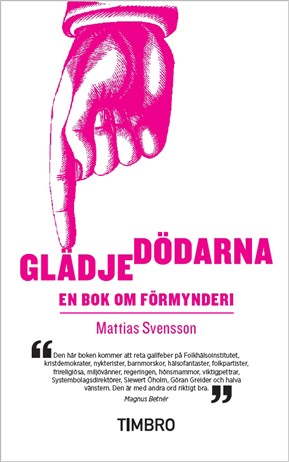
Mattias Svensson - Glädjedödarna

Mattias Svensson – Glädjedödarna, En bok om förmynderi (2011)

A survey of failed and misguided moral crusades, from alcohol and comic books to prostitution and drugs.

Recommended: Yes.  And isn’t it interesting how many of these principled rebuttals of social democratic overreach come out of Sweden these days?

1950s movies marathon – part 51

On the Waterfront (1954, USA, Kazan)

Marlon Brando could have been somebody, if it wasn’t for the union mobsters.  All he has left is being a man, and he doesn’t even have that.  Watched it all before, but didn’t appreciate how perfect it is, a meeting of the old gangster thumbscrew and new acting.  What has changed since last time I saw it?  Does fast-forwarding through thousands of mediocre movies allow the great ones to stand out in a way watching the occasional preselected classic doesn’t?

The Men of Sherwood Forest (1954, UK)

Well, I’ve seen worse Robin Hoods, but that’s because the worse ones had bigger budgets, which allowed their awful plots to bloom into full potential.  I sometimes wonder what it is about the Robin Hood myth that is so compelling when I can’t think of a single book or movie that has told it well.  Watched: 11 minutes.  The one interesting thing about this movie is that it was made by Hammer, which got famous later for gorier reasons.

Night People (1954, USA)

Of all the post-war movies about Communist scheming and kidnapping in the European occupation zones, this is my favorite so far. It reminds me of The Sandbaggers.   No action, no fancy schmancy noir shadows and zither music, just dull, tough men making hard choices and dirty deals.  Watched it all.  Berlin comes off well too: For once as a beautiful city, not just ruins.

1950s movies marathon – part 50

Apache (1954, USA, Aldrich)

It’s amazing how well westerns can be used to make sociological statements, even silly ones.  Here, the last Apache warrior and his woman are radical revolutionaries whose eyes burn in anger at the limits “civilized” society place on their untamed way of life.  Watched it all.  The happy ending was forced, and it shows – none of the actors believe a word they’re saying.  In its honest first half, the message is: Go underground, terrorize the Man, and die young and proud, you glorious rebel you!

The High and the Mighty (1954, USA, Wellmann)

A bunch of people are stuck together on a failing airplane, and Character Drama ensues.  Watched: 15 minutes.  Wasn’t this concept used in a poorly received Norwegian movie recently?  They should have recycled Wellmann’s other movie from that year instead:

Track of the Cat (1954, USA, Wellmann)

When you watch movies chronologically like this, what happens is that one day you start up yet another movie and discover that someone has just invented a whole new way of making movies.  Just the colors here take my breath away – an entire movie made with the palette of a blood-splattered cow.  It’s like they took one of those dense, dark movies that felt like stage plays and added color and sound along the same lines, and got something so intense that it’s frightening to watch.  Watched it all.  And yes, I guess it’s a failure, but – what an experience.

Book roundup: Clive James, Charles Perrow, Nassim Taleb

Clive James - Cultural Amnesia

Clive James – Cultural Amnesia (2007)

I put away this collection of essays on half-forgotten artists and intellectuals four years ago, because it put more books on my to-read list than I knew what to do with.  Now I try again, better than I was before at dealing with the pressure of unread books.  My plan was to continue where I left off, halfway, but I got sucked in and read it all over again.  This is a fantastic survey of cultural pillars, the informal kind that one moment evokes the lost café culture of pre-Anschluss Vienna, and the next distracts itself with the implausibility of Richard Burton’s hairdo in Where Eagles Dare.

Recommended: Hell yes.

Charles Perrow – Normal Accidents (1984/1999)

Perrow’s warnings about the dangers of nuclear power haven’t held up too well, but his overall point has: That complex systems suffer complex failures, where parts interact in unpredictable ways.  A sufficiently complex system can never be safe.  Nassim Taleb has taken this idea further by encouraging systems and behavioral patterns that are designed so that unexpected events benefit us instead of harm us.

Read: 200 pages.

Recommended: No.  The subject is interesting, but the treatment dry.

Nassim Nicholas Taleb – The Bed of Procrustes (2010)

The tweet-length maxims collected in this book are made from four parts wisdom, one part self-aggrandizement.  I forgive this from the author of perhaps the most important book of the previous decade, but I also forgive the reader who wonders why they should be made to watch.

Recommended: Weakly, for the less self-obsessed moments.

Trygghetsnarkomani

Jeg har en bokomtale av I trygghnetsnarkomanernas land av David Eberhard hos Minerva:

Historien har spilt oss et puss: Vi lever tryggere enn noensinne, men er stadig reddere for de farene som er igjen.  Tidligere var vi redde fordi vi hadde noe å være redde for: Tuberkulose, lungebetennelse, underernæring.  I dag er vi redde fordi redselen vår mater seg selv.  Den livnærer seg ikke på ekte farer, men på selve muligheten for at noe kan gå galt.

Les resten her.

1950s movies marathon – part 49

Garden of Evil (1954, USA, Hathaway)

Heading out into mythical Mexico to rescue a trapped miner, Gary Cooper personifies the old-fashioned macho Stoic ideal of someone who is ready to unleash emotions or violence when appropriate, but always remains in control, unlike his too-greedy, too-angry, too-cynical friends, who are the unbalanced fragments of Cooper’s balanced whole.  Susan Hayward inspires his chivalric devotion not because he doesn’t suspect he’s being played, but because that’s beside the point, when after all it is the right thing to do.  Watched it all.

Salt of the Earth (1954, USA)

“The International Union of Mine, Mill and Smelter Workers present .. ” is among the top things you don’t want to see at the beginning of a film.  Commie-fighters at the time thought so too, and launched a campaign against it, thus securing it eternal fame as a Blacklisted Movie.  Watched: 7 minutes, right up to “I tell you, this installment plan, it’s a curse on the working man!”

Sign of the Pagan (1954, USA)

Attila the Hun looks like he has walked out of a Sword & Sorcery fantasy, and there are some great scenes where the power of Paganism and Christianity collide.  But also a lot of dull, wholesome Romans.  Watched: 12 minutes.

..only because religion ceased to matter in any way except privately

Eventually, in the West, we emerged from the age in which people paid with their lives for a religious allegiance. We emerged into another age in which they were murdered by the million for other reasons, but not for that one. Though the religious might hate to hear it said, the West graduated from its nightmare only because religion ceased to matter in any way except privately. At the time of writing, we are in the uncomfortable position of hoping that the same thing can come true for Islam, and do so in a briefer time than the span of centuries it took to come true for us. While we are waiting, it might be of some help, although of little comfort, to realize that an Islamic fundamentalist doesn’t have to share the psychotic certitudes of Torquemada in order to be dangerous: it is enough for him to share the civilized attitudes of Queen Elizabeth I, who wanted every invading priest tortured as soon as caught, and gruesomely executed soon after that.

– Clive James, Cultural Amnesia (2007)

1950s movies marathon – part 48

Secret of the Incas (1954, USA)

You know who would make a great Indiana Jones?  Charlton Heston would!  Here he goes about tomb raiding Inca ruins in full Indy outfit, and he’s twice the rogue Ford was.  All that’s missing is the whip.  And the script.  Watched it all.  It’s trash, but it’s Indy, or at least the inspiration for two iconic Indyisms: His look, and that whole bogus puzzle tomb setup.

Samurai I: Musashi Miyamoto (1954, Japan, Inagaki)

Japan didn’t need to send their armies to conquer Asia.  They could have had the entire world with second-rate samurai epics.  Watched: 25 minutes.  This one got an Academy Award for Best Foreign Language Film, which I attribute to the voters never having seen a samurai film before, and being awestruck by what a fantastic concept this is.  What excuse more recent fans have I don’t know.

Kasserer Jensen (1954, Norway)

The timid accountant looks exactly like a famous criminal.  Watched: 6 minutes, then fast-forwarded to identify all the Oslo locations I was able to, and locate them in Google StreetView, which is really the main reason to watch old Norwegian movies.

Hell Below Zero (1954, USA)

Never mind the rest, but I love the scene where Alan Ladd gives a sleazy con-man a righteous punching.  That’s the spirit!  Watched: 22 minutes.

Book roundup: Nick Cohen, Niall Ferguson, Richard Wiseman, Thomas Sowell

Nick Cohen - Waiting for the Etonians, Reports from the Sickbed of Liberal England (2009)

Nick Cohen – Waiting for the Etonians, Reports from the Sickbed of Liberal England (2009)

This little England, it’s dingy and it’s mean

I’ve flirted with her mewling gods and petty jealousies

These edited-reader rebels with their simulated causes

Their weak-chinned snarls and red guitars I disregard them all

Recommended: Yes.

Niall Ferguson – Colossus, The Rise and Fall of the American Empire (2004)

The United States is an empire, although often an incompetent one, and should embrace their burden, because the alternative is worse.

Though it cuts me to my soul that

It must be America

It must be America

Or nothing at all

Read: 116 pages.

Recommended: No. This is an argument, not a history.  I don’t care about the conclusion, I want the details.

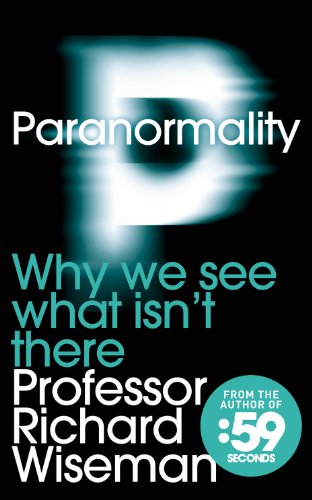
Richard Wiseman - Paranormality, Why We See What Isn't There (2011)

Richard Wiseman – Paranormality, Why We See What Isn’t There (2011)

Not only are paranormal phenomenons bunk, the natural explanations for them are more interesting than any supernatural ones could be.  (And oh, it’s better to know. Okay, I’ll stop now.)

Recommended: Yes.  This is in fact the perfect approach to this subject.

Thomas Sowell – Intellectuals and Society

Intellectuals are often wrong, especially leftist ones.

Read: 45 pages.

Recommended: No. Alongside Hayek, it’s superflous.

1950s movies marathon – part 47

The Caine Mutiny (1954, USA, Dmytryk)

The apparently insane captain isn’t an unorthodox genius, but a genuinely insane captain who’ll get us all killed.  Watched it all before, and again now, and Bogart’s crazy eyes are unforgettable, but in retrospect Queeg is a one-dimensional stock character in the making.  Also, the movie ends with a long courtroom scene.  I hate those.

Devil Girl From Mars (1954, UK)

Recent events on Mars show what can happen when women take their struggle for equality too far: They turn into unsmiling, cape-wearing overlords who travel around the solar system stealing males for their breeding program.  Oh no!  We must stop this from happening here?!  Watched: 4 minutes, + this.

Seven Samurai (1954, Japan, Kurosawa)

Society is an uneasy alliance between bewildered civilians and men who find murder exciting.  Watched it all before, and again now.  Now here’s a proper movie, with proper samurais, proper bandits, and proper sword fights.  Even proper slow-motion death scenes, (a first?)  Movie violence as entertainment, it all comes back to Seven Samurai, (although I insist it should be spelled samurais).

Far til fire i sneen (1954, Denmark)

It flatters my inner patriot that a 1954 Danish family’s idea of a luxurious vacation is to go skiing at Geilo in Norway.  Watched: 10 minutes.