Turning high-volume RSS feeds into low-volume feeds

I added a few too many feeds to my RSS reader recently, and it crossed the line from “a bit hard to follow, but I’ll manage” to “there are how many new items since an hour ago now??!”

Nobody suffers from information overload, just from poor filters, so the first thing I did was split the feeds into high-volume feeds, typically news sites that post 20 times a day that I usually  just skim the headlines of,  and low-volume feeds, personal blogs that post once a day or less and are usually worth reading when they do.  I ended up with 30 feeds in the high-volume folder, at 500 posts a day, and 100 feeds in the low-volume folder, at 50 posts a day.

A good start.  Then I thought: Is there some way I could randomly pick a post now and then from a high-volume feed and show it in the low-volume folder?  Sort of to simulate dropping by a news site occasionally, just to see what’s going on.

And yes there is.  Using the amazing service Yahoo Pipes, I’ve made a public pipe that takes a feed and “randomly” outputs just a few items from it.

To use it, go here, and fill in the URL of a feed, and the approximate factor you want to limit its content by.  Click Run Pipe, then Get as RSS, and add that URL to your RSS reader.

It’s not really random, (“publication minute” % “the number you input” == 0), but it works, and I think it’s pretty cool.

40’s movies marathon – part 88

Its A Wonderful Life (1946, colorized) - James Stewart

It’s a Wonderful Life (1946, USA, Capra) – An angel teaches James Stewart that if you’re the warmest, kindest, most giving person in town, you shouldn’t kill yourself, because people will miss you.  Also that you should give loans to people who can’t afford them, or your town will become a fun place to hang out.  Watched it all.  Actually, another message here is that you don’t need a government program to do good.  The good deeds done here are inspiring precisely because they are done voluntarily, by individuals.  Btw, I love the current state of colorization technology.  It looks perfect – not technicolorful, which would be distracting, but just right.

The Yearling (1946, USA, Brown) – A boy grows up among all the happy woodland critters, accompanied by uplifting choir music.  Watched: 9 minutes.

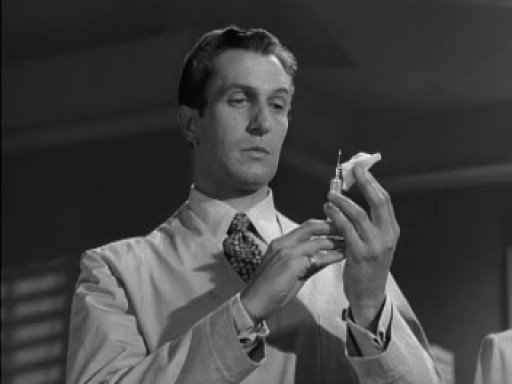
Shock (1946) - Vincent Price

Shock (1946, USA, Werker) – Nervous wreck Anabel Shaw witnesses a murder and goes into a state of “shock”, a diagnosis about as plausible as Padmé dying from grief, but it allows us to see Vincent Price being EVIL, which is about time.  One first step towards this.  Watched it all.

The Truth About Murder (1946, USA, Landers) – Ah, the quaint old 1940’s, when people thought the magic power of a “lie detector” could be used to tell when people were lying!  Watched: 3 minutes.

The Time of Their Lives (1946, USA, Barton) – Was I unfair to Abbott and Costello when I said earlier that the Marx Brothers were the only comedy team of the 30’s and 40’s that was actually funny?  No, I don’t think I was.  Watched: 8 minutes.

Oh no – we’re being overtaken by “American conditions”

One feature of this daily barrage of anti-Americanism is the tireless reference to “American conditions”. The term crops up again and again in reports on undesirable trends in European society. (Its connotations are always negative.) Is traffic getting worse? Are children getting fatter? Oh, no – we’re being overtaken by “American conditions”. The versatility with which the term has been used is impressive. When I recently googled its Norwegian version – “amerikanske tilstander” – I got 1,600 hits. I looked through the first hundred or so; most were newspaper articles about a wide variety of topics. Was money playing more of a part in Norwegian politics? American conditions! Was personal wealth increasingly determining the level of health care one received? American conditions! [..]

I found the term equated with macho behavior, the prescribing of antidepressants to children, Internet spam, overpaid executives, long working hours, animal abuse, lack of sensitivity to needs of convicts, the use of terrain bikes in heavy traffic, ponds being stoked with fish for “sports fishermen”, interest-free financing on cars, schools advertising for students, and the “chaos” of having many commercial radio and TV stations instead of one nice, tidy government-owned station. Perhaps the most outrageous examples I found were an article equating “American conditions” with “long hospital queues” (sorry, that comes under the category of “European conditions”), and another article claiming that “Ruper Murdoch controls the American presidential election through Republican propaganda on Fox News” and asking whether Norway’s wonderfully objective media might someday fall victim to such dastardly ideological control.

– Bruce Bawer, While Europe Slept

40’s movies marathon – part 87

The Beast with five Fingers (1946) - Peter Lorre

The Beast with Five Fingers (1946, USA) – A mad pianist dies, and the vultures descend on his estate.  Then his ghost descends on the vultures.  Best moment: Peter Lorre screaming, over the top of his voice, “I tell you, it’s alive!”  Also, Peter Lorre displaying various contorted facial expressions.  Watched it all.

Genius at Work (1946, USA, Goodwins) – Bela Lugosi has fallen so low that he’s not the master criminal who toys with the police by sharing secrets with a radio show – he’s just the henchman, to some guy.  Oh, Bela.  Watched: 9 minutes.

To Each His Own (1946, USA, Leisen) – Olivia de Havilland goes into flashback mode to explain how she got that way.  Watched: 15 minutes.

The Flying Serpent (1946, USA, Newfield) – I guess one reason the Aztec god Quetzalcoatl doesn’t feature in more movies is his name.  Que..what?  And then there’s his fellow gods Tezcatlipoca, Huitzilopochtli and Chalchiuhtlicue, who do not appear in this movie.  Try saying them out loud, it’s fun!  Watched: 5 minutes.

A Scandal in Paris (1946, USA, Sirk) – A crook makes good in 18th century France.  All the best lines are voice-overs, such as “Emile was that grimmest of characters: An early morning optimist.”  Watched: 12 minutes.  The main character is so ironically detached that he probably doesn’t mind.

Strangler of the Swamp (1946, USA, Wisbar) – There’s so much fog in the swamp that there’s bound to be all sorts of evil things hiding in it.  I’m with the superstitious village women on that one.  Watched: 9 minutes.

Suddenly their smug certainties were gone

Bruce Bawer - While Europe Slept

There are two books in Bruce Bawer‘s While Europe Slept: One looks at the anti-Americanism and multicultural delusions of the Netherlands and Norway in the years around the 9/11 attacks.  It’s based on Bawer’s personal experiences as a resident of both countries.  It’s hard-hitting, subjective – and worth reading every word of it.

The other retells the Bat Ye’or conspiracy theory about Eurabia, about how the European establishment made an agreement with the Arab countries decades ago to turn Europe into a Muslim continent, and now all the angry Muslims are turning the rest of us into dhimmis.  It’s a retarded theory, and Bawer presents it uncritically.

And even at its best, the book is marred by that tone of angry sarcasm that is so common in anti-p.c. rants.  I got enough of that in the warblog years.

But read it anyway, especially if you’re Norwegian.  Bawer is the grumpy outsider who impolitely exposes the assumptions and delusions of our society, who observes things native Norwegians don’t, and comes at issues from unexpected angles. We need that perspective.

There’s a lot here that matches my own views exactly, for instance his criticism of the Norwegian media coverage of the Afghanistan and Iraq wars. I believe the Iraq war was wrong, but most Norwegians commentators didn’t even understand why it was fought.  They assumed they already knew, and didn’t bother to find out.

It’s such perspectives that make this a valuable book, major flaws aside – far more valuable than yet another boring insider’s view.

A profound discomfort with the idea of “them” becoming “us”

The pillars of U.S. immigration policy are integration and emplyment; officials in Western Europe, by contrast, thought they were doing immigrants a favor by not requiring – or even encouraging – either. One might wonder why European authorities didn’t try to learn from the spectacularly successful history of U.S. immigration. I’ve lived in Europe long enough to know why: they didn’t see it as a success story. In the eyes of the Western European establishment, America is a fundamentally racist and materialistic nation that cruelly compels immigrants to shake off their identities and fend for themselves under a heartless, dog-eat-dog economic system. [..]

While immigrants to America are encouraged to become full members of society – and are rewarded for doing so – in Europe (where the native-born children and grandchildren of immigrants are actually called “second- and third-generation immigrants”) the establishment prefers its minorities unintegrated. Why? The supposed reason is that it respects differences; the real reason, as I gradually came to understand, was a profound discomfort with the idea of “them” becoming “us”. Immigrants to Europe are allowed to perpetuate even the most atrocious aspects of their cultures, but the price for this is that no one, including themselves, will ever think of them as Dutch or German or Swedish.

– Bruce Bawer, While Europe Slept

40’s movies marathon – part 86

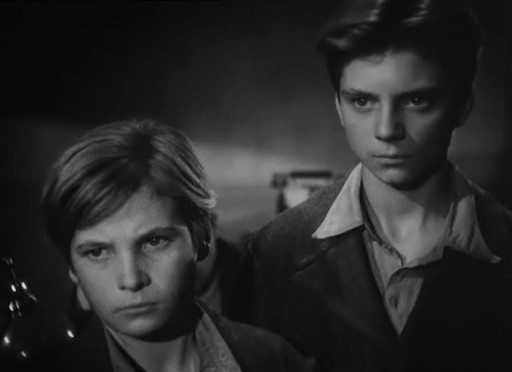
Sciuscia - Shoeshine (1946) - Franco Interlenghi, Rinaldo Smordoni

Shoeshine (1946, Italy, de Sica) – Two boys try to make a living on the streets of Rome, but end up in juvenile prison, where they are hurled towards inevitable doom.  The system is to blame.  Watched it all.

Heartbeat (1946, USA, Wood) – Some guy runs a school for pickpockets in Paris. He invites people to job interviews, and recruits the candidates who take the opportunity to steal from him.  The premise is so great that it’s a shame everything else sucks.  Watched: 16 minutes.

Night and Day (1946, USA, Curtiz) – Cole Porter was young once too, and faced adversity etc.  But not too young, or too much adversity, or they couldn’t have gotten Cary Grant to play him.  Watched: 11 minutes.

Colonel Effingham's Raid (1946) - Charles Coburn

Colonel Effingham’s Raid (1946, USA, Pichel) – A Colonel Blimp goes to war against a city government run by corrupt carpetbaggers who want to remove symbols of the town’s Confederate past.  Think of it as a Mr Smith Goes to Washington but with implicit racism and an obsession with women’s legs.  As in, every time the Shockingly Independent Woman With a Job enters the screen, the camera zooms in on her legs, and we hear a crowd whistle appreciatively.  Pretty bad, but hard to stop watching.  Watched it all.

Centennial Summer (1946, USA, Preminger) – Life of some stupid family during the 1876 Centennial celebration.  Hey, I just read a Flashman novel set at that time.  Quite interesting.  Indian wars and everything.  Did you know scalping isn’t fatal?  Watched: 6 minutes.

With Muslims in the role of needy victims and Norwegians as heroic benefactors

Though immigration and integration have become major points of contention in Europe, they weren’t even open for discussion when I was first living in Oslo.  On these topics, the “one idea” of the “one-idea state” was clear: Muslims in Europe were a colorful and enriching asset – period.  In Norway, the expression on everyone’s lips was “fargerik felleskap” – “colorful community”. On the rare occasions when immigrants were mentioned on TV or in the press, you could be sure these words would figure prominently. Norwegian journalists, professors, and politicians loved to use the term. But from the beginning, I found it offensive. Its fixation on the skin color mocked Martin Luther King’s dream of a color-blind society, and its reduction of immigrants to their most superficial aspect turned them into mere window-dressing – an outward sign of ethnic Norwegians’ inner virtue. Often, hearing and reading comments on immigration by Norwegian establishment types, I nearly gasped at their grotesque condescension, their inability to see immigrants as individuals, and their view of the whole business as a morality play; with Muslims in the role of needy victims and Norwegians as heroic benefactors.

– Bruce Bawer, While Europe Slept

Hey have you heard about this thing called “Twitter”?

I am now on the Twitter, as BjoernStaerk, and that is why every paragraph in this post is less than 140 characters. Nd prctc shrtnng sntncs.

So far I have mostly twittered (twut?) about how wonderful it is to be on Twitter. Twitterers (twits?) are like bloggers that way.

I also twit (twoot?) when I go to the bathroom, in case someone wonders where I am right now.

My first followers wanted to sell me cigars. My next followers came to hear about politics. I hope they like pirate-themed metal videos.

When you get 1000 followers I think you level up or something. At higher levels you get magic items. It’s awesome.

The hype is now so over that it isn’t even not cool to be on Twitter any more, so go right ahead and join.

Six word messages, next big thing.

40’s movies marathon – part 85

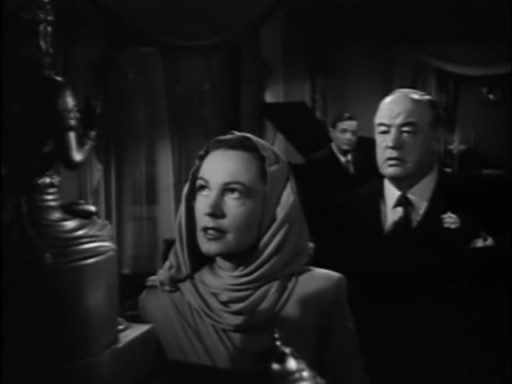
Three Strangers (1946) - Geraldine Fitzgerald, Sydney Greenstreet, Peter Lorre

Three Strangers (1946, USA, Negulesco) – Three strangers of deplorable character meet under the statue of a Chinese goddess to pray for the one thing that will make them happy: Money.  They then go out and destroy their lives beyond the repair of any divine power.  Watched it all.

She-Wolf of London (1946, USA, Yarbrough) – Gah.  Watched: 7 minutes, which I’ve already forgotten.  The Warren Zevon song is pretty good though.  Also the one about that headless Norwegian.  Hm, where did I put my Zevon songs?

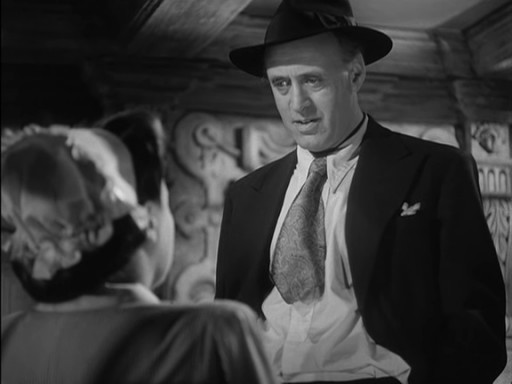
Green for Danger (1946) - Alastair Sim

Green for Danger (1946, UK, Gilliat) – The problem with stopping movies when I don’t like the beginning is that some of them get better afterwards.  If I had stopped this one after the first 25 minutes, where people at a hospital just walk around being miserable, I would have missed the part where it turns into a dark, witty whodunnit.  Watched it all.

The Spider Woman Strikes Back (1946, USA, Lubin) – These monster movies would be a lot more interesting if they didn’t spend the first half trying to ease us slowly into the fantastic premise.  Watched: 3 minutes, then fast-forwarded to see the spider, but there isn’t any.  There is an evil mansion that burns down at the end, though.

The Bamboo Blonde (1946, USA, Mann) – This is the second ’46 Anthony Mann movie that is absolutely terrible .. and yet I find myself watching it to the end.  Who is this guy?  This one is sort of a cheap version of a Preston Sturges movie, featuring Stan the used boat salesman from Monkey Island.  Watched it all.